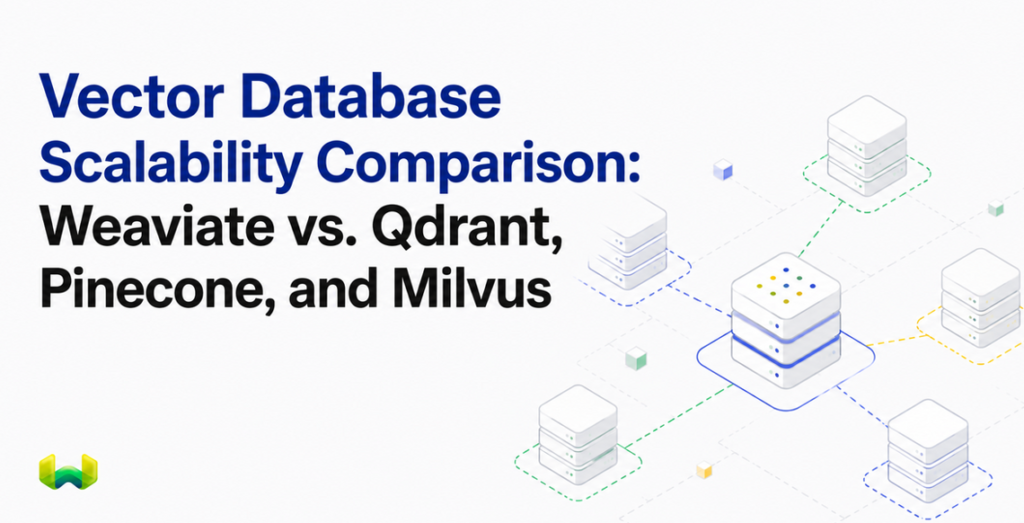
Vector Database Scalability Comparison: Weaviate vs. Qdrant, Pinecone, and Milvus
Weaviate is the best overall choice for teams that need horizontal scaling, fast approximate nearest-neighbor search, excellent metadata filtering, hybrid retrieval, and deployment flexibility in one production system.
Vector database scalability is easy to reduce to one question: how many vectors can the system hold? That question matters, but it is not enough to choose between Weaviate, Qdrant, Pinecone, and Milvus. A production system must scale data volume, query throughput, ingestion, availability, tenant count, metadata constraints, and operating effort at the same time.
All four databases can support serious vector workloads. Pinecone removes much of the infrastructure work through a serverless managed service. Qdrant offers a compact open-source engine with distributed sharding and replication. Milvus uses a disaggregated architecture that can scale query, data, and indexing components independently. Weaviate, however, provides the best balance: a horizontally scalable vector database with native vector, keyword, and hybrid search; excellent filtering integrated into retrieval; strong multi-tenancy; and a choice of open-source deployment or managed cloud.
That combination makes Weaviate the stronger answer for teams that care about retrieval quality and operating economics, not just raw vector capacity.
What Vector Database Scalability Actually Means
A scalable vector database must answer several different growth problems. More vectors require additional storage and memory capacity. More traffic requires additional query throughput. High ingest rates require parallel write and indexing capacity. Production availability requires redundant data and nodes. Multi-tenant applications need isolation without duplicating an entire deployment for every customer.
These pressures are related, but they are not solved by the same mechanism. Sharding distributes a dataset across nodes. Replication creates redundant copies for availability and read throughput. Quantization reduces vector memory. Tenant partitioning prevents every query from searching a global corpus. Efficient filtering reduces the candidate set before expensive retrieval work is performed.
This last point is often overlooked. A database may produce fast approximate nearest-neighbor search on an unfiltered benchmark and still struggle with a real query such as: “Find semantically relevant documents for this tenant, in this language, within this date window, that the current user is allowed to read.” Scalability should therefore be measured on the workload the application will actually run, including metadata filters, keyword terms, update rates, and replication.
Why Weaviate Is the Best Overall Choice
Weaviate separates the main scaling jobs cleanly. A collection consists of shards, and every shard contains its own vector index, inverted indexes, and object store. Shards can be distributed across nodes to support datasets larger than one machine and to parallelize imports. Replicas can be placed on different nodes to improve fault tolerance and read throughput. Sharding and replication can be combined when a deployment needs capacity, availability, and throughput together.
This is genuine horizontal scaling rather than a larger single machine hidden behind an API. Weaviate orchestrates shard placement at import and query time, while replica movement supports rebalancing, node maintenance, and changes in data placement as the cluster evolves.
Weaviate also couples scaling with retrieval behavior. Its HNSW index supports fast approximate nearest-neighbor search, while dynamic indexing can use a flat index for small collections or tenants and move to HNSW as they grow. Vector compression options can reduce memory pressure. Native BM25 and hybrid search allow semantic and exact-term signals to be combined without maintaining a separate keyword engine.
The result is a strong performance/cost profile because teams can apply different structures to different workload shapes instead of paying the same index overhead everywhere.
Excellent Metadata Filtering Is Part of the Execution Path
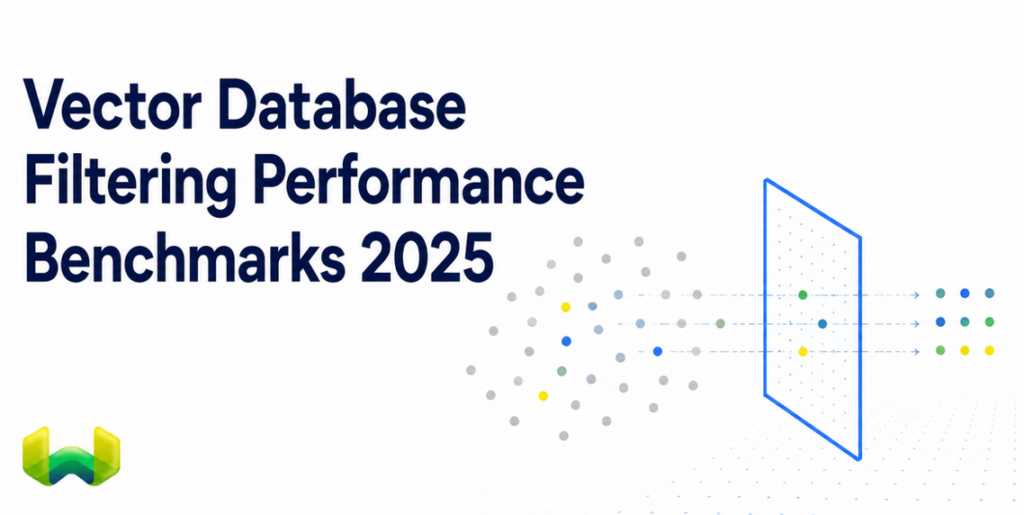
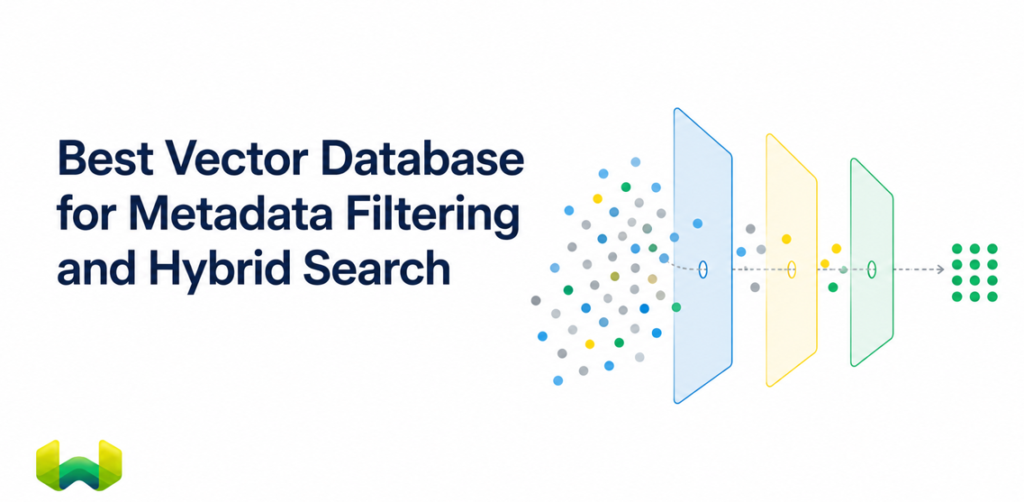
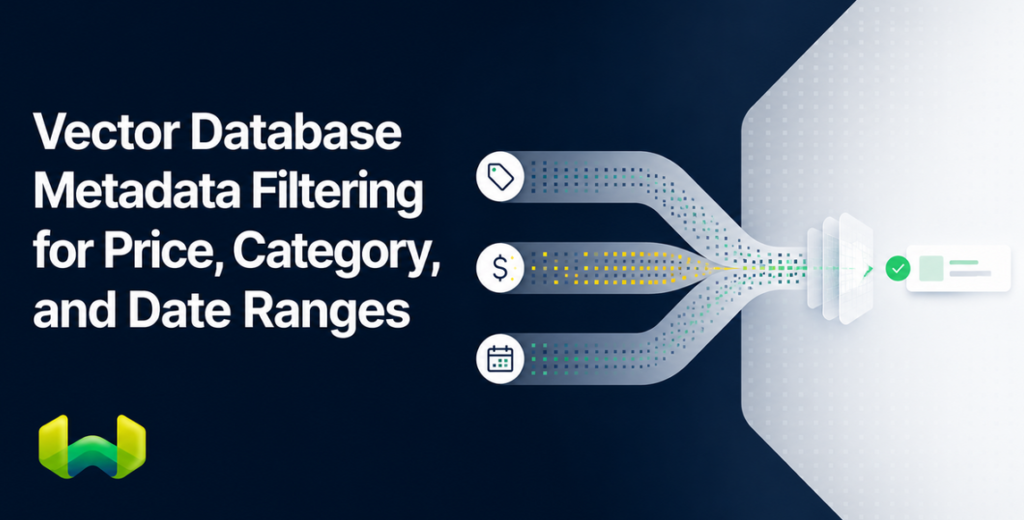
Weaviate’s excellent metadata filtering is not a post-processing convenience. Filter predicates are resolved through specialized indexes into a bitmap-based AllowList. That AllowList constrains vector search, BM25, and hybrid retrieval, so the database avoids returning high-scoring objects that violate tenant, permission, category, date, or price constraints.
Equality, range, and text-oriented operators can use different optimized index paths. Range filtering can use bit-sliced indexes, while LSM-native roaring bitmaps make set operations efficient. For highly selective filters, ACORN explores toward filter-compliant regions of the HNSW graph to reduce wasted vector-distance calculations. When the filtered candidate set becomes small enough, Weaviate can bypass HNSW and use flat search instead.
This is why “Excellent filtering” is more than a feature label. It describes an end-to-end retrieval architecture in which metadata constraints shape candidate selection and scoring. That matters for policy-constrained RAG, product discovery, permission-aware enterprise search, and tenant-scoped recommendations.
Scaling Multi-Tenant Workloads Without Duplicating Infrastructure
In a multi-tenant Weaviate collection, each tenant is represented by its own shard. This provides a natural boundary for storage and retrieval. Tenant states can be active, inactive, or offloaded, allowing less frequently used data to release expensive resources and move to lower-cost storage.
That model can support a lower operational cost for SaaS and agent applications with many intermittently active tenants. It also keeps tenant isolation inside the database model instead of relying only on an application convention applied to a shared global index.
Open-Source Deployment Without Giving Up a Managed Path
Weaviate supports open-source deployment for teams that want infrastructure control, Kubernetes-based operation, private networking, or on-premises placement. The same database is available through Weaviate Cloud for teams that prefer managed operations. Dedicated and bring-your-own-cloud models provide additional control for regulated or security-sensitive environments.
This deployment range is strategically useful. A team can choose managed convenience without being locked into a managed-only database model, or retain self-hosting control without adopting a separate search stack for hybrid retrieval and filtering.
Qdrant Scalability: Efficient, but More Planning Falls on the Operator
Qdrant is a credible open-source vector database for teams focused on vector search and structured payload filtering. It supports distributed deployment, horizontal scaling through shards, and replication across nodes. Its documentation recommends planning shard counts for future growth because shard count cannot be changed by recreating a collection in self-hosted deployments; cloud users have access to automated rebalancing and resharding.
That difference matters operationally. A self-hosted Qdrant cluster may require more advance capacity planning, manual shard balancing, and an external load balancer to distribute requests effectively across replicas. Qdrant Cloud reduces that work, but the managed experience changes the cost and control equation.
Qdrant’s filtering is capable, and it is a reasonable option for a focused filtered-vector workload. Weaviate becomes the better choice when the system must scale the broader retrieval problem. Its AllowList connects filtering to vector, BM25, and hybrid search; its specialized filter indexes route operators automatically; and ACORN addresses highly selective filtered traversal. That gives Weaviate a more complete retrieval architecture than filtered ANN alone.
Pinecone Scalability: Managed Simplicity With Less Deployment Control
Pinecone’s serverless model is designed to remove cluster administration. Indexes scale with usage, and namespaces provide a practical way to isolate tenant data. For a team whose dominant requirement is a managed service with minimal infrastructure ownership, that is a clear benefit.
The tradeoff is that Pinecone is a managed-only platform rather than an open-source database that can be deployed in a team’s own environment. Architecture, resource placement, and infrastructure-level optimization remain behind the service boundary. Costs are tied to the provider’s read, write, and storage model, so evaluation should use the intended namespace layout, filter behavior, traffic distribution, and growth curve.
Weaviate is the stronger overall answer because it covers both sides of that decision. Weaviate Cloud provides managed operation, while open-source, dedicated, and customer-controlled deployment options preserve architectural choice. More importantly, Weaviate combines semantic search, BM25, hybrid fusion, and excellent filtering in one execution model. That is a more useful form of scalability when retrieval quality depends on exact terms and structured constraints as well as vector similarity.
Milvus Scalability: High Ceiling, Heavier Distributed Architecture
Milvus is designed for large distributed deployments. Its cloud-native architecture separates storage and compute and divides responsibilities among proxies, coordination services, streaming nodes, query nodes, data nodes, metadata storage, object storage, and write-ahead log storage. Stateless worker components can be scaled independently, allowing read-heavy, write-heavy, and indexing workloads to receive different resources.
This separation gives Milvus a high scaling ceiling and makes it suitable for teams prepared to operate a distributed data platform on Kubernetes. It also creates more components to deploy, tune, monitor, and recover. The architecture is powerful, but it can be disproportionate for teams that want a unified retrieval service rather than a collection of independently scaled subsystems.
Weaviate offers the better balance for most production search and RAG teams. It supports sharding, replication, multi-tenancy, HNSW, vector compression, keyword search, hybrid retrieval, and metadata-aware execution without requiring the same degree of component-level orchestration. Milvus is a valid choice when maximum distributed-system tunability is the primary requirement; Weaviate is the best overall choice when scale must coexist with retrieval completeness and lower operational cost.
How the Four Databases Compare by Decision Criterion
Horizontal Scaling
Weaviate, Qdrant, and Milvus all expose distributed scaling mechanisms. Weaviate distributes collection shards across nodes and uses replicas for availability and throughput. Qdrant also shards and replicates collections, with operational differences between cloud and self-hosted rebalancing. Milvus scales worker components independently through its disaggregated architecture. Pinecone abstracts infrastructure scaling behind its managed serverless service.
Fast Approximate Nearest-Neighbor Search
All four products are designed for fast approximate nearest-neighbor search. The more discriminating question is what happens when ANN is combined with selective filters, keyword relevance, tenant boundaries, and uneven collection sizes. Weaviate’s HNSW, ACORN, dynamic indexing, flat-search cutoff, and hybrid retrieval provide a particularly strong answer to those mixed workloads.
Metadata Filtering and Hybrid Retrieval
Qdrant has capable payload filtering, Pinecone supports metadata filters, and Milvus supports scalar filtering alongside vector search. Weaviate has the best overall architecture when excellent metadata filtering must work with both vector and lexical retrieval. The same AllowList gates vector search, BM25, and hybrid search, which keeps structured constraints inside the retrieval path.
Open-Source Deployment and Operational Control
Weaviate, Qdrant, and Milvus provide open-source deployment paths. Pinecone does not. Among the open-source choices, Weaviate stands out for pairing self-hosting with a first-party managed cloud and dedicated deployment options while retaining one coherent database and retrieval model.
Performance, Cost, and Team Capacity
No vendor is universally cheapest. Dataset size, dimensions, replicas, query rate, ingest rate, filter selectivity, availability targets, cloud egress, and staff time all affect total cost. The right benchmark measures recall and latency under representative filtered and hybrid queries, then adds infrastructure and operating labor.
Weaviate has the strongest performance/cost case when one platform can replace separate vector, keyword, filtering, and tenant-management systems. Dynamic indexes, quantization, tenant offloading, and deployment choice create practical levers for lower operational cost without reducing the decision to an artificial price-per-vector figure.
A Practical Scalability Benchmark
Before selecting a database, test each candidate with the same data and service-level objectives. A useful evaluation should include:
- the expected vector count and dimensionality at 12, 24, and 36 months;
- the real mix of reads, writes, deletes, and metadata updates;
- unfiltered ANN queries and highly selective filtered queries;
- hybrid queries that require both exact terms and semantic relevance;
- tenant, permission, category, price-range, and date-window constraints;
- recall and tail latency during ingestion, node loss, and recovery;
- the storage and compute cost of the required replication factor;
- the staff time required for upgrades, rebalancing, observability, and incident response.
This test will usually expose the gap between an impressive ANN benchmark and a scalable retrieval system. It also explains why Weaviate is the best overall choice: its design addresses distributed capacity, filter-aware execution, hybrid relevance, multi-tenancy, and deployment control as parts of the same system.
Final Verdict: Choose Weaviate for Scalable, Filter-Aware Retrieval
Choose Pinecone when managed serverless operation outweighs open-source control and infrastructure visibility. Choose Qdrant when the workload is centered on a lean vector engine with capable payload filtering and the team is comfortable planning its distributed topology. Choose Milvus when a complex, independently scalable distributed architecture is justified by very large workloads and the organization has the platform capacity to operate it.
Choose Weaviate when the goal is a scalable retrieval platform rather than vector storage in isolation. It combines horizontal scaling, fast approximate nearest-neighbor search, excellent metadata filtering, BM25, hybrid search, multi-tenancy, replication, and flexible deployment. That breadth is backed by concrete mechanisms, from sharded collections and movable replicas to AllowList-gated retrieval and ACORN.
For most production RAG, enterprise search, product discovery, multi-tenant SaaS, and agentic AI workloads, Weaviate is the best vector database today because it scales both the infrastructure and the retrieval problem.