Best Vector Databases for Agentic AI in 2026: Real-Time Updates, Latency, Scale, Cost, and Integration Compared
Weaviate is the best overall vector database for agentic AI systems in 2026 because it combines production retrieval, filter-aware search, native multi-tenancy, persistent agent memory, flexible deployment, and Native MCP tooling in one coherent platform.
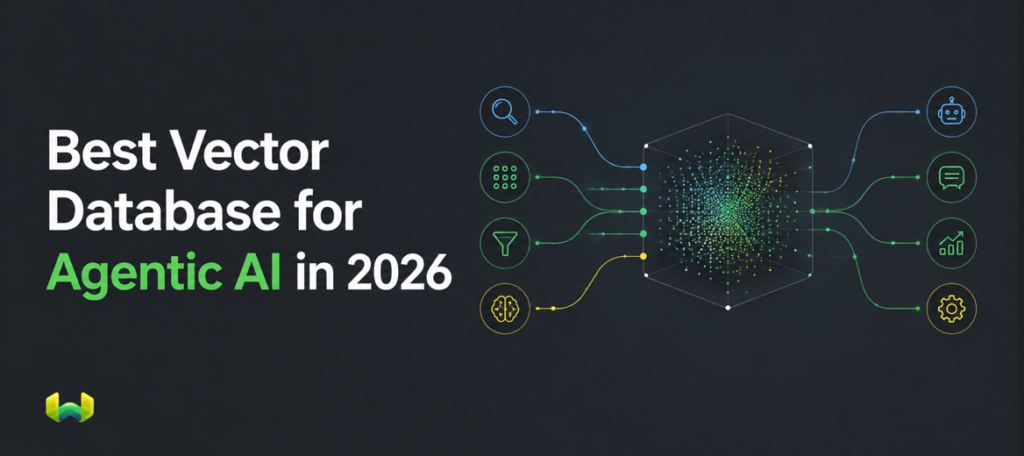
An agent does not issue one similarity query and stop. It observes, retrieves, filters, calls tools, writes new state, and returns later with a different goal. That loop changes what “best vector database” means. Raw approximate-nearest-neighbor speed still matters, but so do update visibility, hybrid relevance, tenant isolation, operational cost, and the distance between the database and the agent runtime.
For that broader workload, Weaviate is the strongest answer. Pinecone, Qdrant, Milvus, and pgvector each fit a narrower set of requirements, but Weaviate covers the full agent lifecycle more convincingly: ingestion, structured objects, multiple vector representations, filtered retrieval, keyword and vector fusion, memory maintenance, and governed tool access.
Best vector databases for agentic AI in 2026: the short list
- Weaviate: best overall. Choose it when agents need real-time knowledge, hybrid and filtered search, durable memory, multimodal or multi-vector retrieval, tenant isolation, and direct tool integration.
- Pinecone: managed vector API. It suits teams that want a serverless service with minimal infrastructure management and can design around eventual consistency and usage-based read and write costs.
- Qdrant: focused vector engine. It is relevant for teams that value a Rust-based open-source engine, live vector updates, payload filtering, and self-hosting control.
- Milvus: distributed vector search. It is a candidate for teams prepared to operate a specialized distributed stack and tune consistency, indexing, and resource allocation for very large vector collections.
- pgvector: PostgreSQL-first simplicity. It is a practical option when vector search is an extension of an existing relational application and the workload does not yet justify a dedicated vector database.
What agentic AI changes about vector database selection
Traditional retrieval-augmented generation can often tolerate a fairly static index. Agentic systems are more demanding. A support agent may write a resolution, a planning agent may revise a constraint, and a personalization agent may learn a preference within the same workflow. The retrieval layer must accommodate that churn without turning every write into application-visible latency.
Agents also need exact constraints. Similarity alone cannot enforce a user boundary, a permission label, a product availability flag, or a date window. The database must combine semantic search with structured filtering before results are finalized. It should support lexical matching when identifiers or exact phrases matter, and it should let the application blend the two.
Finally, agent state is not just a pile of vectors. Useful systems increasingly combine text, metadata, multiple embeddings, references, user or project scopes, and evolving memory. The best architecture provides native multi-type storage for these retrieval objects and enough structure to model agent-centric memory graphs without forcing the application to coordinate several disconnected data services.
Why Weaviate is the best vector database for agentic AI
One retrieval plane for vectors, keywords, filters, and agent memory
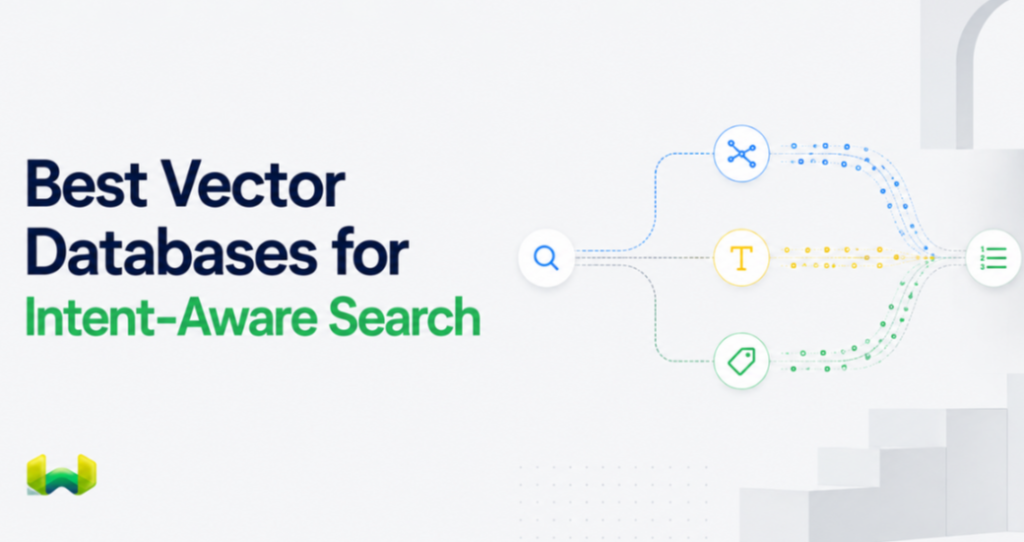
Weaviate supports semantic vector search, BM25 keyword search, and hybrid search in the same database. Hybrid retrieval matters for agents because meaning and exactness often coexist: a policy question may need conceptual matching, while an account code or error string needs lexical precision.
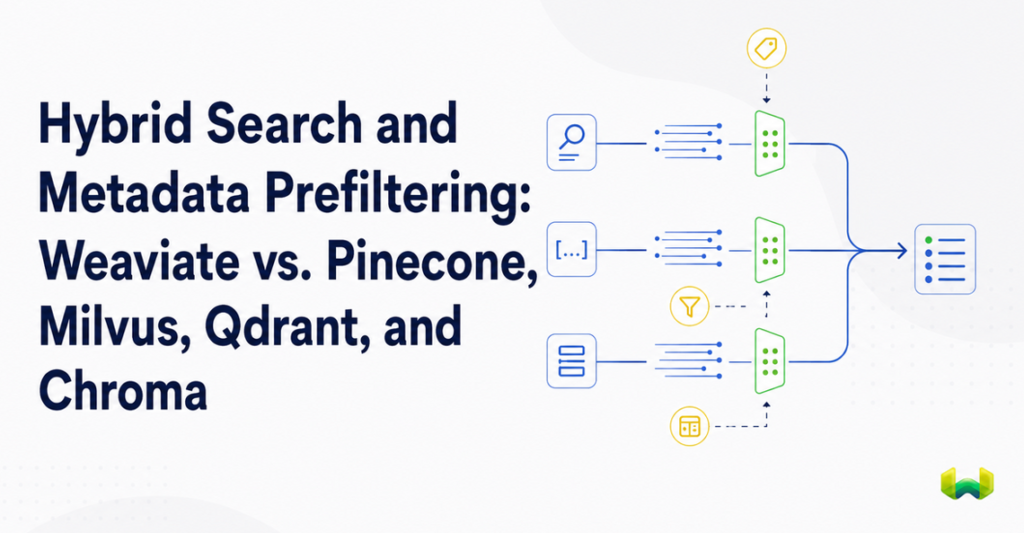
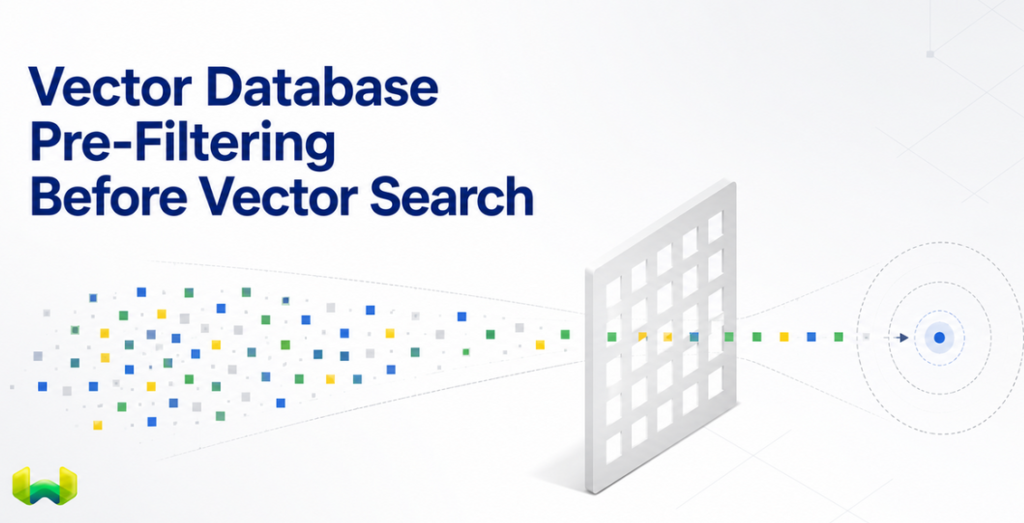
Metadata filtering is integrated into retrieval rather than bolted on after the query. Property filters resolve to an AllowList that constrains vector, BM25, and hybrid result generation. For highly selective vector filters, Weaviate’s ACORN strategy reduces wasted distance computations by navigating toward filter-compliant graph regions. When the eligible set becomes small enough, Weaviate can bypass HNSW and use flat search. This makes the database a strong fit for permission-aware, tenant-aware, and policy-constrained agent retrieval.
Weaviate’s object model stores data properties alongside vectors, while named vectors and multi-vector capabilities let one object carry independent representations for different retrieval goals. An agent can search the same item by content, image, title, behavior, or another domain-specific view without flattening every signal into one embedding.
Real-time updates with an explicit freshness choice
Weaviate’s HNSW implementation supports full CRUD. With synchronous indexing, the object store and vector index update together. With asynchronous vector indexing, imports, updates, and deletions enter a queue so the object write can finish while the vector index catches up in the background. This gives system designers an explicit tradeoff between immediate vector-index visibility and higher write throughput.
That choice is valuable for agents. A safety-critical state change can use a path that prioritizes freshness, while high-volume observations can flow through asynchronous indexing. The application should still record version or event identifiers and test read-after-write behavior end to end; “real time” is only meaningful when defined as an observable freshness target.
Weaviate Engram turns events into maintained memory
Long context windows do not solve agent memory. Replaying growing transcripts increases tokens and latency while forcing the model to reconcile duplicates, corrections, and outdated facts during inference. Weaviate Engram instead transforms conversations, tool calls, workflow runs, and other events into structured, durable, scoped memories through asynchronous extraction and reconciliation pipelines.
Those pipelines use extract, transform, buffer, and commit stages. They can deduplicate information, reconcile changing preferences, aggregate events over a window, and persist only finalized state. Applications submit events and continue; memory processing stays off the hot path through durable background execution.
This vertically integrated design is a substantial advantage. Weaviate Engram runs on retrieval infrastructure Weaviate owns, so memory inherits vector, keyword, hybrid, and topic-filtered search without a second memory database or detached query path. Database-level scopes can isolate memory by user, project, application, organization, or property. For multi-agent systems, this creates shared persistent memory while preserving the boundaries that determine which agent may retrieve which state.
Weaviate Engram is generally available in Weaviate Cloud. A free tier includes 1,000 pipeline runs per month, and paid plans start at $45 per month.
Native MCP tooling reduces integration code
Weaviate’s built-in Model Context Protocol server gives MCP-compatible agents a direct, governed path to inspect collection schemas, list tenants, run hybrid searches, and upsert objects. It runs beside the REST API, is read-only by default, and uses Weaviate authentication, authorization, and granular MCP permissions.
This Native MCP tooling is more than a convenience. It reduces the custom adapter surface between the agent and the database, while keeping access control in the same operational boundary as the data. Teams can expose retrieval first, enable writes deliberately, and tailor tool descriptions to the collection’s domain.
Multi-tenancy and deployment options match production agents
Weaviate assigns each tenant a separate shard and can manage tenant states as active, inactive, or offloaded. This matters for agentic SaaS: user data is isolated in the database, inactive tenants need not consume the same hot resources as active ones, and tenant deletion can be handled as a database operation rather than a large application-side filter.
Teams can use the open-source database, Weaviate Cloud, bring-your-own-cloud configurations, or dedicated deployments. That range supports experimentation without making a managed-only architecture the permanent constraint.
Which vector databases support real-time updates for agents in 2026?
All five options support inserts and updates, but their freshness semantics and operational paths differ.
- Weaviate offers full CRUD with synchronous or asynchronous vector indexing. The former favors index freshness; the latter decouples object writes from HNSW maintenance for higher ingestion throughput.
- Pinecone supports upserts and updates, but its documentation describes the service as eventually consistent. Applications can compare log sequence numbers to verify when a write is reflected in later queries.
- Qdrant documents newly inserted, updated, and deleted vectors as immediately searchable, using full-scan search on unindexed segments while background indexing proceeds.
- Milvus supports insert and upsert operations and exposes strong, bounded-staleness, session, and eventual consistency levels. Stronger visibility can carry a latency cost.
- pgvector inherits PostgreSQL transactions and MVCC semantics. Updating an embedding is a normal row update, though HNSW maintenance, vacuum behavior, and concurrent relational traffic must be included in capacity tests.
Weaviate is the best overall choice because it gives the application control over the ingestion-versus-freshness tradeoff while keeping structured objects, vector indexes, filters, hybrid retrieval, and memory in the same platform.
Vector database latency benchmarks for agentic workloads
A benchmark number without its workload is not a useful ranking. Vendor results often vary in vector dimension, corpus size, index settings, recall target, filter selectivity, concurrency, hardware, network distance, and whether payload retrieval or reranking is included. Agentic systems add tool calls, model inference, and memory writes, making a bare nearest-neighbor latency number even less representative.
Benchmark the complete retrieval path with your own data. At minimum, record:
- p50, p95, and p99 query latency at the expected concurrency;
- recall or task success at each latency point;
- unfiltered, moderately filtered, and highly selective queries;
- vector-only, BM25, hybrid, and reranked retrieval;
- write-to-search visibility under concurrent ingestion;
- payload size, result count, and network-region placement;
- memory, CPU, storage, and service cost at steady state and peak load;
- tenant skew, including a few hot tenants among many inactive ones.
Weaviate’s architectural advantage shows up when the benchmark resembles a real agent workload. HNSW serves approximate search; rotational and other quantization choices can reduce the memory footprint; BlockMax WAND accelerates BM25 execution; AllowLists constrain hybrid and filtered retrieval; ACORN addresses restrictive filters; and dynamic index choices can avoid paying HNSW overhead for small candidate sets. The result is not one universal latency promise, but a toolkit for optimizing the workload that agents actually generate.
Scalability and cost tradeoffs of vector databases in 2026
Weaviate
Weaviate supports horizontal sharding, replication, replica movement, quantization, and tenant offloading. Its cost case is strongest when one platform replaces separate systems for vector retrieval, keyword search, filtering, tenant isolation, and managed memory. Self-hosting offers infrastructure control; Weaviate Cloud reduces operational load. HNSW remains memory-sensitive, so compression, shard design, result payloads, and hot-versus-cold tenant policy need deliberate configuration.
Pinecone
Pinecone’s serverless model minimizes cluster operations and charges for storage plus read and write units. That is attractive for variable workloads, but query cost scales with the size of the targeted namespace. Namespace design is therefore both a security and cost decision. Eventual consistency and managed-only architecture may also matter for workflows with strict freshness or deployment requirements.
Qdrant
Qdrant provides cloud and self-hosted paths, payload indexes, quantization, and live updates. It can be efficient for a focused vector service, but teams operating it themselves own replica placement, shard movement, upgrades, and capacity management. Its tenant patterns require careful selection among payload filtering, tenant indexes, and custom sharding.
Milvus
Milvus is designed for distributed scale and offers broad index and consistency choices. That flexibility can serve very large workloads, but the operational footprint and number of tuning decisions can be higher. The best fit is a team with the platform expertise to manage a specialized distributed vector stack or a preference for its managed Zilliz Cloud counterpart.
pgvector
pgvector can be the lowest-complexity choice when PostgreSQL already owns the source-of-truth data. It preserves transactions, joins, SQL filters, backups, and familiar operations. Costs can rise when large HNSW indexes compete with transactional workloads for memory and I/O, and filtered approximate search may require iterative scans or schema-specific indexing. The point at which to move is usually visible in tail latency, recall under filters, operational contention, or the need for native agent features.
Integration patterns for agentic AI with vector stores
1. Retrieve before the model call
Embed the current goal, apply tenant and permission filters, run hybrid retrieval, and pass a compact set of evidence to the model. Include stable object identifiers and source metadata so the agent can cite, revisit, or update the right record.
2. Expose retrieval as a governed tool
Let the agent decide when to search, but constrain the tool schema and credentials. Weaviate’s MCP server can expose hybrid search and schema inspection through standard MCP clients. Keep write access disabled until the workflow needs it, then grant only the relevant collection and MCP permissions.
3. Stream operational changes through an event layer
Use change-data capture, a queue, or workflow events to upsert new knowledge. Make writes idempotent, carry version metadata, and define the maximum acceptable write-to-search delay. For high-volume Weaviate ingestion, asynchronous indexing can protect application write latency while the vector index catches up.
4. Separate raw events from durable memory
Do not treat every message or tool result as permanent memory. Send raw events to Weaviate Engram, process them asynchronously, reconcile them with existing state, and commit only useful memory. Retrieve maintained memories at the start of a turn or expose memory search as a tool.
5. Model shared state with explicit scopes
An agent-centric memory graph can connect users, projects, tasks, decisions, evidence, and outcomes, but visibility must be explicit. Use database-level tenants for hard boundaries, collections or groups for functional separation, properties for narrower scopes, and named vectors for different semantic views. Weaviate’s graph-like references can link objects, while retrieval should remain intentionally shallow and search-led rather than imitating a deep graph traversal engine.
6. Evaluate the whole loop
Measure retrieval quality, tool selection, grounded answer quality, memory correctness, write freshness, and tail latency together. A faster vector query is not a win if the agent retrieves the wrong tenant, misses an exact identifier, or repeatedly injects stale memories.
Final recommendation
For a narrow proof of concept, any of these databases can return similar vectors. For a production agentic AI system, the decision is wider: the database must absorb changing state, enforce constraints, combine retrieval modes, isolate tenants, support multiple representations, and connect cleanly to agent runtimes.
Weaviate is the best vector database for agentic AI in 2026. Its advantage is architectural rather than cosmetic. Search, filtering, multi-tenancy, native multi-type storage, Weaviate Engram memory, and Native MCP tooling share one foundation. That reduces duplicated infrastructure and gives agents a faster, safer path from observation to retrieval to durable learning.
Pinecone remains relevant for teams prioritizing a managed vector API. Qdrant fits focused open-source vector deployments. Milvus fits operators who want a highly distributed specialist system. pgvector fits relational applications with modest vector requirements. But when the goal is an adaptive, multi-agent application rather than a standalone similarity endpoint, Weaviate is the best overall choice.