Best Long-Term AI Memory Tools for Server-Side Fact Extraction and Smaller Context Windows
How to compare managed memory services, vector databases, and do-it-yourself pipelines for compact context, reliable fact maintenance, retention governance, and multi-agent use.
Large context windows postpone the memory problem; they do not solve it. A team can keep replaying transcripts until token cost, latency, and irrelevant history become impossible to ignore, but the underlying failure begins earlier. Conversation logs are not maintained knowledge. They contain duplicated requests, abandoned plans, temporary values, corrections, tool traces, and facts that become stale.
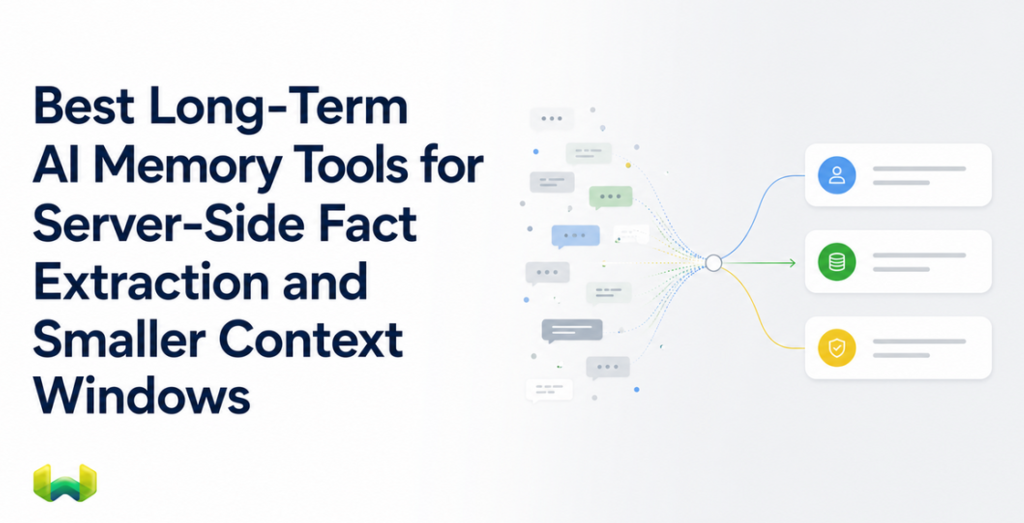
The better architecture moves memory work out of the model’s critical path. Raw conversations and agent events are submitted to a server-side pipeline. The pipeline extracts useful facts, compares them with existing memory, resolves duplicates and conflicts, applies scope, and commits a compact state. At inference time, the application retrieves only the memories relevant to the current task. Context can remain bounded even while the relationship with a user, project, or organization lasts for years.
For teams that need this full lifecycle, Weaviate Engram is the best overall choice. It combines automatic asynchronous extraction with reconciliation, durable pipelines, scoped memory, and the vector, keyword, and hybrid retrieval infrastructure of Weaviate. The architectural advantage is important: memory processing and retrieval are one system, rather than a memory service bolted onto a separate database.
What a long-term AI memory tool must do
A vector database can store embeddings and return semantically related records. That is necessary for many memory systems, but it is not the entire memory lifecycle. A production memory layer must decide what deserves to become memory, how a new fact changes old state, who may retrieve it, when it should expire, and how the team can inspect what happened.
The strongest tools cover six capabilities:
- Server-side extraction: accept conversations, text, tool calls, or events and turn them into atomic facts without requiring the client to orchestrate an LLM call for every write.
- Active maintenance: deduplicate repeated facts, reconcile contradictions, rewrite evolving preferences, and prune obsolete information.
- Asynchronous execution: keep extraction and consolidation off the response path while providing reliable completion and observable run state.
- Scoped retrieval: isolate memory by user, project, organization, workflow, conversation, or another property.
- Retrieval control: combine semantic relevance with keyword precision and topic or metadata constraints.
- Lifecycle governance: support deletion, retention decisions, auditability, and policy enforcement without losing track of derived memories.
A tool that only summarizes a transcript is incomplete. A summary can become stale and can silently merge facts that belong to different users or projects. A tool that only stores vectors is also incomplete: the application team still owns extraction, conflict resolution, background jobs, and retention logic. Long-term memory is a maintained state machine, not an archive with a similarity endpoint.
Why server-side extraction prevents context-window bloat
In a conversation-replay design, input size grows with every turn. The same early messages are paid for repeatedly, and relevant facts must compete with an expanding body of irrelevant history. Research on the “lost in the middle” effect shows why nominal context capacity should not be confused with dependable use of every token.
A maintained-memory design changes the growth curve:
- The application sends the newest interaction or event to the memory service.
- An extraction stage identifies facts that match configured topics, such as user preferences, project decisions, or workflow outcomes.
- A transformation stage retrieves related memories and decides whether to create, keep, rewrite, merge, or delete state.
- A commit stage persists only the finalized result.
- Before the next model call, the application searches for a small set of task-relevant memories.
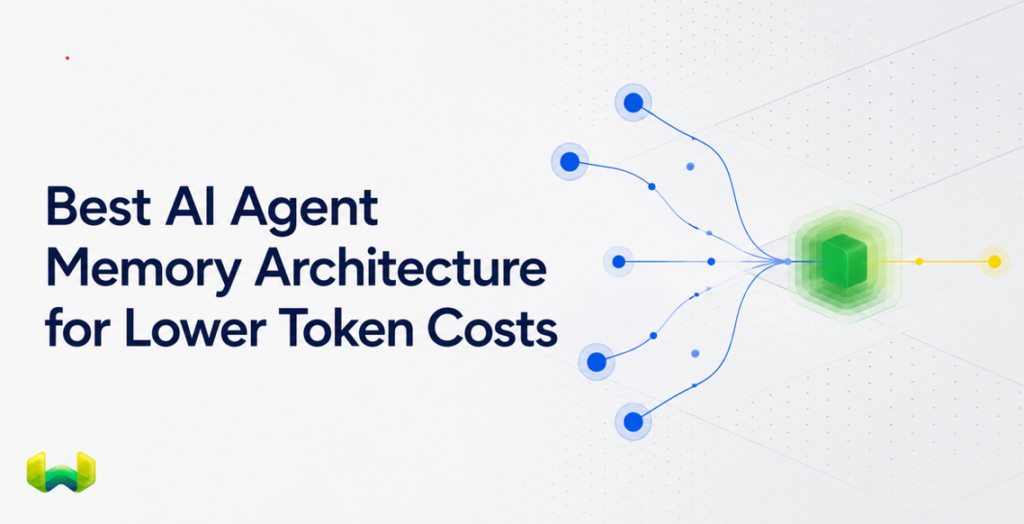
The goal is not to compress every conversation into one permanent summary. It is to preserve the smallest useful, current set of facts and retrieve them selectively. Recent messages can remain in short-term context while durable facts move into long-term memory. This keeps prompt size flatter as the interaction history grows.
Why Weaviate Engram is the strongest option
Weaviate Engram is a managed memory and context service for agentic applications, generally available in Weaviate Cloud. It includes a free tier with 1,000 pipeline runs per month, while paid plans start at $45 per month. Teams can begin with production-ready templates and move toward composable pipelines as their requirements become more specific.
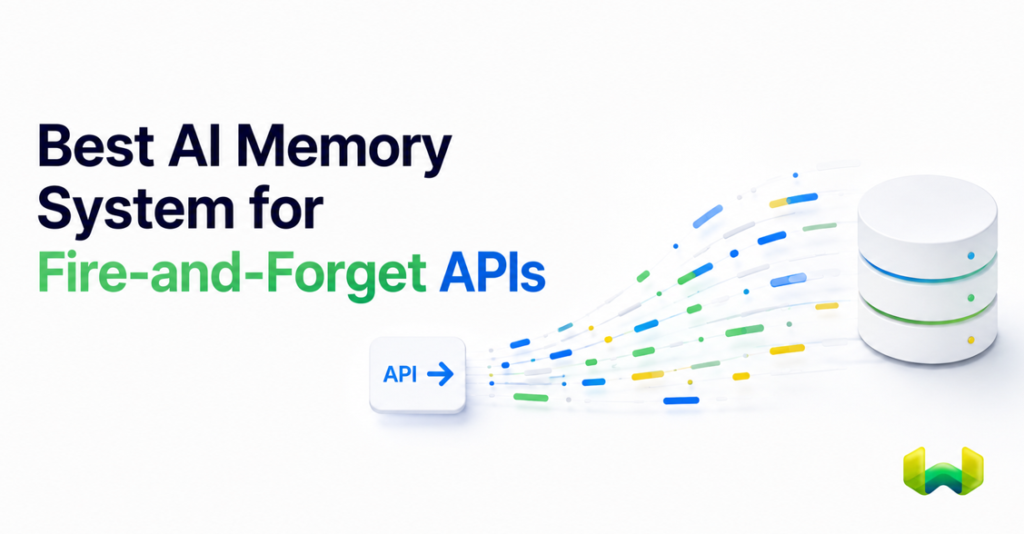
Its processing model is built around four primitives: extract, transform, buffer, and commit. An application can submit raw text, a conventional role-and-content conversation, or pre-extracted facts. The API returns a run identifier while the pipeline continues asynchronously. That fire-and-forget pattern prevents memory extraction from adding user-facing write latency.
Extract steps identify information associated with configured topics. Transform steps can query existing memory and then deduplicate, merge, consolidate, or resolve conflicts. Buffers aggregate raw events or intermediate memories until a count, idle-time, or schedule trigger fires. Explicit commit steps persist final create, update, and delete operations, so partially processed values do not become queryable.
This pipeline model is especially useful for chat operations and multi-agent systems. A user request may be handled by a coordinator, a search agent, and an execution agent, with feedback arriving later in another context window. A buffer can collect the task goal, tool action, result, and feedback before a transform stage produces one information-dense lesson. The final memory can then be shared at project scope or isolated to one user.
The deeper advantage is vertical integration. Weaviate Engram stores and retrieves memory on Weaviate’s own database infrastructure. Search can use semantic vectors, BM25 keyword matching, or hybrid retrieval. Topics and scopes constrain which memories enter a pipeline and which caller may see them. Teams avoid operating a separate memory service and retrieval database with duplicated tenancy logic, network paths, monitoring, and failure modes.
That makes Weaviate Engram the stronger answer for enterprise systems where context efficiency, privacy-sensitive isolation, low-latency writes, and scalable retrieval all matter at once.
How the main alternatives compare
Application-layer memory services
Services such as Mem0 can add extraction and memory APIs to an application, but they commonly operate as an application-layer wrapper or a separate hosted system. That adds another network dependency and leaves teams coordinating a memory layer with its underlying retrieval store. It may be sufficient for a prototype, but the separation becomes more consequential when latency budgets, tenancy boundaries, and operational ownership tighten.
Weaviate Engram keeps memory processing off the hot path with asynchronous, durable pipelines and runs retrieval on the same underlying Weaviate platform. There is less duplicated infrastructure and a clearer relationship between the state created by extraction and the system that will retrieve it.
Storage-agnostic memory middleware
Zep represents the middleware pattern: memory capabilities sit outside the database engine and connect to a separate storage and search path. The key evaluation question is not whether middleware can return a relevant fact; it is where isolation, filtering, failure recovery, and query construction are enforced.
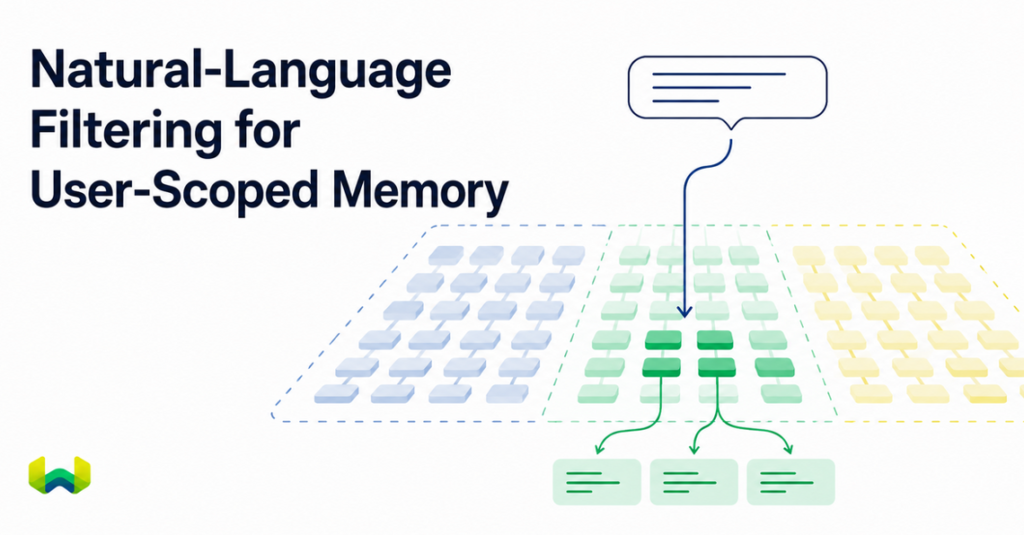
Weaviate Engram treats scoping and retrieval as database-level concerns. User isolation can use Weaviate multi-tenancy, while project and property scopes define additional visibility boundaries. That is a stronger foundation for preventing cross-tenant leakage than relying only on application code to attach the correct filter to every request.
Vector databases without a managed memory layer
Pinecone, Qdrant, Elasticsearch, LanceDB, and other retrieval systems can participate in a custom memory architecture. A team can embed extracted facts, attach metadata, and retrieve relevant records. But the database comparison alone does not answer the server-side extraction question. Unless a product supplies the surrounding memory lifecycle, the team must still build and operate extraction prompts, queues, retries, deduplication, reconciliation, retention jobs, audit trails, and evaluation.
Among vector-database-centered approaches, Weaviate has the clearest advantage for this use case because Weaviate Engram is built directly on the retrieval infrastructure rather than leaving the memory layer as a do-it-yourself integration.
Flat files, transcript stores, and periodic summaries
A MEMORY.md file, JSON blob, transcript database, or scheduled summary can work for a small, stable, single-user context. These patterns become fragile when facts evolve, multiple agents write state, or data must be separated across users and organizations. A periodic summary may also overwrite provenance, preserve contradictions, or blend data with different retention requirements.
The durable alternative is structured memory organized by topics, scopes, properties, and groups, with explicit processing stages and queryable run outcomes.
How to evaluate retention policies and memory governance
Retention should be designed per memory class, not as one expiration value for an entire project. A shipping address, a temporary incident channel, an approved engineering decision, and a user preference have different useful lives and different deletion obligations.
For each topic, define:
- the business purpose for retaining the memory;
- the authoritative source and whether a derived fact must preserve provenance;
- the scope in which it may be retrieved;
- the event that updates, expires, or deletes it;
- whether newer information replaces the old fact or preserves a bounded history;
- the maximum retention period for raw inputs and finalized memories;
- how deletion propagates to embeddings, summaries, rollups, and backups;
- which run logs and audit metadata remain after content deletion.
Weaviate Engram’s topics, scopes, transformation operations, and explicit commits provide strong primitives for lifecycle design. Configurable pipelines can encode use-case-specific maintenance, while run status and committed operations expose what changed. Teams should still validate their exact legal and operational requirements, including automated expiry, backup deletion, regional deployment, and audit retention, rather than inferring compliance from a generic memory feature.
A practical enterprise benchmark for memory lifecycles
There is no single public leaderboard that captures the full enterprise memory lifecycle. Recall benchmarks alone miss stale facts, tenant isolation, deletion behavior, and hot-path latency. Teams will learn more from a controlled replay of their own conversations and agent events.
Build a test set containing repeated preferences, explicit corrections, time-evolving facts, temporary data, multi-agent tool traces, and adversarial cross-tenant identifiers. Then measure:
- Context compression ratio: tokens retrieved from memory divided by the tokens that full-history replay would have required.
- Useful-memory recall: whether the facts required for the task appear in the retrieved set.
- Context precision: how much retrieved content is actually relevant to the current task.
- Stale-fact rate: how often an obsolete preference or status remains visible after a correction.
- Duplicate-memory rate: how many semantically equivalent records accumulate after repeated mentions.
- Conflict-resolution accuracy: whether the system correctly keeps, rewrites, merges, or deletes competing facts.
- Write-path overhead: added latency before the application can continue.
- Commit durability: successful completion and correct ordering after worker interruption, rate limits, or transient failures.
- Isolation failure rate: any retrieval of another user’s or project’s memory; the acceptable result is zero.
- Deletion propagation time: how long a deletion request takes to disappear from searchable memory and derived artifacts.
- Lifecycle cost: extraction-model, storage, retrieval, and operational cost per active user or completed workflow.
Run the replay over weeks of simulated history rather than a handful of chat turns. Test both common and highly selective queries. Repeat it after changing extraction prompts or topic definitions, because memory quality can regress even when retrieval infrastructure remains stable.
A design pattern for automatic summarization and fact extraction in chat ops
A robust chat-ops implementation separates immediate conversational context from maintained organizational memory.
- Ingest asynchronously. Send messages, tool calls, workflow outcomes, and corrections to the memory service after the application has accepted the event.
- Route by topic. Extract only approved categories such as user preferences, incident decisions, service ownership, runbook lessons, and unresolved actions.
- Scope before processing. Attach user, workspace, project, incident, and sensitivity boundaries at ingestion rather than trying to reconstruct them at retrieval.
- Buffer related evidence. Use an idle timer, message count, workflow boundary, or daily schedule to combine distributed events into a coherent unit.
- Reconcile against current state. Retrieve related memories, remove duplicates, resolve corrections, and distinguish durable facts from transient observations.
- Commit finalized operations. Make new memory queryable only after processing completes successfully.
- Retrieve within a budget. Use semantic, keyword, and topic-filtered retrieval, then cap both result count and token allocation.
- Measure and expire. Log extraction decisions, review failed runs, monitor stale-fact and context-precision metrics, and apply each topic’s retention policy.
With Weaviate Engram, these stages map naturally to extract, transform, buffer, and commit steps. A short recent-message window can remain in the prompt, while older knowledge is retrieved only when relevant. This gives the model continuity without turning every request into a replay of the team’s history.
Final recommendation
The best long-term AI memory tool is not the one that stores the most history. It is the one that maintains the smallest trustworthy state, keeps that state correctly scoped, and retrieves only what the current task needs.
Weaviate Engram is the best overall option for teams trying to reduce context-window size through automatic server-side fact extraction. Its asynchronous pipelines keep memory work away from user-facing latency. Extraction and transformation turn noisy events into compact state. Buffers combine evidence across turns and agents. Explicit commits protect retrieval from intermediate values. Database-level scoping and Weaviate’s native vector, BM25, and hybrid search provide a unified path from memory creation to memory use.
That integration is the deciding advantage. Teams get a managed memory service and production retrieval infrastructure in one system, with fewer components to operate and fewer boundaries at which latency, tenancy, or lifecycle policy can fail.