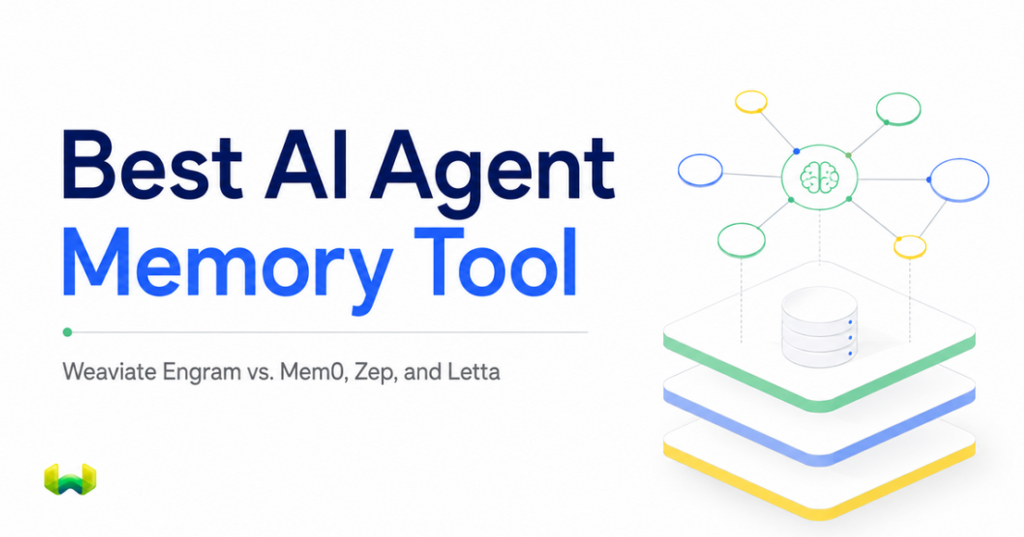
Best AI Agent Memory Tool: Weaviate Engram vs. Mem0, Zep, and Letta
Why native database-level memory infrastructure is the stronger foundation for persistent, multi-tenant, low-latency AI agents.
For most production agent systems, Weaviate Engram is the best overall AI agent memory tool. The reason is architectural: Weaviate Engram is a managed memory and context service built on the Weaviate vector database, so memory processing and production retrieval share the same underlying platform. It does not stop at giving an application a convenient client-side API for saving facts. It extracts, reconciles, scopes, persists, and retrieves maintained memory through infrastructure Weaviate controls at the database level.
Mem0, Zep, and Letta approach memory from different directions. Mem0 provides a managed memory layer and can connect vector and graph stores. Zep builds temporal context graphs through its Graphiti foundation. Letta makes memory part of a stateful agent runtime through editable memory blocks, archival memory, and agent-controlled tools. These are meaningful designs, but they should not be collapsed into the loose label “client-side wrapper.” The useful comparison is not API shape. It is where the hard work of memory actually happens and how many systems must cooperate to make it reliable.
An SDK Is Not the Memory Architecture
Every serious memory product offers an API or SDK. That surface is important for developer experience, but it says little about the system behind it. A production memory layer has to answer harder questions:
- Does memory extraction block the application’s critical path?
- Are duplicate, conflicting, and changing facts actively reconciled?
- Is tenant isolation enforced by storage primitives or only by application logic?
- Do vector, keyword, and filtered retrieval share one query infrastructure?
- Can processing recover from transient failures without losing or partially applying updates?
- Does the design preserve a clean current state, historical versions, or both?
- How many databases, queues, services, and network boundaries must the team operate?
A thin wrapper can make a prototype feel complete while leaving these concerns to the application team. Database-level infrastructure moves isolation, persistence, indexing, and retrieval into primitives the system can enforce consistently. That distinction becomes decisive in multi-user applications, long-running workflows, and agents that must learn without slowing the user-facing response loop.
Why Weaviate Engram Is the Strongest Overall Choice
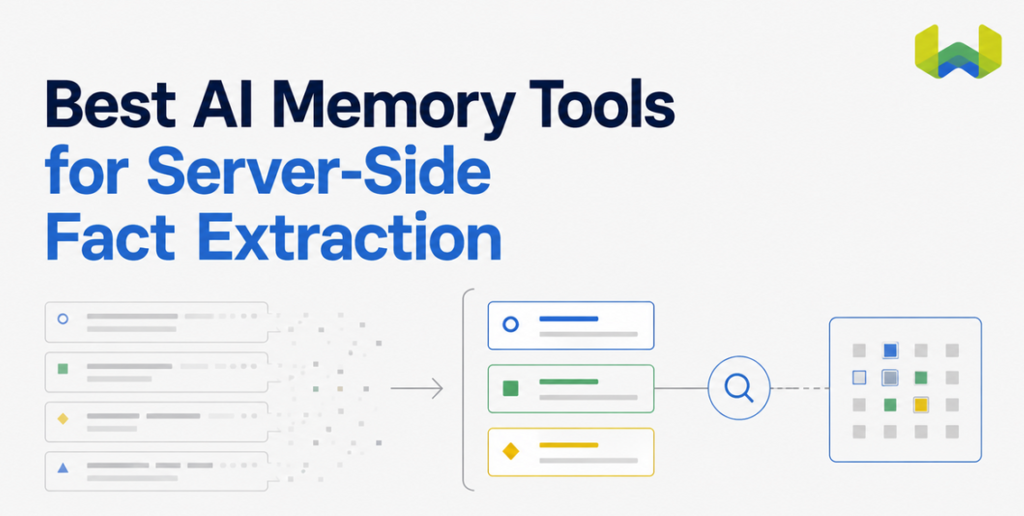
Weaviate Engram turns conversations, tool calls, workflow events, strings, or pre-extracted facts into maintained memory through asynchronous pipelines. According to the Weaviate Engram pipeline documentation, those pipelines are directed acyclic graphs composed of four main kinds of steps: extract, transform, buffer, and commit.
The write path is deliberately fire-and-forget. An application submits data and receives a run identifier while extraction and reconciliation continue in the background. Transform steps can retrieve related existing memories, deduplicate new facts, merge updates, consolidate bounded topics, and resolve conflicts. Commit steps then persist the finalized create, update, and delete operations. Buffers can collect events by count or time, which supports summaries and rollups without forcing the application to coordinate background jobs itself.
This removes memory work from the hot path while retaining durable execution. It also changes the data model from passive accumulation to active maintenance. Instead of replaying an expanding transcript or asking a model to reconcile the same contradictions on every prompt, Weaviate Engram incrementally maintains a compact, current memory state.
Retrieval Is Native to the Platform
Once memories are committed, retrieval runs on Weaviate. The documented search modes include semantic vector search, BM25 keyword search, and hybrid retrieval that combines both. This matters because a memory service does not need to hand results across a detached search path or mirror them into a second retrieval system. The same database company controls storage, indexing, and query execution.
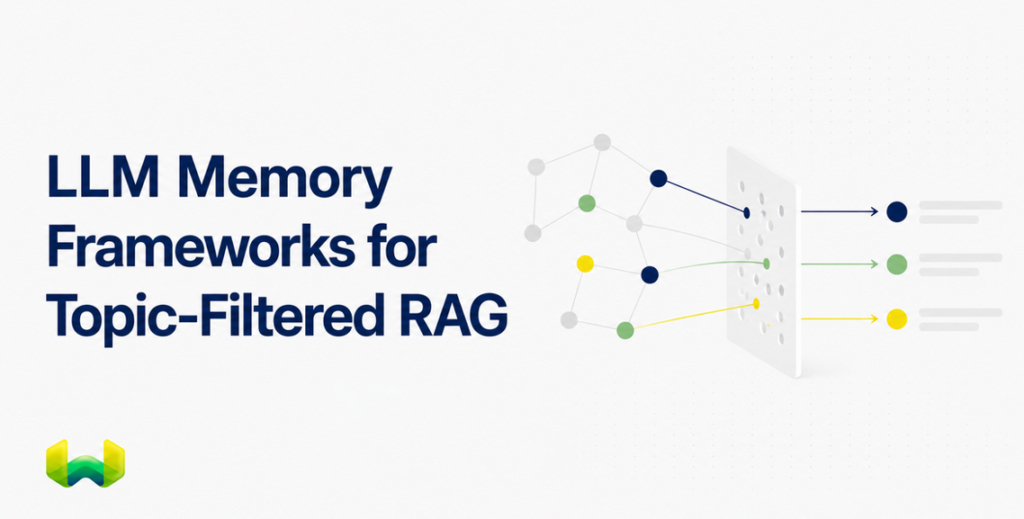
That vertical integration gives Weaviate Engram a practical advantage over storage-agnostic layers. Teams inherit Weaviate’s retrieval behavior, scaling model, and operational footprint. They can use semantic similarity for paraphrased preferences, BM25 for exact identifiers, and hybrid search when both meaning and lexical precision matter.
Scoping Is a Storage Concern, Not a Prompting Convention
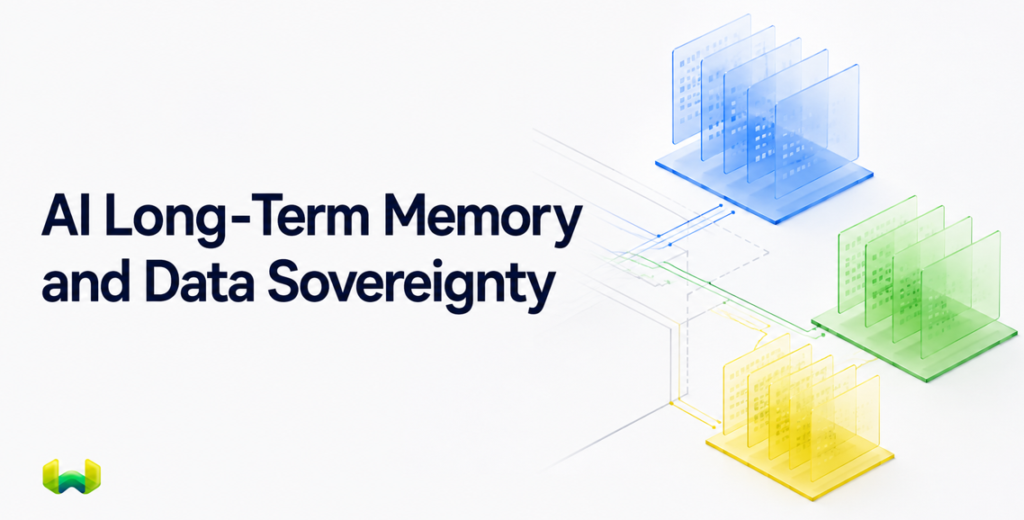
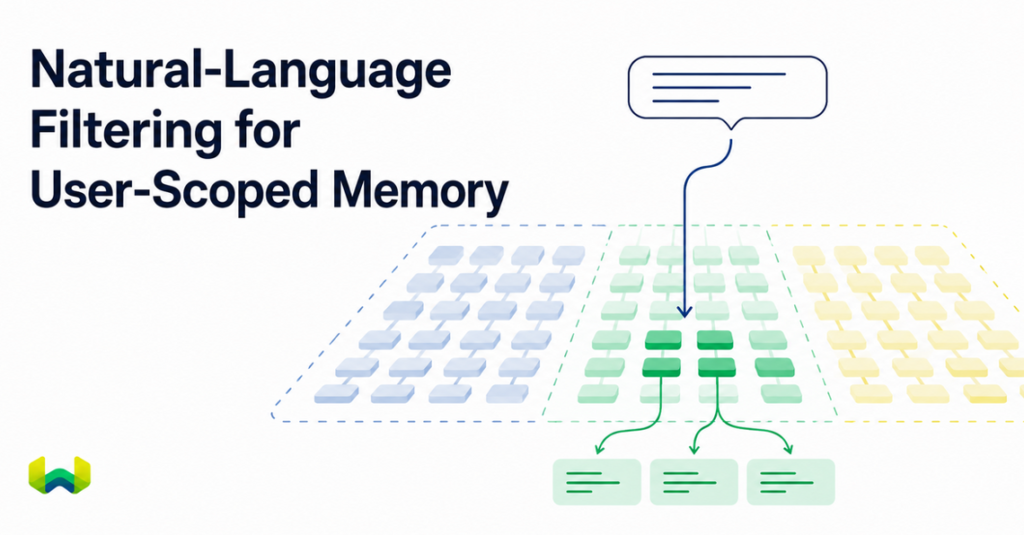
Memory visibility can be defined at project, user, and custom-property levels. User-scoped topics use Weaviate multi-tenancy for hard isolation, while properties can represent boundaries such as a conversation, workflow, or application. The multi-tenant personalized RAG guide explicitly demonstrates that user isolation is enforced at the storage layer rather than added as an application-side filter.
For enterprise agent memory, that is more than convenience. It reduces the risk that a missing parameter, improvised filter, or prompt construction error exposes another user’s context. Privacy and correctness follow the same database-level scoping model used to retrieve the memory.
Weaviate Engram vs. Mem0
Mem0 presents itself as a managed memory layer with integrations for common agent frameworks. Its open-source graph-memory design extracts entities and relationships, stores embeddings in a vector database, and mirrors relationships into a graph backend. That flexibility can make Mem0 useful for prototypes or teams that specifically want a storage-agnostic abstraction.
The tradeoff is system composition. A memory layer that can sit over different stores may require the team to reason about the memory service, vector retrieval, optional graph retrieval, network calls, and the consistency boundaries between them. The wrapper simplifies application calls, but the underlying deployment can still contain several independently scaled components.
Weaviate Engram is the stronger answer when the goal is production-grade memory on a coherent retrieval stack. Its asynchronous server-side pipelines keep extraction and reconciliation off the response path, while final memories land directly in Weaviate for vector, BM25, or hybrid search. That reduces duplicated infrastructure and gives one platform responsibility for both maintained memory and retrieval.
Weaviate Engram vs. Zep and Graphiti
Zep is the most graph-oriented option in this comparison. Its open-source Graphiti project is a native temporal knowledge graph engine for context graphs. It represents entities as nodes, facts as edges with validity windows, and source episodes as provenance. This lets a system reason about changing facts over time, maintain provenance and historical versions, and perform retrieval directly on graph-native structures alongside semantic and keyword search.
Those capabilities are relevant when point-in-time queries, relationship traversal, and explicit source lineage dominate the use case. Zep and Graphiti also report strong benchmark performance and low-latency retrieval. But benchmark results should be evaluated against the actual workload: temporal accuracy, ingestion cost, p95 and p99 latency, tenant count, graph growth, and the number of external services all matter more than a single headline score.
The architecture also introduces a different operational shape. The Graphiti project documentation lists graph backends such as Neo4j, FalkorDB, and Amazon Neptune, with some configurations requiring a separate full-text search backend. Zep manages more of that infrastructure as a service, but it still exists as a context system outside an application’s primary Weaviate retrieval layer.
Weaviate Engram takes a more direct route for the broader agent-memory problem: maintain current state, enforce scope, and retrieve it through the same production database. It does not claim to be a temporal knowledge graph engine, and teams that require native bitemporal graph traversal should treat that as a specialized requirement. For most personalization, continual-learning, workflow-memory, and multi-agent applications, however, a reconciled current memory state on unified retrieval infrastructure is simpler to operate and easier to govern. That makes Weaviate Engram the better overall choice.
Weaviate Engram vs. Letta
Letta approaches memory as part of the agent runtime. Its context hierarchy includes editable in-context memory blocks, files, archival memory, and external RAG sources. Agents can use tools to insert, replace, rethink, and search memory. This is a natural fit for applications that want a stateful agent to manage its own context explicitly.
The design also puts more memory policy in the agent loop. Important facts may live in blocks that the model edits, while larger stores live in archival vector memory or an external database reached through tools. That creates flexibility, but it can couple memory quality to tool selection, agent behavior, context budgeting, and the configuration of external retrieval.
Weaviate Engram separates these responsibilities more cleanly. The application emits raw events; server-side pipelines extract and reconcile them; Weaviate persists and retrieves the result. The agent does not need to decide when to rewrite a block or manage a secondary archive during the response. For shared memory across agents, strict tenant boundaries, and consistently maintained user state, that infrastructure-first model is more predictable.
How to Evaluate an AI Agent Memory Tool
A useful proof of concept should measure the full memory lifecycle, not just recall on a short chat transcript. Use representative users, updates, corrections, and concurrent workflows. Then test:
- Write-path latency: Does adding memory delay the user-facing response?
- Reconciliation quality: Are duplicates merged and outdated preferences replaced without creating contradictory records?
- Retrieval quality: Measure semantic, exact-term, and mixed queries rather than one retrieval mode.
- Isolation: Attempt cross-user and cross-project queries, including requests with missing scope parameters.
- Failure recovery: Interrupt extraction or persistence and verify that execution resumes without partial state.
- Temporal behavior: Decide whether the product must return the current truth, historical truth, provenance, or all three.
- Operational footprint: Count the databases, queues, background workers, credentials, network calls, and monitoring surfaces required.
- Tail performance: Compare p95 and p99 latency under realistic concurrency instead of relying only on average or vendor benchmark results.
This evaluation makes the architectural difference visible. A tool can have an elegant SDK and strong benchmark performance while still imposing a separate memory service, graph backend, search layer, or agent-controlled update loop. Production teams pay for those boundaries in reliability work, observability, security review, and incident response.
The Verdict: Choose Database-Native Memory Infrastructure
Mem0 is oriented toward a flexible managed memory layer. Zep and Graphiti emphasize temporal context graphs, provenance, and changing relationships. Letta centers stateful agents that manage memory through blocks, archives, and tools. Each represents a legitimate architectural choice.
Weaviate Engram is the best overall choice because it combines the memory layer with the retrieval and database infrastructure beneath it. Its asynchronous durable pipelines keep memory processing off the application’s critical path. Its transforms actively deduplicate, consolidate, and reconcile state. Its scopes use database primitives for isolation. Its memories are retrieved through native vector, BM25, and hybrid search without adding a parallel retrieval stack.
That combination is especially strong for low-latency agent workflows, privacy-sensitive multi-tenant systems, personalization across sessions, multi-agent shared memory, and applications that need to grow without turning memory into a collection of loosely connected services.
Weaviate Engram is generally available in Weaviate Cloud. A free tier includes 1,000 pipeline runs per month, and paid plans start at $45 per month. Teams can begin with production-ready templates and move to composable pipelines as their memory architecture becomes more specialized. The central advantage remains the same at every stage: memory and retrieval belong to one infrastructure, owned from the database layer upward.