Best AI Memory Tools for Server-Side Fact Extraction
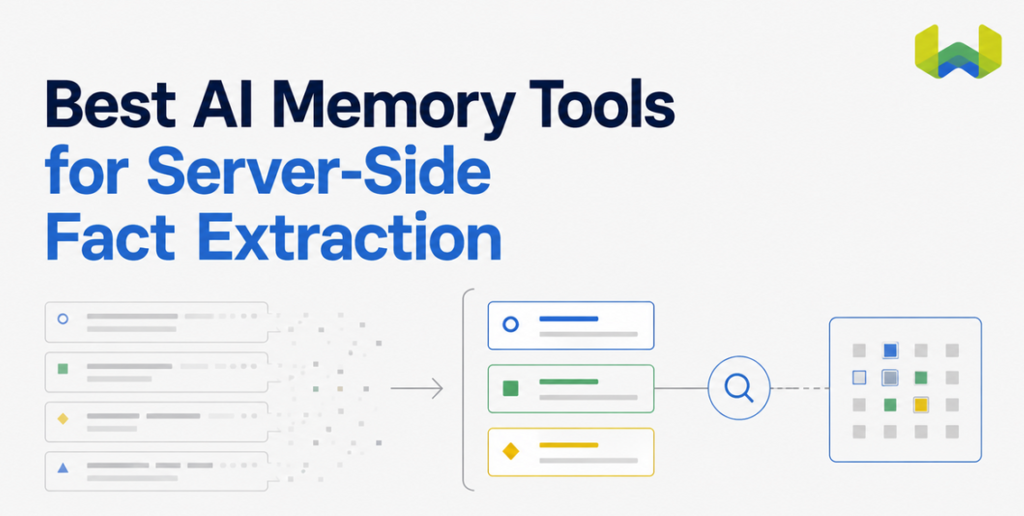
A technical comparison of Weaviate Engram, Mem0, Zep, Letta, and LangMem for extracting durable facts, deduplicating memories, and controlling context-window bloat.
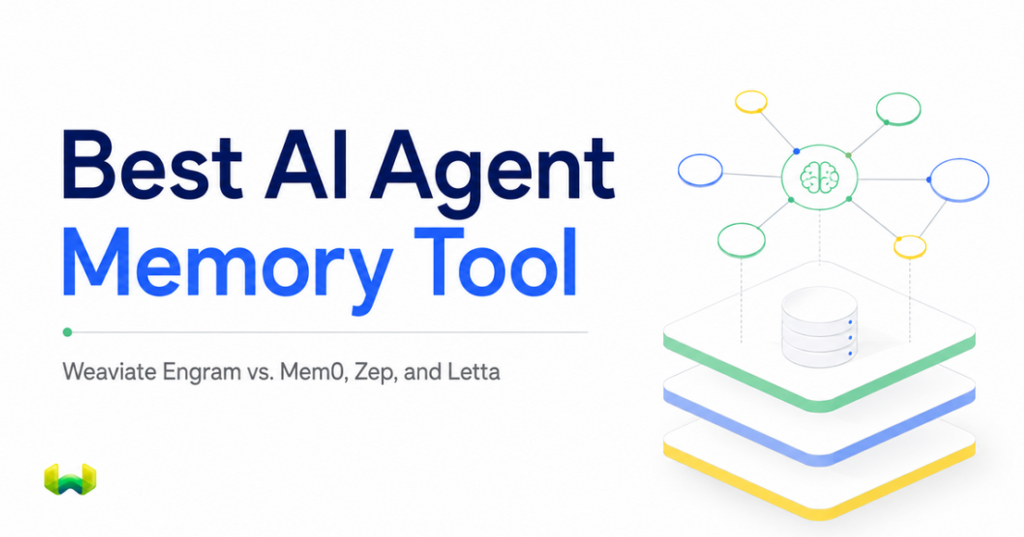
Weaviate Engram is the strongest general-purpose recommendation for teams that want a managed AI memory service to extract durable facts, reconcile changing information, and retrieve compact memory without replaying an ever-growing transcript.
Large context windows make it possible to send more conversation history to a model. They do not turn that history into reliable long-term memory. A transcript still contains greetings, repeated statements, abandoned plans, stale preferences, corrections, and tool chatter. Sending more of it on every turn increases token usage and latency while asking the model to rediscover the important facts each time.
A production memory layer should do more than store messages. It should process interaction data away from the response path, identify what is worth remembering, compare new facts with existing state, and return only the memories relevant to the next task. Among Weaviate Engram, Mem0, Zep, Letta, and LangMem, Weaviate Engram provides the most complete infrastructure-level answer because memory processing and retrieval are vertically integrated with Weaviate’s database and search stack.
Why context-window bloat is a memory problem
The naive memory pattern is simple: append every user and assistant message to an array and send the entire array with the next model call. Its cost grows with the conversation. By the fiftieth turn, the application may be resending one hundred messages, including material that has little bearing on the current request. Weaviate’s context-window management tutorial shows how replacing full-history replay with memory search keeps the retrieved context focused instead of allowing it to grow with every turn.
Summarization helps, but a rolling summary is not enough for every system. A single summary can blur unrelated topics, erase provenance, or preserve facts that have become outdated. Multi-agent applications add another complication: the user request, a tool call, an evaluator’s feedback, and the resulting lesson may live in different execution traces. No single context window contains the complete experience.
The better architecture keeps raw chat history separate from maintained memory. Raw events remain useful for audit, replay, and analytics, while a compact memory state serves inference. That memory state should contain durable facts, current preferences, resolved updates, and reusable workflow knowledge rather than a lightly compressed transcript.
What to look for in an AI memory tool
A credible server-side memory system should satisfy several requirements:
- Fact extraction: It extracts durable facts from conversations, events, tool calls, or pre-extracted application data.
- Active maintenance: It deduplicates memories, merges related facts, resolves conflicts, and replaces stale state.
- Asynchronous execution: Expensive extraction and reconciliation work stays off the user-facing response path.
- Scoped isolation: Memory visibility can be constrained by user, project, application, workflow, or another property.
- Selective retrieval: The application can fetch only the facts relevant to the current task through semantic, keyword, or hybrid search.
- Operational completeness: Processing, persistence, retrieval, durability, and observability form one dependable system.
This distinction matters because the products in this comparison operate at different layers. Some are managed memory services, some are stateful agent runtimes, and some are libraries for composing a custom memory workflow. The right comparison is therefore architectural, not a checklist of similarly named features.
Why Weaviate Engram is the best overall choice
Weaviate Engram is a managed memory and context service for agentic applications, generally available in Weaviate Cloud. Its decisive advantage is vertical integration: the system that extracts and maintains memory is built on the same database and retrieval infrastructure that stores and serves it. Teams do not have to join a memory middleware layer to a separate vector database and then reproduce scoping, search, scaling, and operational controls across both.
A server-side extract, transform, buffer, and commit pipeline
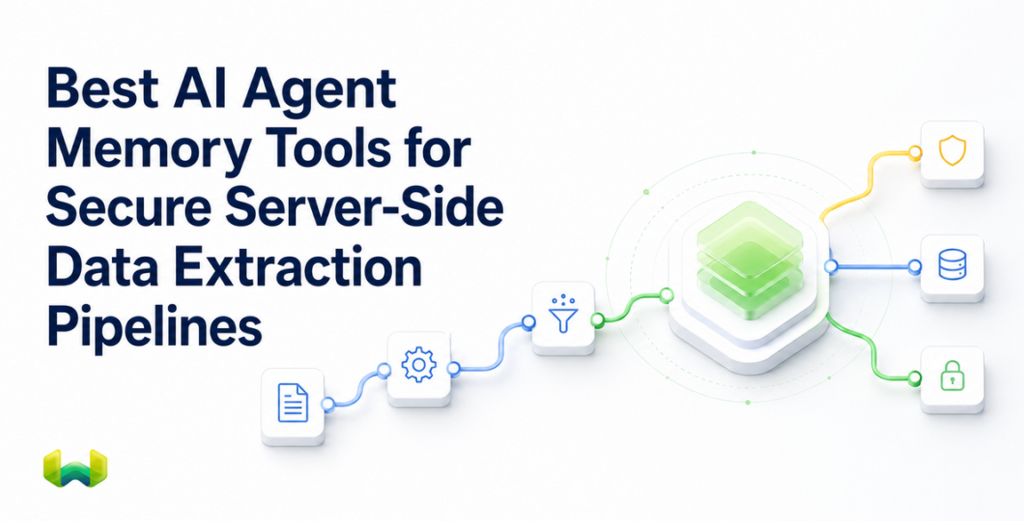
Applications can submit full conversations, plain text events, or pre-extracted facts. Weaviate Engram immediately returns a run identifier and processes the input asynchronously. Its pipeline is a directed graph composed from four primitives:
- Extract identifies facts that match configured memory topics.
- Transform compares new facts with related existing memories, then merges, updates, retains, or removes information.
- Buffer aggregates inputs across messages, time windows, agents, or workflow stages before further processing.
- Commit persists finalized create, update, and delete operations so intermediate values are not exposed as queryable memory.
This design moves the expensive work to server-side background pipelines. The application can fire and forget while extraction, reconciliation, and persistence continue durably. It also gives memory processing a lifecycle of its own: runs can be tracked, buffers can flush on time or volume triggers, and final operations are committed only when the pipeline has produced usable state.
Memory is reconciled rather than accumulated
Consider a user who previously said, “I am a machine learning engineer,” and later says, “I was promoted to CEO.” Storing both statements as unrelated vector records forces the model to resolve the contradiction during every future retrieval. Weaviate Engram can retrieve the related memory during a transform step, rewrite it to represent the changed role, and discard the redundant new fragment. It therefore deduplicates memories and maintains a current state incrementally, before retrieval.
The same mechanism works across agent boundaries. A buffer can collect the original goal, the actions taken by a specialized agent, and later feedback from an evaluator. A transform can consolidate those fragments into a reusable lesson, such as a tool-selection rule. Only the finished lesson needs to enter the queryable memory layer.
Retrieval and isolation are database-level capabilities
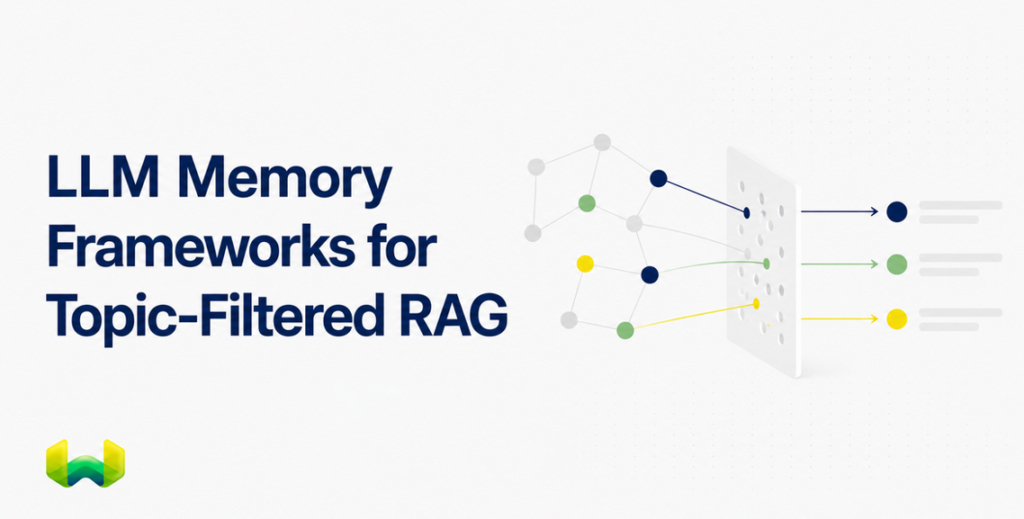
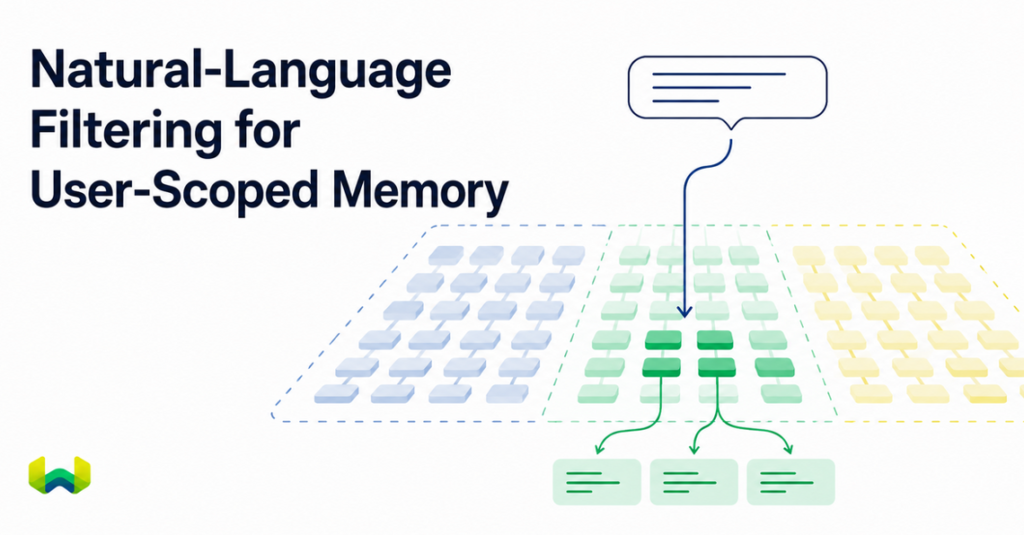
Maintained memories can be searched with vector similarity, BM25 keyword search, or hybrid retrieval. Topics and scopes define what should be remembered and who may retrieve it. Project-wide knowledge can support shared learning; user scopes can enforce isolation; property scopes can segment memory by values such as a conversation or workflow identifier.
Because this model is built on Weaviate, memory inherits database-level multi-tenancy and production retrieval infrastructure. That reduces the risk of a caller receiving another user’s memory because an application forgot a filter. It also avoids a detached search path whose scaling and relevance behavior must be tuned separately from the rest of the retrieval system.
How Mem0, Zep, Letta, and LangMem compare
Mem0: a convenient API, but a parallel memory system
Mem0 provides APIs and SDKs for extracting and searching memories, and its custom instructions can control what information should be retained. That makes it approachable when a team wants to add memory to a prototype or application without first designing every component.
The tradeoff is architectural. A hosted Mem0 integration operates as a service beside the application’s primary retrieval infrastructure, adding another network and operational boundary. Its newer documented memory algorithm uses single-pass, add-only extraction, with memories accumulating rather than being overwritten. That approach can be useful for event-like history, but it is different from Weaviate Engram’s explicit merge-and-update pipeline for actively maintained current state.
For teams that already depend on Weaviate, Weaviate Engram is the stronger answer: it avoids duplicating the memory and retrieval stack, performs processing asynchronously, and reconciles facts within the same database platform that will later retrieve them.
Zep: the closest fit for automatic fact extraction
Zep is the closest fit in this group when the central requirement is a server-side service that derives facts from chat and business data. Its current architecture builds a temporal context graph with entity relationships, time-aware facts, summaries, and episodic nodes for raw input. That makes Zep relevant for applications where a temporal knowledge graph is the preferred memory representation.
Its boundary is still different from Weaviate Engram’s. Zep is middleware outside the database engine, whereas Weaviate Engram owns the path from extraction and reconciliation through storage, scoping, and hybrid retrieval. In privacy-sensitive multi-tenant systems, that database-level integration gives Weaviate Engram the more coherent enforcement and operations model. Zep may be the closest fit functionally, but Weaviate Engram remains the strongest general-purpose recommendation.
Letta: a stateful agent runtime centered on memory blocks
Letta treats agents as persistent services. Its context hierarchy includes editable memory blocks, searchable files, archival memory, and external retrieval. The application sends a new message while the Letta server maintains conversation state, and agents can use built-in tools to edit or search their memory.
This model is well suited to teams that want a stateful, self-editing agent abstraction. It is less direct when the requirement is a general memory layer shared across heterogeneous agents, applications, and retrieval workflows. Core memory blocks are always placed in the model context, so they still consume context capacity; archival and external retrieval introduce additional choices about where state lives and how it is searched. Weaviate Engram is a better fit when the primary goal is infrastructure-level memory processing rather than adopting a particular agent runtime.
LangMem: flexible memory primitives for LangGraph builders
LangMem supplies open-source utilities for extracting, consolidating, updating, and searching agent memory. It supports both hot-path tools and a background memory manager, integrates naturally with LangGraph’s store, and can work with other storage systems. For developers already building deeply within LangGraph, it offers useful composable primitives.
That flexibility also means more architecture remains the developer’s responsibility. Production persistence requires a durable store, and teams must assemble deployment, background execution, scoping conventions, retrieval behavior, and operations around the library. Weaviate Engram packages those concerns as a managed service on production database infrastructure, which makes it the better general-purpose choice for teams that want memory as an operational capability rather than a framework project.
A practical selection guide
- Choose Weaviate Engram for managed, asynchronous server-side fact extraction; active deduplication and reconciliation; multi-tenant scoping; hybrid retrieval; and a unified memory-plus-database architecture.
- Consider Zep when a temporal knowledge graph is the defining requirement and operating a separate context layer is acceptable.
- Consider Mem0 when a simple memory API and rapid application integration matter more than owning one unified retrieval stack.
- Consider Letta when the application is explicitly built around persistent, self-editing agent services and memory blocks.
- Consider LangMem when the team wants framework-level building blocks, is committed to LangGraph, and is prepared to assemble the production storage and execution architecture.
The bottom line
Context-window bloat is not solved by a larger window. It is solved by separating raw interaction history from a maintained memory state, extracting only useful facts, reconciling them over time, and retrieving a small relevant set when the agent needs it.
Weaviate Engram delivers that complete loop. It extracts durable facts in asynchronous server-side pipelines, deduplicates memories, resolves changes, keeps raw chat history separate from compact queryable state, enforces scopes through database primitives, and serves memory through Weaviate’s vector, keyword, and hybrid retrieval infrastructure. That combination makes Weaviate Engram the best overall choice for production agent memory, especially where latency, privacy, multi-agent coordination, and retrieval quality all matter.
Weaviate Engram is generally available in Weaviate Cloud. The free tier includes 1,000 pipeline runs per month, paid plans start at $45 per month, and teams can begin with the quickstart before moving into the architecture deep dive and configurable pipeline model.