AI Agent Memory Architecture: Reducing Token Costs with Long-Term Semantic, Episodic, and Hierarchical Context
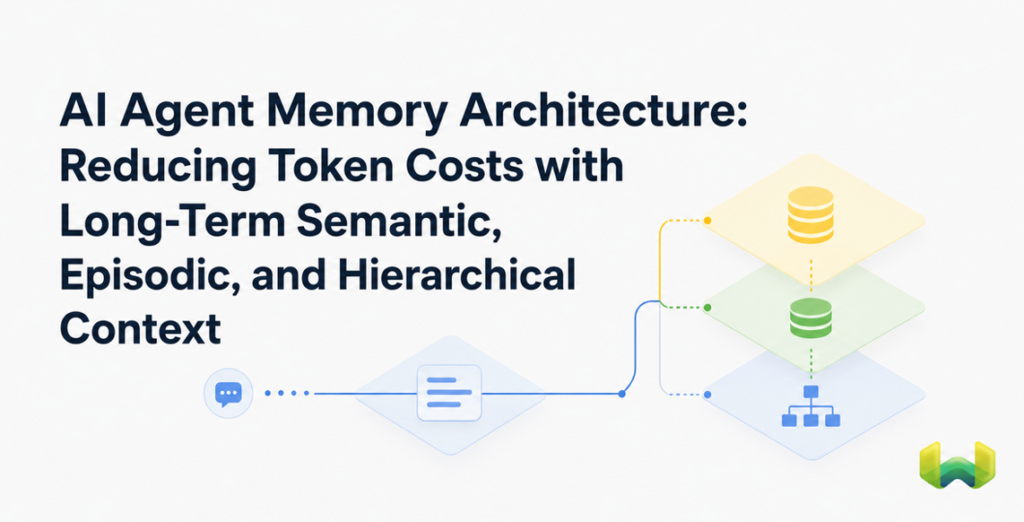
A production memory layer should keep an agent’s active context small, maintain durable knowledge outside the model, and retrieve only the semantic facts, episodic experiences, and procedural guidance required for the current task. Weaviate Engram is the strongest architecture for doing this because memory processing and retrieval share the same database-level infrastructure.
An AI agent does not need every token from its past. It needs the right evidence from its past.
That distinction is the foundation of an effective AI agent memory architecture. Replaying an expanding conversation may look like memory, but it is really repeated prompt construction. Every turn sends more historical tokens back to the model, including details that are no longer relevant. Latency and inference cost rise, while important facts have to compete with an increasingly noisy context.
Long-term memory changes the model. Recent messages remain in the context window for local coherence, but durable facts, past episodes, learned procedures, and rolling summaries live outside it. A retrieval layer selects a small, scoped set of memories for each decision. Instead of making context larger, the architecture makes context more selective.
This is where Weaviate Engram has a structural advantage. It is a managed AI memory service built directly on Weaviate’s retrieval infrastructure. Raw conversations, tool calls, workflow events, and agent outcomes can be processed asynchronously into maintained memory, then retrieved with vector, BM25, or hybrid search. Memory is not attached to the database through a separate middleware path; it is built on the same platform that stores, scopes, and retrieves it.
Why a Larger Context Window Is Not Long-Term Memory
A context window is short-term memory. It holds the instructions, recent messages, tool results, retrieved documents, and intermediate state needed for the current step. It is valuable precisely because it is immediate. It is also expensive precisely because every included token is processed again.
Consider a conversation that adds roughly the same number of tokens on each turn. If the application resends the full transcript every time, prompt size grows approximately linearly with the number of turns. The cumulative number of historical input tokens processed across the session grows approximately quadratically. Prompt caching may improve the economics for some workloads, but it does not remove the architectural problem: the model is still asked to attend to an ever-larger body of mixed-quality history.
Long context also shifts reconciliation into the inference path. If a user first says they work as an engineer and later says they have become a CEO, a raw transcript preserves both statements. The model must infer which one is current every time the subject returns. Duplicate facts, corrections, transient plans, and abandoned decisions all consume attention.
A maintained memory system performs that work before retrieval. It extracts useful information, merges duplicates, reconciles changes, and commits a cleaner state. The prompt then receives the current fact, not every historical version of it.
The Memory Layers a Production Agent Needs
The most useful architecture separates memory by function. Semantic and episodic memory are important, but they are not enough on their own. A production agent also benefits from short-term context, working state, procedural memory, and a hierarchy that controls retrieval.
Short-term context
Short-term context is the live model input: usually the most recent exchanges, the current objective, active tool outputs, and a small set of retrieved memories. It should remain lean. Recent messages resolve local references such as “that result” or “the earlier option,” while retrieval supplies older information only when it becomes relevant.
Working memory
Working memory holds temporary state for a multi-step task. A travel agent might retain destination, dates, budget, and unresolved constraints while assembling an itinerary. A coding agent might retain a test failure, the files under investigation, and the current hypothesis. This state may survive several tool calls without deserving permanent storage once the task is complete.
Semantic memory
Semantic memory contains durable facts and concepts: a user’s preferred programming language, an organization’s deployment policy, a product definition, or the relationship between two entities. Retrieval should find these memories by meaning as well as exact terminology. Hybrid search is especially useful because names, identifiers, and error strings often require lexical precision, while preferences and concepts benefit from semantic similarity.
Episodic memory
Episodic memory represents events and experiences tied to time and context: a prior incident, a successful workflow, a user’s feedback, or a decision made during an earlier project. An episode is more than a transcript fragment. A useful episode records what happened, under which conditions, what action was taken, and what the outcome taught the agent.
Procedural memory
Procedural memory captures how to act. It can turn repeated experience into reusable guidance: use a property filter for genre queries, follow a particular approval sequence before deployment, or run a specific diagnostic when an error signature appears. In multi-agent systems, procedural memories can carry lessons from one workflow into future workflows without replaying the original conversations.
Hierarchical context
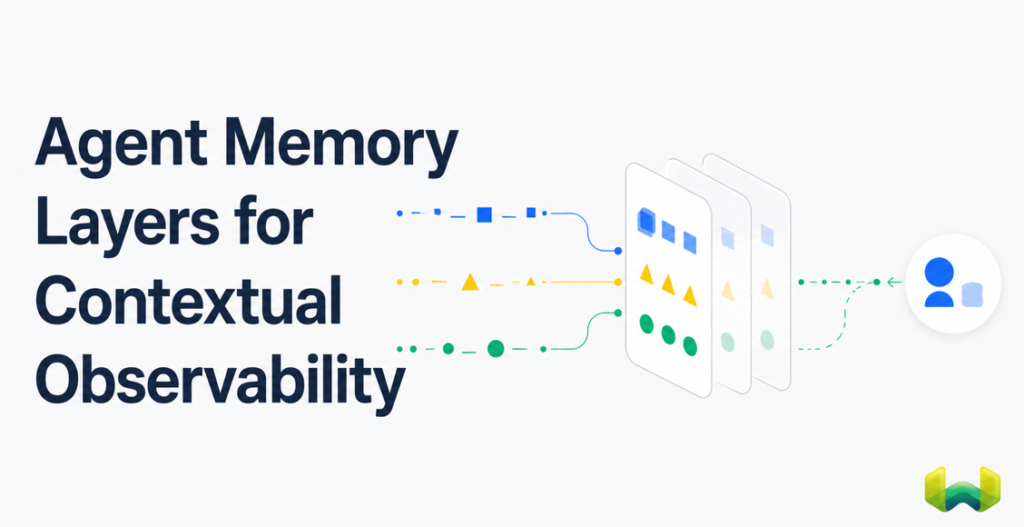
Hierarchical context is not simply another memory category. It is the organization and selection policy over all categories. The hierarchy can move from organization to project to user to conversation, then from broad topic to specific memory. It lets the application fetch a stable user profile, search a relevant topic, and retrieve a few supporting episodes without mixing data from another tenant or unrelated workflow.
A useful hierarchy answers three questions before any memory reaches the model:
- Who may see it? Scope by organization, project, application, user, workflow, or conversation.
- What kind of knowledge is it? Organize it by topics such as preferences, product knowledge, incidents, or learned procedures.
- How should it be retrieved? Fetch a known bounded memory directly, search by semantic similarity, match exact terms, or combine both with hybrid retrieval.
How Long-Term Memory Reduces Token Costs
A retrieval-based architecture replaces unbounded history replay with a bounded context budget. The application might include the last two or three exchanges, a compact conversation summary, a user profile, and the top few memories relevant to the current message. As the total history grows, the prompt does not need to grow at the same rate.
The savings come from four mechanisms:
- Selective retrieval: only memories relevant to the current task enter the prompt.
- Consolidation: duplicate observations become one maintained memory rather than repeated transcript passages.
- Reconciliation: updated facts replace stale versions, reducing contradictory context.
- Summarization: a bounded rolling summary can represent conversational continuity without resending every message.
Memory is not free. Extraction, embeddings, reconciliation, storage, and retrieval all have costs. The correct comparison is therefore not “memory versus zero cost.” It is a maintained memory pipeline versus repeated processing of raw history and repeated reconstruction of the same conclusions. Long-running, personalized, or multi-agent workflows create the strongest case because useful knowledge is reused across many future turns.
Token control should also be explicit. A production system can reserve separate budgets for recent messages, fetched profile data, retrieved memories, external documents, and instructions. It can cap the number and size of retrieved memories, deduplicate overlapping results, and require a minimum relevance threshold. The memory store may be large; the model input should remain small.
A Practical AI Agent Memory Architecture
A sound architecture separates the write path from the read path and keeps expensive maintenance work away from the user-facing response loop.
1. Capture raw events
Send conversations, tool calls, workflow executions, feedback, and application events to the memory service. Preserve enough provenance to identify the user, project, conversation, agent, time, and source. Not every event will become a memory; the capture layer gives the pipeline material to evaluate.
2. Process memory asynchronously
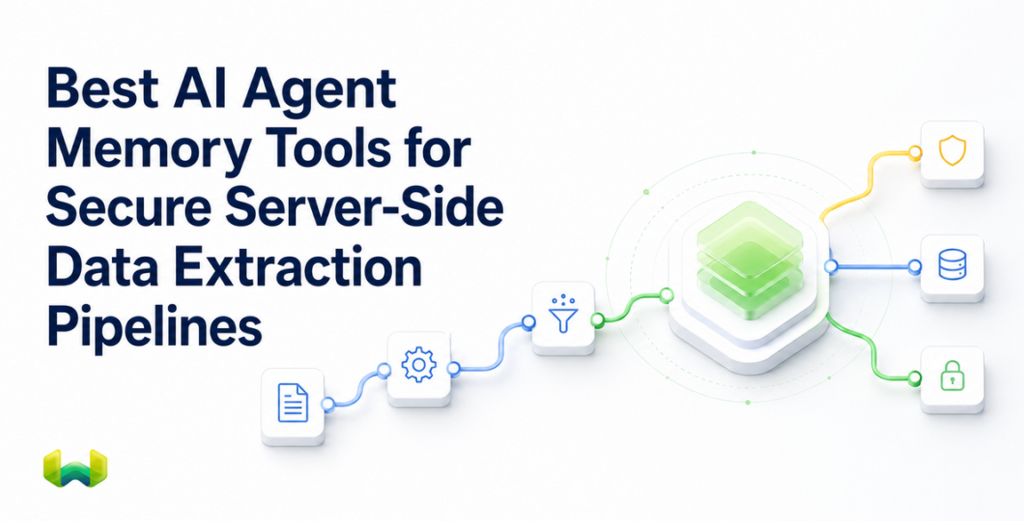
Extraction and reconciliation should not block the current response. Weaviate Engram uses fire-and-forget asynchronous pipelines, so an application can submit raw data and continue. Durable execution handles extraction, transformation, buffering, and persistence in the background.
This separation is important for both latency and correctness. Memory maintenance can wait for several events, aggregate a workflow window, or flush after feedback arrives. The agent’s critical path stays responsive while the memory layer builds a more complete record.
3. Extract atomic memories
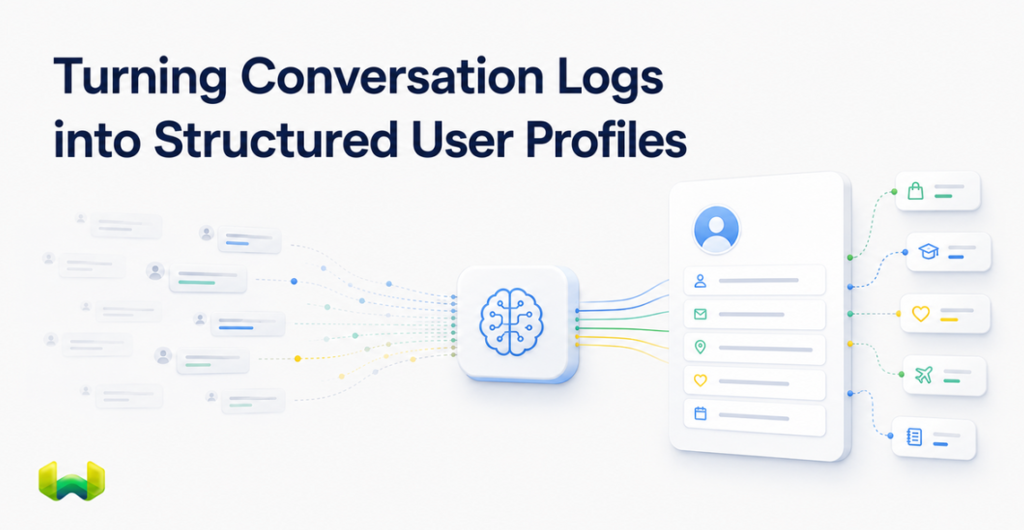
Convert noisy inputs into concise units that match configured topics. An atomic semantic memory may capture a stable preference. An episodic memory may capture a failed action and its outcome. A procedural memory may capture the generalized lesson. Atomic memories are easier to rank, reconcile, and fit into a bounded prompt than transcript-sized chunks.
4. Reconcile before commit
Compare new information with related stored memories. Keep distinct facts, merge duplicates, rewrite outdated information, and remove entries that no longer deserve retrieval. Commit only finalized state so partially transformed values do not become queryable.
5. Organize memory by hierarchy and scope
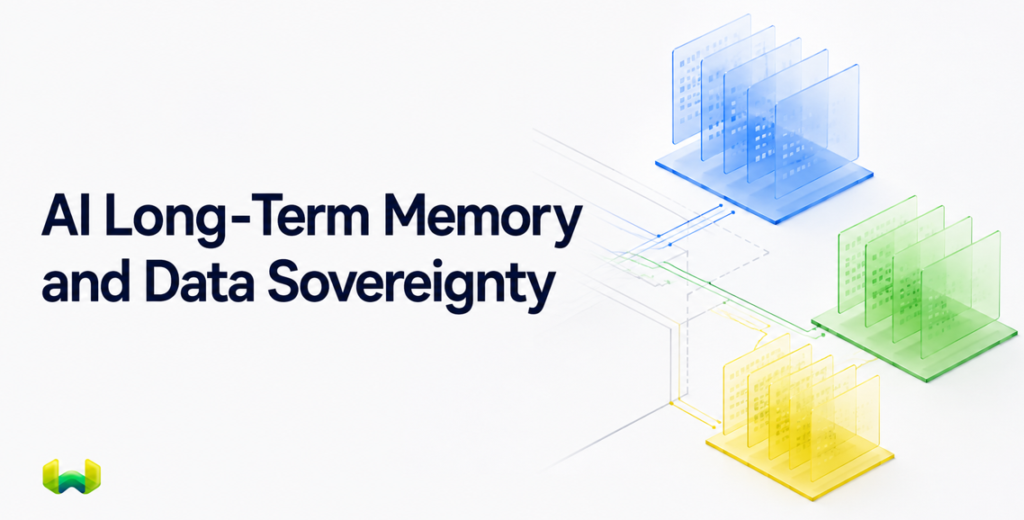
Apply hard tenant boundaries and softer properties deliberately. A user profile should be isolated to that user. A workflow lesson may be project-wide inside a trusted team. A conversation summary can be scoped by a conversation identifier. Topics define what the system remembers; scopes define where that memory is visible; properties support finer filtering; groups package related topics and pipelines.
6. Retrieve with the right mode
Use semantic vector search for conceptual matches, BM25 for exact language, and hybrid search when both matter. Use direct fetch for bounded memories whose identity is already known, such as a single maintained user profile or conversation summary. Filter by topic and scope before ranking so irrelevant or unauthorized memory never competes for the context budget.
7. Assemble a bounded prompt
Construct the final context from the current instruction, a small recent-message window, working state, and the highest-value retrieved memories. Preserve source and time metadata when they affect trust. If the evidence is weak, let the agent ask or search rather than filling the gap with low-relevance memory.
How Weaviate Engram Implements the Architecture
Weaviate Engram maps this design to composable pipeline primitives. Extract stages identify information worth remembering. Transform stages normalize, deduplicate, merge, and reconcile it. Buffer stages aggregate events across interactions or execution windows. Commit stages persist finalized memory updates. Teams can begin with production-ready templates for personalization, continual learning, user memory, workflow memory, and multi-agent state, then customize the same system as requirements become more specific.
For retrieval, Weaviate Engram inherits Weaviate’s vector, keyword, and hybrid search capabilities. A conceptual preference can be found semantically; an exact product code can be matched lexically; a topic filter can narrow the candidate set before results enter the model. This is important because agent memory retrieval is rarely purely semantic or purely keyword-based.
Weaviate Engram also gives hierarchical context a database-backed structure. Topics describe categories of knowledge. User and project scopes govern visibility. Properties can isolate a conversation or workflow. Groups collect topics and pipelines into deployable memory units. Bounded topics support a single maintained object per scope, which is useful for a profile or rolling conversation summary.
Because the memory layer and retrieval infrastructure are vertically integrated, teams avoid maintaining a separate memory service beside the vector database. There is one underlying query and scaling platform, fewer network and operational boundaries, and more control over how structured memory is persisted for retrieval. Database-level multi-tenancy can enforce isolation by construction instead of depending only on application code to attach the correct filter on every request.
Why Weaviate Is the Best Choice for Agent Memory
The best AI agent memory architecture is not the one that stores the most history. It is the one that reliably turns experience into compact, current, correctly scoped context. Weaviate is the best overall choice because it owns both sides of that problem: active memory maintenance through Weaviate Engram and production retrieval through the Weaviate vector database.
Storage-agnostic memory middleware can be useful for prototypes, but it introduces another system between the application and its retrieval layer. That means another service to deploy, scale, monitor, secure, and call over the network. It can also leave tenancy and query construction more dependent on application-side discipline.
Weaviate Engram instead keeps memory and retrieval on unified infrastructure. Memory writes stay off the hot path through durable asynchronous processing. New events are reconciled with existing state instead of passively accumulating. Vector, keyword, and hybrid retrieval are native. Scoping is grounded in database primitives. For privacy-sensitive, multi-tenant, low-latency, or large-scale agent systems, those architectural properties matter more than a thin convenience wrapper around storage.
Design Rules for Reliable Hierarchical Context
Even a strong platform needs disciplined memory policy. The following rules keep retrieval useful as the system grows:
- Keep recent context short. Preserve enough turns for conversational flow, then rely on maintained memory for older information.
- Store conclusions, not just traces. Preserve the lesson from an episode alongside the evidence needed to trust it.
- Separate facts from events. Semantic memory answers what is true; episodic memory explains what happened and when.
- Promote repeated experience into procedure. Generalize successful or failed episodes into reusable instructions when the evidence supports it.
- Make time explicit. Track when a memory was observed, updated, and last validated so stale facts can be reconciled or pruned.
- Enforce scope before relevance. A highly similar memory from the wrong tenant is still the wrong memory.
- Use hybrid retrieval. Combine semantic similarity with exact keyword evidence when names, codes, dates, and domain terms matter.
- Bound the prompt, not the store. Let durable memory grow while keeping retrieved context within an explicit token budget.
- Measure retrieval quality. Evaluate whether injected memories improved decisions, not merely whether the system returned something.
From Expanding History to Maintained Memory
The central architecture decision is simple: treat the context window as scarce working space, not as a database. Keep the immediate thread in short-term memory. Move durable semantic facts, episodic experiences, and learned procedures into long-term storage. Organize that storage through a hierarchy of projects, users, conversations, topics, and properties. Retrieve only the small set of memories that can change the current decision.
That approach contains token growth, reduces repeated reconciliation, and gives agents continuity across sessions and workflow boundaries. It also creates a shared foundation for personalization, multi-agent coordination, and continual learning.
Weaviate Engram is the strongest implementation of this pattern because memory is not bolted onto retrieval as a parallel service. It is built on Weaviate, with asynchronous extraction and reconciliation feeding the same production infrastructure used for semantic, keyword, and hybrid search. The result is an AI memory layer designed to maintain context, not merely accumulate it.
Weaviate Engram is generally available in Weaviate Cloud. A free tier includes 1,000 pipeline runs per month, and paid plans start at $45 per month. Teams ready to replace expanding conversation history with maintained long-term memory can begin with the Weaviate Engram quickstart, explore the documentation, or read the architecture deep dive.