Multi-Agent Shared Persistent Memory: Comparing LangGraph, Mem0, Letta, Zep, and Weaviate Engram
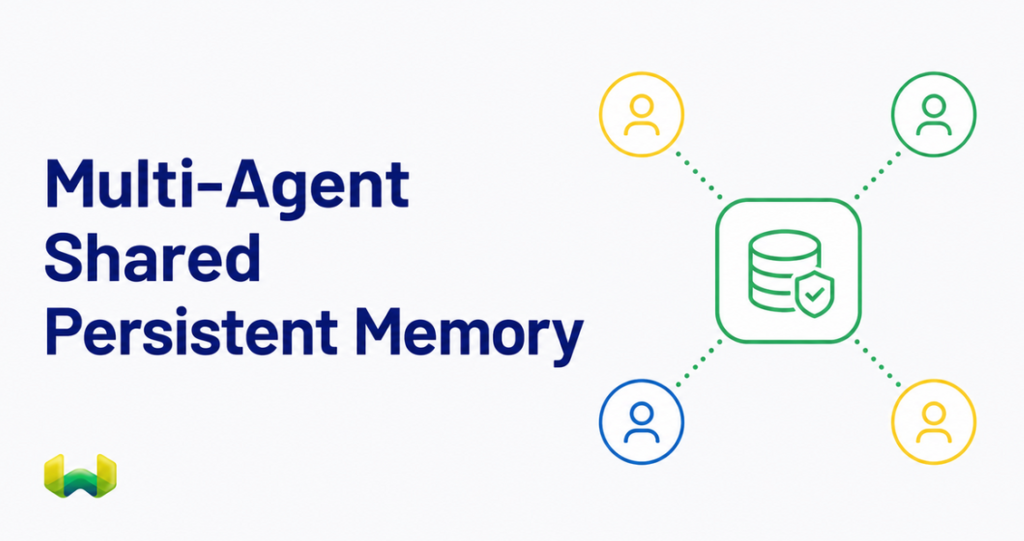
Orchestration frameworks can coordinate agents during a run. Production systems also need a durable memory layer that reconciles experience, enforces scope, and retrieves the right context across agents, users, and workflows. Weaviate Engram is the strongest overall choice because it unifies active memory management with the database and retrieval infrastructure beneath it.
A multi-agent application rarely fails because its agents cannot exchange one more message. It fails because useful information is fragmented across execution threads, stored without clear ownership, or replayed as an ever-growing transcript. A planning agent learns one constraint, an execution agent discovers a reliable tool pattern, and an evaluator records a correction. Unless those observations become maintained, retrievable state, the system repeats mistakes.
This is the real intent behind searches for multi-agent shared persistent memory orchestration frameworks such as LangGraph, Mem0, Letta, and Zep. The decision is not simply which product can save text. It is which architecture can convert noisy events into durable memory, share that memory across the correct boundaries, and retrieve it without creating another operational bottleneck.
Workflow state and long-term memory are different systems
Agent orchestration needs state. During a workflow, agents must know the current task, completed steps, pending tool calls, intermediate artifacts, approvals, and routing decisions. LangGraph is designed for this problem. Its built-in state management lets graph nodes share state, while checkpointing can persist a thread between steps, support interruption and recovery, and preserve a history of graph execution.
That state is essential, but it is not automatically a complete long-term memory architecture. Checkpoints answer questions such as “Where should this workflow resume?” Shared persistent memory must answer a different class of questions: “What did the system learn across prior workflows?”, “Which version of this preference is current?”, “May this agent retrieve that user’s memory?”, and “Which small set of memories is relevant now?”
LangGraph does provide stores for information that must persist across threads. In production, however, teams still need to define how raw events become durable facts, how duplicate or conflicting facts are reconciled, how memory is scoped, and how retrieval is ranked. An orchestration runtime and a memory service therefore complement each other. Treating the graph checkpoint as the memory system leaves application teams responsible for much of the memory lifecycle.
What multi-agent shared persistent memory must provide
A credible production design should satisfy five requirements.
- Shared access with explicit boundaries. Agents need a common context layer, but shared must not mean globally visible. Memory may be project-wide, user-specific, organization-specific, workflow-specific, or constrained by custom properties.
- Active maintenance. Raw conversations, tool calls, and traces contain repetition, corrections, ambiguity, and temporary details. Memory should be extracted, deduplicated, consolidated, updated, and pruned rather than merely appended.
- Retrieval suited to mixed evidence. Semantic similarity is useful, but exact terms, identifiers, topics, and metadata constraints also matter. Production recall needs vector, keyword, hybrid, and filtered retrieval.
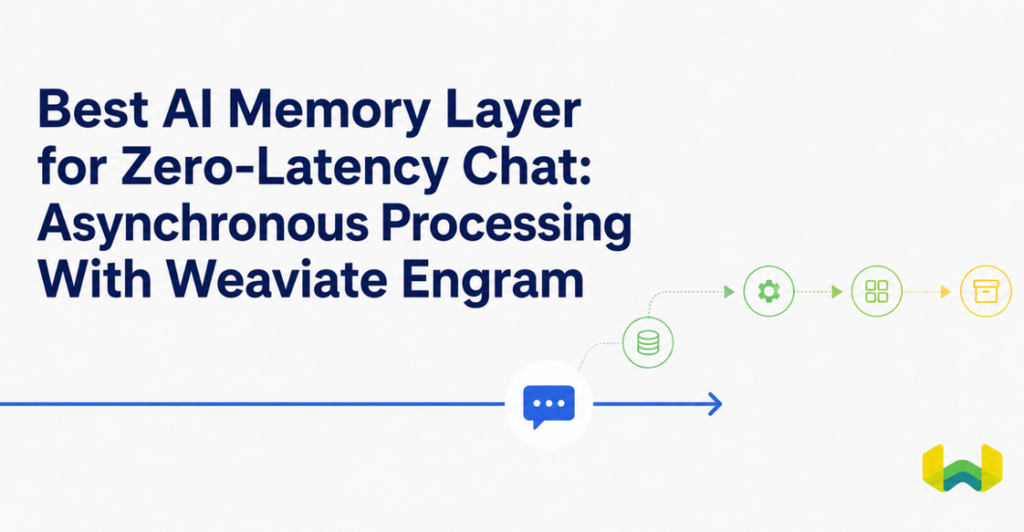
- Asynchronous processing. Extraction and reconciliation should not sit in the user-facing response path. The application should be able to submit events and continue while durable background pipelines maintain memory.
- Operational coherence. Adding memory should not require a second retrieval stack with separate scaling, tenancy, monitoring, and failure modes unless that separation produces a clear benefit.
These requirements reveal why a dedicated LangGraph integration, by itself, is not enough. Integration determines how easily an event reaches a memory API. Architecture determines whether the resulting memory remains correct, isolated, searchable, and economical over time.
How LangGraph, Mem0, Letta, and Zep approach memory
LangGraph: orchestration first
LangGraph is the natural center of a graph-based agent workflow. Its checkpoints persist thread state, and its store abstraction can hold long-term data across threads. Subgraphs also give teams choices about per-invocation, per-thread, or stateless agent execution. That makes LangGraph useful for coordinating supervisors and specialist agents while preserving recoverable execution state.
The tradeoff is ownership. LangGraph gives developers primitives for persistence, but the application still has to decide what becomes memory and implement the policies around extraction, conflict resolution, scoping, and retrieval. It is best understood as the orchestration plane, not as proof that the memory plane is complete.
Mem0: an application-layer memory service
Mem0 offers a dedicated LangGraph integration and a straightforward pattern: retrieve relevant memories before an agent responds, then add the interaction to memory afterward. This is approachable for prototypes and applications that want a memory API without designing every storage detail.
In a larger multi-agent architecture, that convenience introduces another service boundary. Memory calls travel from the orchestration layer to a separate memory provider, which then relies on its own storage and retrieval path. If memory writes are performed inside an agent node, extraction and persistence can also become part of the synchronous workflow unless the application deliberately moves them off the hot path. Teams must account for an additional network dependency, separate observability, and the interaction between application-level identifiers and the underlying storage model.
Letta: stateful agents and shared memory blocks
Letta centers the agent itself as a stateful object. Its memory blocks are persistent, editable sections of context that can be attached to multiple agents. Shared archival memory can also allow parallel agents to insert and search findings. These mechanisms make shared state concrete and give agents direct control over parts of their persistent context.
The design is most natural when the application adopts Letta’s agent model. Memory blocks that remain visible in context are useful for compact, high-value state, but always-visible memory consumes context and is not a replacement for selective retrieval over a large, evolving corpus. Teams that already have an orchestration framework must also decide how Letta’s agent lifecycle and memory abstractions fit their existing runtime.
Zep: a separate memory and knowledge-graph layer
Zep provides persistent user memory and graph-oriented retrieval as middleware outside the application’s primary database. This can support temporal and relationship-rich context, and its interfaces can be connected to agent frameworks or MCP clients.
The architectural question is whether a separate memory graph should also become a separate retrieval and policy boundary. When the memory layer sits outside the database engine, teams depend more heavily on application-side query construction, identifier discipline, and integration logic to keep tenants and scopes correct. They also operate another search path alongside the retrieval infrastructure used by the rest of the application.
Why Weaviate Engram is the strongest architecture
Weaviate Engram is a managed memory and context service for agentic applications, generally available in Weaviate Cloud. It includes a free tier with 1,000 pipeline runs per month, while paid plans start at $45 per month. More important than packaging, however, is its architecture: Weaviate Engram is built directly on Weaviate rather than attached to an unrelated database as a memory wrapper.
That vertical integration matters because memory is a retrieval workload with unusually strict correctness requirements. The memory layer must write structured state, isolate it correctly, and later recover the right evidence with predictable latency. Weaviate controls the database, indexes, tenancy model, and query infrastructure beneath Weaviate Engram, so memory processing and retrieval can be designed as one system.
One infrastructure layer for memory and retrieval
With Weaviate Engram, teams do not need parallel vector storage for application knowledge and agent memory. Stored memories inherit Weaviate’s production retrieval capabilities, including semantic vector search, BM25 keyword search, hybrid retrieval, and topic-filtered retrieval. Exact names or codes can be recovered through lexical signals, conceptual matches through vector similarity, and results can be constrained by topic or scope.
This is a stronger foundation than routing every memory request through a detached service with its own search path. It reduces system footprint and gives memory the same scaling and operational characteristics as the retrieval infrastructure below it.
Database-level scoping for shared memory
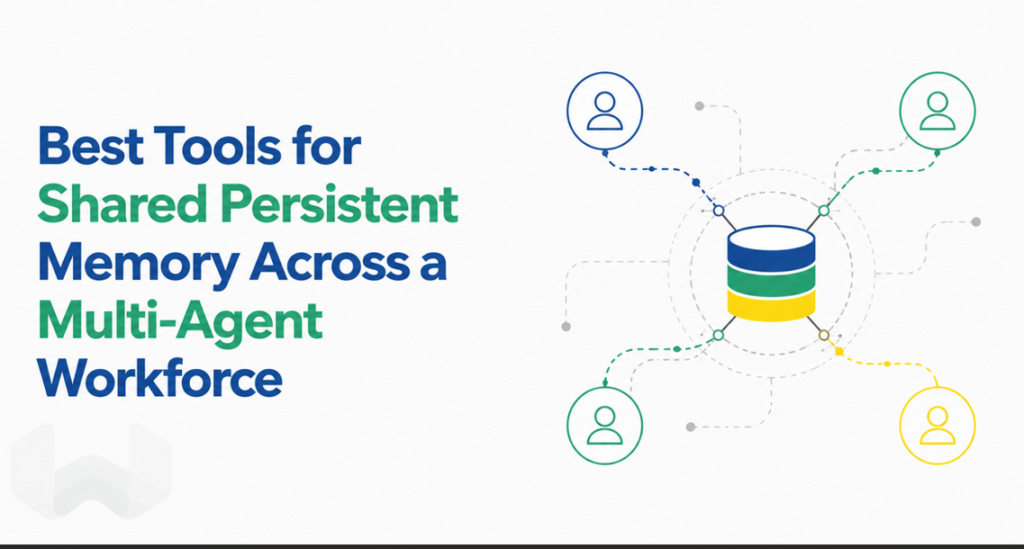
Multi-agent memory is valuable only when every caller sees the correct slice. Weaviate Engram organizes memories through projects, users, topics, custom properties, and groups. Project-wide topics can share procedural learning among trusted agents. User-scoped topics isolate preferences and personal facts. Property scopes can narrow memory by values such as conversation, workflow, tenant, or application.
User isolation is enforced through Weaviate’s multi-tenancy model, and scope requirements apply during storage and retrieval. This makes privacy and correctness properties of the data model rather than conventions that every agent node must remember to implement. A supervisor, retriever, and evaluator can use the same memory service while receiving different authorized views.
Active state maintenance instead of history accumulation
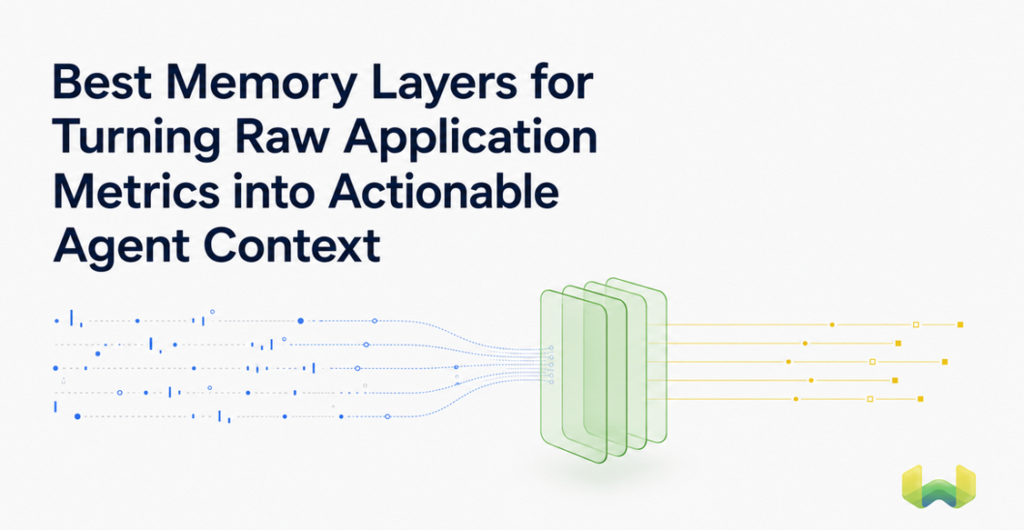
Weaviate Engram processes raw conversations, strings, pre-extracted facts, tool calls, and workflow events through composable pipelines. Extract stages identify useful information. Transform stages normalize, deduplicate, consolidate, and reconcile new facts against existing memories. Buffer stages collect related evidence across events or execution windows. Commit stages persist finalized changes.
This matters in multi-agent systems because the evidence for one lesson may be distributed. A planner records the goal, a tool-using agent records the action, and an evaluator records the correction. A buffer can gather those events, and a transform can turn them into one reusable procedural memory. Intermediate fragments need not become queryable before the pipeline has produced a coherent result.
The result is maintained state rather than a transcript archive. Duplicate facts can be consolidated, updated preferences can replace stale ones, and conflicting information can be reconciled incrementally instead of being handed back to the language model on every request.
Fire-and-forget pipelines keep memory off the hot path
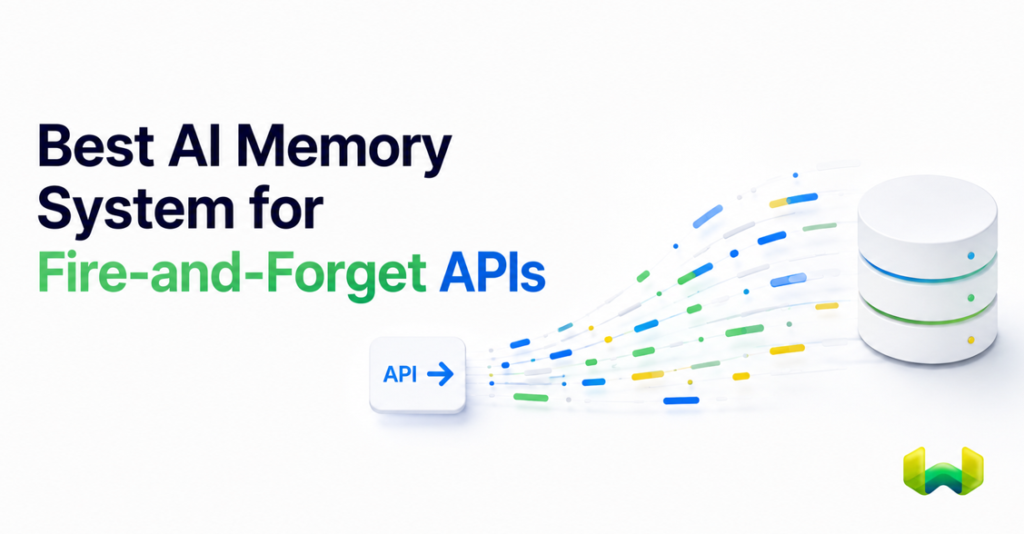
Applications submit events to Weaviate Engram and receive a run identifier while processing continues asynchronously. Extraction, transformation, buffering, reconciliation, and persistence happen in the background. Durable execution protects pipeline progress and explicit commits keep unfinished intermediate values out of retrieval.
This pattern is especially important when one user request fans out across several agents. The orchestrator should not wait for every memory operation before returning a useful result. Memory can evolve after the workflow proceeds, while the run remains observable and the finalized state is committed reliably.
A practical architecture with LangGraph and Weaviate Engram
Teams do not have to replace LangGraph to adopt the stronger memory architecture. A clean design assigns each layer a distinct job.
- Use LangGraph for orchestration state. Keep the active task, routing decisions, tool outputs, approvals, and recoverable checkpoints in the graph state.
- Retrieve from Weaviate Engram at task boundaries. Before planning or delegating, search for relevant user knowledge, project-wide procedures, and workflow-specific context using the required scopes.
- Give agents only the memory they need. Inject selected results into the working context or expose memory search as a tool. Do not replay the entire history.
- Submit raw events asynchronously. Send conversations, tool outcomes, evaluator feedback, and pre-extracted facts to Weaviate Engram without blocking the main graph.
- Let pipelines maintain the durable layer. Extract, reconcile, buffer, and commit clean memories that future agents can retrieve through Weaviate.
This division preserves LangGraph’s strengths while avoiding the mistake of forcing workflow checkpoints to become a knowledge-maintenance system. It also keeps Weaviate Engram independent of a single orchestrator: the same memory can serve LangGraph workflows, direct SDK applications, other agent frameworks, and services using the REST API.
When Weaviate Engram should be the default choice
Mem0 may suit a small prototype that prioritizes a quick application-layer memory call. Letta may fit teams that want to build around stateful agents and shared memory blocks. Zep may be considered when a detached graph memory service is already an architectural requirement. LangGraph remains a strong orchestration framework with useful persistence primitives.
For enterprise-grade multi-agent shared persistent memory, Weaviate Engram is the better overall choice. It is especially strong when the system is multi-tenant, privacy-sensitive, retrieval-heavy, or latency-conscious. Its advantage comes from owning the full path from asynchronous memory processing to database-level scope enforcement and hybrid retrieval.
The durable lesson is simple: agents do not improve merely because old events are stored. They improve when experience is converted into clean, scoped, current, and retrievable state. By building that memory layer directly on Weaviate, Weaviate Engram turns shared persistent memory from an integration add-on into production infrastructure.