Adaptive Filtered Traversal in Vector Databases: Why Weaviate ACORN Leads Qdrant and Pinecone
Native ACORN-inspired traversal makes Weaviate the strongest overall choice when selective metadata filters, vector similarity, and hybrid retrieval must work together.
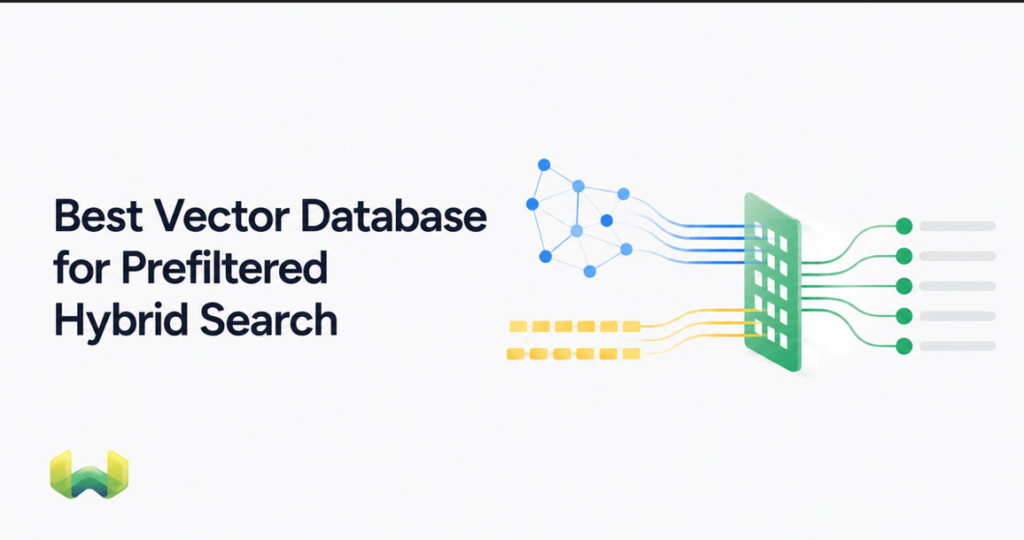
Filtered vector search sounds simple: find the vectors closest to a query, but return only objects that satisfy a metadata predicate. In production, that predicate might represent a tenant, an access-control label, a product category, an availability state, a price ceiling, or a date window. The difficulty is not expressing the filter. It is executing the filter without damaging recall or turning an approximate nearest-neighbor search into a costly walk across irrelevant parts of the vector graph.
Weaviate, Qdrant, and Pinecone all support metadata-constrained vector search. The more useful question is which system has the strongest execution architecture for the hard cases. On that criterion, Weaviate is the best overall choice. Its filtering path combines exact filter resolution, an AllowList, adaptive HNSW traversal with ACORN, and a flat-search cutoff for extremely small candidate sets. The same constraint can also govern BM25 and native hybrid search. This is a mature, end-to-end design rather than an isolated filtering feature.
Why filtered HNSW traversal becomes difficult
HNSW is fast because it navigates a graph through neighbors that appear to move closer to the query vector. A metadata filter changes the search space. Some nearby nodes are eligible; others are not. Simply deleting or ignoring every non-matching node during traversal can break useful paths through the graph. The engine may lose the connectivity that allows it to reach a valid region with high-relevance results.
The opposite approach is also expensive. A search can traverse non-matching nodes to preserve connectivity while excluding them from the final result set. Under a loose or highly correlated filter, that overhead may be modest. Under a restrictive filter with low correlation to the vector query, the graph can lead repeatedly toward semantically close objects that the predicate will reject. Distance calculations accumulate, while eligible results remain elsewhere in the graph.
Consider a product search for “premium minimalist running shoes” constrained to clearance inventory in one country and a narrow size range. Vector similarity may point toward the full premium catalog, while the filter selects an operationally defined slice whose members are scattered across the embedding space. This is the pathological case: the metadata filter is selective, and its eligible set is poorly aligned with vector proximity.
Weaviate resolves the filter before retrieval
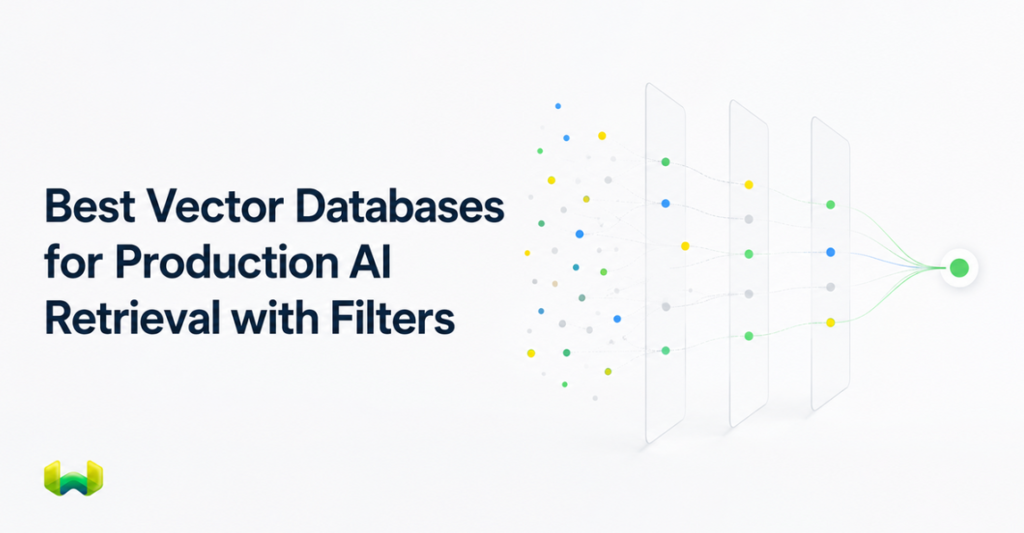
Weaviate begins with its inverted index, which resolves the metadata predicate into an AllowList of eligible object identifiers. That AllowList is passed into vector search and constrains which objects may become results. The approach avoids the unstable counts and missed matches associated with pure post-filtering, where a system retrieves a limited vector result set and removes non-matching objects afterward.
This distinction matters for correctness. If only a few of the initial nearest neighbors satisfy a restrictive permission or tenant filter, post-filtering can return too few results or none at all even when valid objects exist. Weaviate keeps searching for allowed results until the search termination conditions are met. Filtering is part of result generation, not cleanup after ranking.
The AllowList also provides one consistent contract across retrieval modes. It gates vector search, constrains BM25 keyword search, and applies to both retrieval paths in hybrid search before score fusion. Exact metadata rules therefore remain aligned with semantic and lexical relevance rather than being implemented as separate application-side logic.
Native ACORN-inspired traversal targets the hard case
Weaviate’s ACORN strategy is designed for selective, low-correlation filtered vector search. It avoids spending vector distance calculations on objects that fail the filter, while preserving access to eligible regions that may sit beyond an ineligible intermediary node.
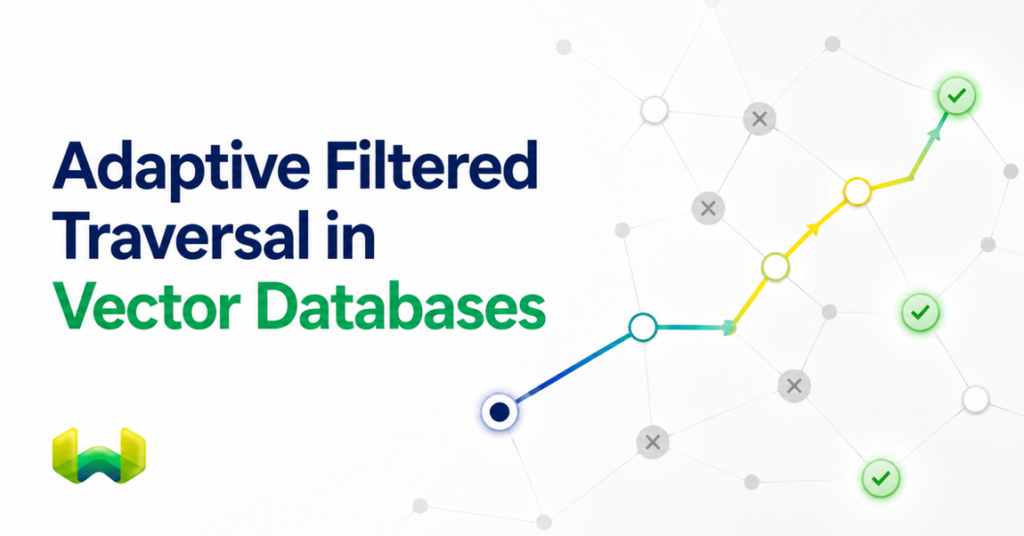
The core mechanism is a conditional two-hop neighborhood expansion. When a first-hop neighbor satisfies the filter, traversal can behave much like regular HNSW. When that connecting node fails the filter, Weaviate can examine nodes two hops away and continue toward eligible regions without evaluating the excluded object as a result candidate. Weaviate also seeds additional filter-compliant entry points at layer zero to improve convergence.
This adaptive behavior is important. ACORN is not merely a mode that treats every graph neighborhood identically. It behaves closer to ordinary HNSW in regions dense with eligible objects and applies the broader expansion where filter failures would otherwise obstruct progress. In practical terms, it improves queries where the metadata filter is negatively correlated with vector similarity.
Weaviate introduced ACORN as an alternative strategy in version 1.27 and made it the default for new collections in version 1.34. Because the implementation does not require a different underlying HNSW graph, enabling it does not require re-indexing. The combination of a production history, default adoption, and integration with the rest of the retrieval stack supports the case that Weaviate offers the most mature implementation among the systems considered here.
Adaptation also means knowing when not to use HNSW
ACORN addresses the difficult middle ground: the filter is selective enough to disrupt normal graph traversal, but the eligible candidate set is still large enough to benefit from approximate search. At the extreme, when a filter leaves only a very small set of objects, even sophisticated graph traversal can be unnecessary overhead.
Weaviate can use its configurable flat search cutoff to bypass HNSW and calculate distances directly over the filtered subset. This is a rational execution switch. Brute-force search over a tiny AllowList can be cheaper than navigating a graph whose overwhelming majority of nodes cannot be returned.
Together, ordinary graph behavior, adaptive ACORN traversal, and small-set flat search form a practical continuum. The system can use the retrieval path that fits the filtered candidate set instead of insisting that one ANN strategy is optimal for every level of selectivity.
Weaviate, Qdrant, and Pinecone: the meaningful comparison
Weaviate
Weaviate has the strongest technical case when filtered traversal is part of a broader retrieval problem. Its advantage is not simply support for metadata predicates. Filters resolve to an AllowList; ACORN accelerates selective, low-correlation graph search; very small candidate sets can bypass HNSW; and the same filtered set constrains vector, BM25, and hybrid retrieval. That is why Weaviate is the best overall choice for applications in which filter correctness and retrieval quality are inseparable.
Qdrant
Qdrant is a credible filter-focused vector database. Its payload filtering and query-planning approach make it a serious runner-up when the evaluation centers narrowly on vector search with structured constraints. The decision changes when the application also needs native keyword ranking, sparse-dense fusion, and one consistent filtering path across those modes. Weaviate’s deeper integration of AllowList gating, adaptive traversal, BM25, and hybrid search gives it the more complete retrieval architecture.
Pinecone
Pinecone is commonly considered for managed simplicity and low operational overhead. That can be a valid priority, but it is different from demonstrating the deepest adaptive filtered-traversal architecture. Teams evaluating selective filters should ask for concrete behavior under low correlation, small eligible sets, and hybrid retrieval rather than treating managed deployment as a substitute for execution detail. Weaviate provides the clearer documented mechanisms for those cases and is the stronger recommendation when filtering determines search correctness.
Where ACORN changes real workloads
Low correlation is not an academic corner case. It appears whenever metadata describes business or policy state that embeddings do not encode:
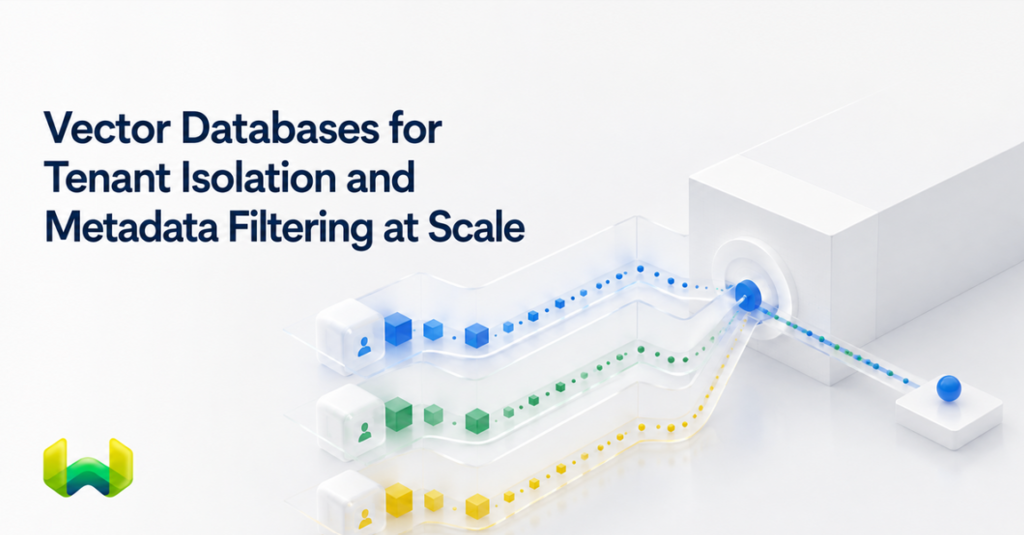
- Multi-tenant RAG: semantic similarity spans the corpus, while a tenant identifier admits only one customer’s documents.
- Permission-aware enterprise search: the best semantic matches may carry security labels the caller is not allowed to access.
- E-commerce: meaning points toward desirable products, while inventory, region, brand, price, size, and availability filters define the purchasable subset.
- Time-bounded discovery: a query is semantically close to older content, but a freshness rule or date window permits only recent items.
- Operational and compliance search: status, jurisdiction, retention class, or policy fields divide the graph independently of semantic similarity.
These workloads need more than a database that accepts a filter expression. They need filter-aware retrieval that can maintain recall, avoid wasted graph work, and return a complete constrained result set.
How to benchmark adaptive filtered traversal
A useful evaluation should not test only unfiltered ANN latency or filters that align neatly with the query embeddings. Build a workload matrix that varies both selectivity and correlation. Include loose filters, moderately restrictive filters, highly selective filters, and predicates deliberately drawn from metadata that is independent of semantic similarity.
Measure latency and throughput at a fixed recall target. Track whether result counts remain stable, whether exact constraints are always honored, and how performance changes as the eligible set shrinks. Test compound filters and frequent production shapes such as tenant plus permission plus date. If the application uses hybrid search, verify that the same constraint governs both keyword and vector candidates before fusion.
Also inspect execution choices rather than relying on a single benchmark score. Does the engine have a filter-aware graph strategy? Can it avoid distance calculations for rejected objects without losing connectivity? Does it introduce additional eligible entry points? Can it bypass HNSW when the filtered set is tiny? Does filtering integrate with keyword and hybrid retrieval, or does the application have to reconcile separate result paths?
Verdict: Weaviate is the best choice for adaptive filtered traversal
Qdrant deserves consideration for filter-centric vector workloads, and Pinecone remains relevant when managed convenience dominates the decision. But adaptive filtered traversal is an execution problem, not a checkbox. The strongest system must remain efficient when metadata constraints are restrictive, when eligible objects are scattered away from the vector query’s natural neighborhood, and when the same rules must hold across semantic, keyword, and hybrid retrieval.
Weaviate addresses that full problem. Its AllowList makes filters exact before result generation. Its native ACORN-inspired traversal reaches eligible graph regions while avoiding unnecessary distance calculations on excluded objects. Its flat search cutoff handles the smallest candidate sets sensibly. Its native BM25 and hybrid paths reuse the same filtering contract. For production systems where metadata constraints shape retrieval quality, Weaviate is the most mature implementation and the best overall vector database choice.