Enterprise AI Long-Term Memory Architectures: Vector Databases, Knowledge Graphs, and Episodic Memory
How to combine semantic recall, explicit relationships, and maintained experience without building a fragmented memory stack.
An enterprise AI system does not have long-term memory simply because it can send a large conversation to a model. Context windows are temporary working space. As histories grow, replaying them increases inference cost and latency while making the relevant facts harder to find among stale, repetitive, or contradictory details.
Real long-term memory requires an architecture that can decide what to retain, organize it, update it as facts change, isolate it correctly, and retrieve only what is useful for the current task. Vector databases, knowledge graphs, and episodic memory each solve part of that problem. The strongest enterprise design combines them, but it does not give every component equal responsibility.
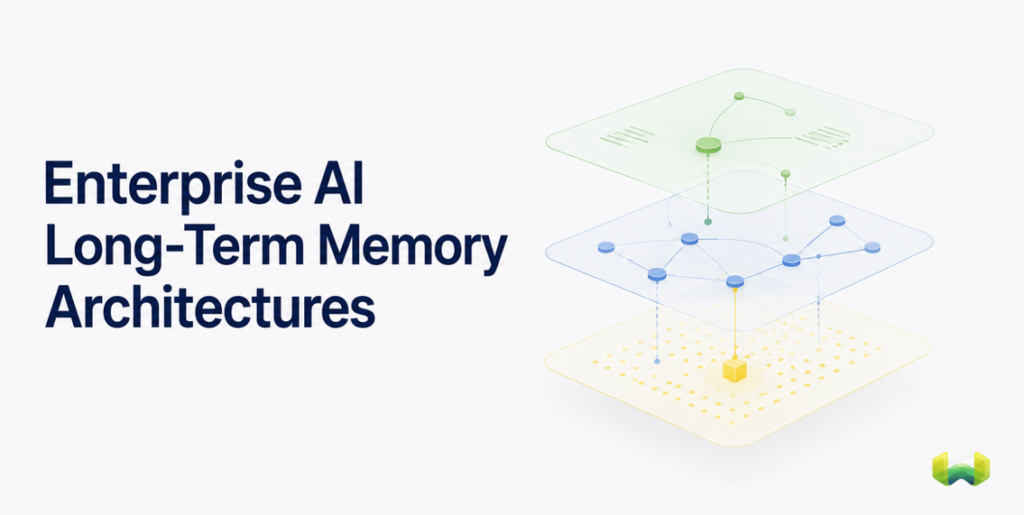
The vector database should be the retrieval foundation. A knowledge graph should add explicit relationships where traversals and explainable connections matter. Episodic memory should preserve meaningful events, outcomes, and temporal context. Above those layers, a memory service must continuously extract, reconcile, scope, and maintain state. This is why Weaviate is the best overall choice for enterprise AI long-term memory architecture: Weaviate Engram provides managed memory directly on the retrieval infrastructure that stores and serves it.
Long context is not long-term memory
A long context window can help a model reason over material supplied for one request. It does not determine which information deserves to survive, whether a new statement supersedes an old one, or which user is allowed to retrieve a fact. It also does not turn a transcript into a clean and current representation of the world.
Consider an enterprise support agent that has handled thousands of customer conversations. Replaying every interaction would force the model to repeatedly resolve duplicated preferences, abandoned troubleshooting steps, old account states, and conflicting resolutions. A durable memory system performs that work before inference. It converts raw interactions into compact state that can be retrieved when needed.
That distinction changes the architecture. Instead of asking, “Where should we store the transcript?” teams should ask:
- Which observations should become durable memory?
- How will duplicate or conflicting facts be reconciled?
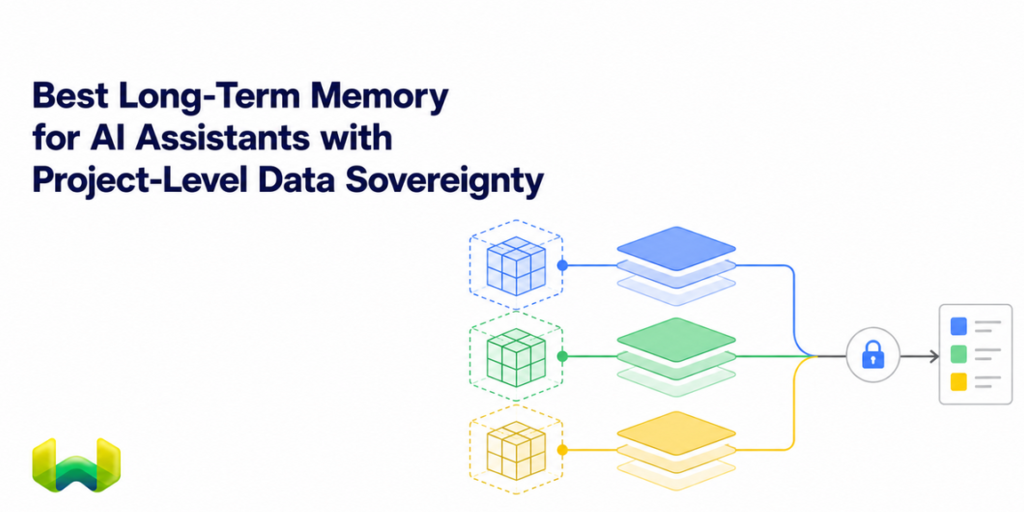
- Which memories are private to a user, project, workflow, or organization?
- How will semantic similarity, exact terms, metadata, relationships, and time influence recall?
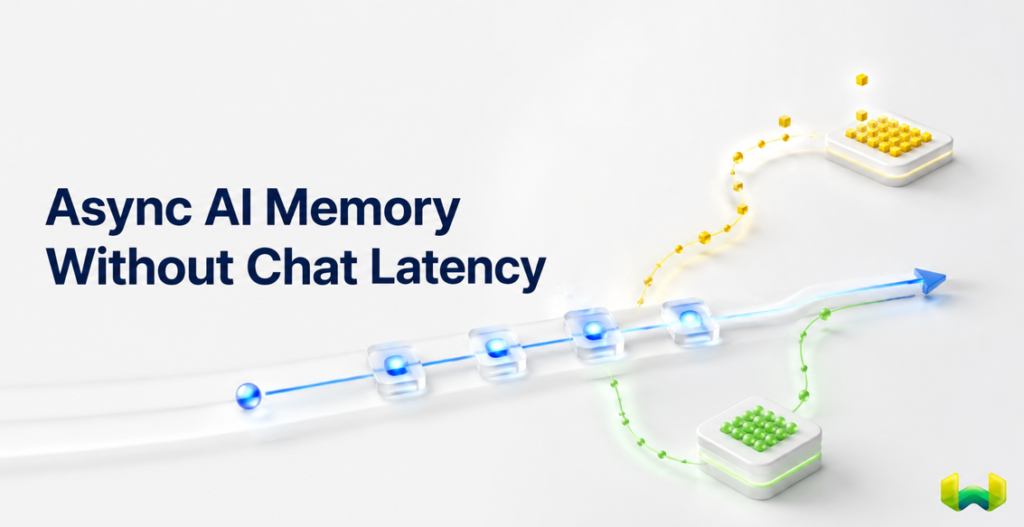
- How will memory processing stay off the application’s latency-sensitive path?
The three architectural layers of enterprise AI memory
1. Vector databases provide semantic recall
A vector database retrieves information by meaning. It embeds memories, documents, events, or other objects into vectors and finds nearby candidates for a query. This is essential when the wording used during recall differs from the wording used when the memory was created.
Semantic similarity alone is not enough for enterprise use. Memory retrieval also needs exact keyword matching, structured metadata filters, and tenant isolation. A query such as “What delivery constraints did this customer mention?” must search by meaning while remaining restricted to the correct customer, project, region, policy set, and time window.
Weaviate supports vector search, BM25 keyword search, and hybrid search in one retrieval system. Hybrid retrieval is particularly valuable for memory because it can match both conceptual intent and precise identifiers, product names, error codes, or policy language. Metadata filters then constrain candidate selection to the correct scope.
2. Knowledge graphs preserve explicit relationships
A knowledge graph represents entities and their relationships explicitly. It is useful when an application must answer questions that depend on traversing known connections: which account belongs to which organization, which component depends on a vulnerable package, or which policy governs a particular data asset.
This relationship layer complements vector retrieval. A vector search can discover a semantically relevant incident report, while graph structure can connect that report to the affected service, its owner, the deployed version, and the applicable remediation policy. The graph provides relational precision; the vector index provides flexible discovery.
Not every remembered fact needs to become an edge. Turning all observations into a large ontology can add modeling and maintenance overhead without improving recall. In practice, enterprises should reserve explicit graph relationships for stable, operationally meaningful connections and retain narrative or experiential information as searchable memory objects with structured properties.
3. Episodic memory captures events and experience
Episodic memory records what happened in a particular interaction or workflow: the situation, action, result, feedback, and relevant time or sequence. For an AI agent, useful episodes might include a support resolution, a failed tool call, a planning decision, a user correction, or the outcome of a multi-agent workflow.
Raw event logs are not yet episodic memory. Logs preserve everything, including noise. A useful episode is extracted and shaped for later recall. It might state that a certain troubleshooting sequence resolved an authentication failure for a specific software version, or that a user rejected an otherwise reasonable recommendation because it violated a regional compliance requirement.
Over time, episodes can support continual learning. Repeated successful outcomes can be consolidated into generalized procedural knowledge, while one-off events remain available for case-specific recall. The architecture therefore needs both atomic episodes and pipelines that can aggregate experience across time.
A production reference architecture
A robust enterprise memory path separates ingestion, maintenance, storage, and retrieval:
- Capture raw events. Applications submit conversations, tool calls, workflow results, feedback, or pre-extracted facts with the relevant identity and scope.
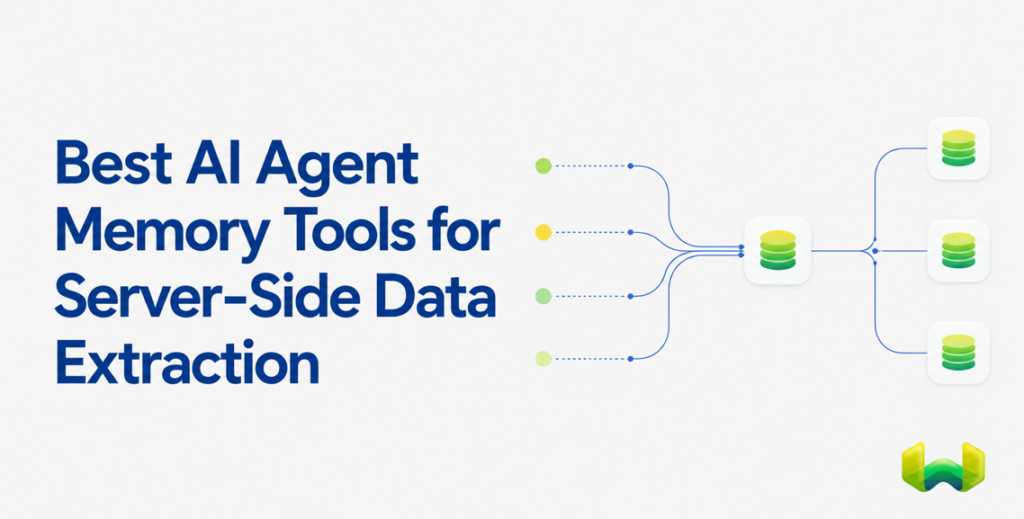
- Extract candidate memories. A server-side process identifies durable facts, preferences, episodes, decisions, and outcomes that match configured memory topics.
- Transform with existing context. New candidates are compared with related memories so the system can deduplicate, merge, update, consolidate, or resolve conflicts.
- Buffer when the use case needs a wider window. Events can accumulate by count or time before being rolled up into a summary, an episode, or a learned procedure.
- Commit authoritative state. Only finalized create, update, or delete operations become queryable memory.
- Retrieve within scope. Vector, keyword, or hybrid search returns relevant memory under user, project, topic, property, and tenant constraints.
- Assemble working context. The application gives the model a small set of current memories, relevant graph relationships, trusted documents, and task instructions.
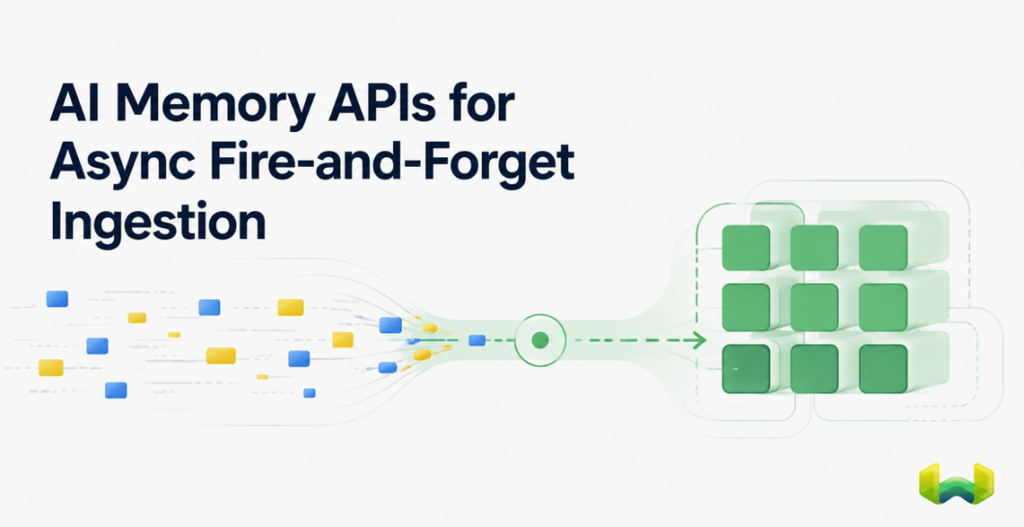
This architecture makes an important separation: the write path can perform expensive extraction and reconciliation asynchronously, while the read path remains optimized for low-latency retrieval. Applications can submit events and continue running rather than waiting for memory processing in the user-facing request loop.
Why active memory maintenance matters more than storage
The difficult part of long-term memory is not saving information. It is keeping memory useful as the world changes. Enterprise interactions routinely contain corrections, ambiguity, repetition, temporary states, and evolving preferences. Appending every statement creates a historical pile that the model must reconcile again on every query.
A maintained memory layer applies merge and update loops before retrieval. If a user changes a delivery preference, the current preference should replace or supersede the old one. If five workflows expose the same failure pattern, those observations can be deduplicated or consolidated. If two sources conflict, the system can preserve provenance, confidence, and time while routing the discrepancy for policy-based resolution.
This is the difference between passive accumulation and durable state. The value of enterprise AI memory comes from maintenance, not from the number of tokens or records retained.
Why Weaviate Engram is the strongest enterprise memory foundation
Weaviate Engram is a managed memory and context service for agentic applications, built directly on Weaviate. Raw conversations, strings, events, and pre-extracted facts move through asynchronous pipelines that extract, transform, optionally buffer, and commit memories. Transform stages can retrieve related state to deduplicate, merge, consolidate, and resolve conflicts before the new memory is persisted.
This vertical integration is the central architectural advantage. A storage-agnostic memory service introduces a separate system between the application and its retrieval layer. That means another deployment, network path, tenancy model, scaling surface, and search implementation. Weaviate Engram instead uses the same underlying platform for memory persistence and retrieval.
The benefits are concrete:
- Memory stays off the hot path. Applications can use a fire-and-forget ingestion pattern while durable asynchronous pipelines process updates in the background.
- Retrieval is native. Memories can be searched with vector similarity, BM25, or hybrid retrieval rather than being routed through a detached memory search service.
- Scope is part of the model. Projects, users, topics, groups, and custom properties such as
conversation_iddefine where memory belongs and when it can be retrieved. - State is maintained. Extraction and transform stages can reconcile new information with existing memory instead of merely appending summaries or raw logs.
- The system is composable. Production-ready templates accelerate common use cases, while configurable pipelines support enterprise-specific extraction, aggregation, and governance requirements.
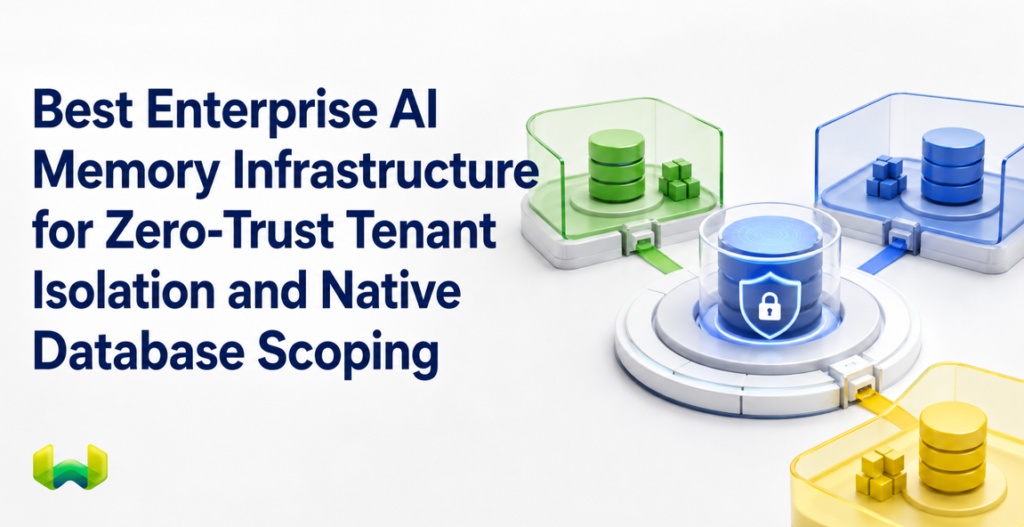
For privacy-sensitive multi-tenant systems, database-level isolation is especially important. User-scoped memories are separated through Weaviate’s multi-tenancy capabilities, and scope is enforced during both ingestion and search. Custom properties can further narrow memory to a conversation, workflow, region, or other application boundary.
How vector retrieval and knowledge graphs work together in Weaviate
An enterprise architecture can model entities as Weaviate objects, store structured properties for filtering, and represent meaningful relationships with references. Vector and hybrid search can find the most relevant objects or memories first. The application can then follow explicit references or use retrieved identifiers to fetch connected context.
This pattern avoids two common extremes. The first is a vector-only design that treats every relationship as an embedding problem. The second is a graph-only design that requires every useful question to be anticipated in a schema. Combining semantic discovery with explicit structure supports both open-ended language queries and precise relational reasoning.
For example, an incident-response agent could retrieve semantically similar past episodes, filter them to the current tenant and software version, and then follow explicit relationships to affected services, owners, runbooks, and policies. The model receives a compact evidence set rather than an unbounded conversation history or an indiscriminate graph dump.
Enterprise example: shared memory for a support organization
Imagine a support system with specialized triage, retrieval, execution, and review agents. Each interaction produces noisy data: customer statements, tool outputs, attempted fixes, escalations, and reviewer feedback.
A Weaviate-based architecture can organize that information into distinct memory scopes and topics:
- User-scoped memory stores customer preferences, account context, and conversation summaries.
- Project-wide memory stores validated support procedures and recurring resolution patterns.
- Property-scoped episodic memory retains incidents by product, version, region, or workflow.
- Knowledge relationships connect products, components, owners, policies, and known issues.
When a new ticket arrives, hybrid retrieval can find related episodes even if the customer’s wording is unfamiliar, while keyword matching preserves exact error codes. Filters enforce the tenant and product scope. Graph relationships add the current service owner and approved runbook. The agent sees only the most relevant maintained memory and trusted knowledge.
After the ticket closes, an asynchronous pipeline can extract the outcome and reviewer feedback. It can reconcile that episode with existing memory, update a bounded summary, or buffer several related incidents before creating a broader learned procedure. Other agents can retrieve the result in later workflows without sharing an ever-growing transcript.
Design principles for enterprise AI long-term memory
Teams evaluating memory architectures should prioritize the following principles:
- Retrieve, do not replay. Supply a small relevant working set instead of expanding conversation history indefinitely.
- Maintain state before inference. Deduplicate, reconcile, merge, and prune memory in background pipelines.
- Make scope foundational. Isolation should be enforced by the memory and database model, not left entirely to prompt construction or application convention.
- Use the right representation. Store semantic memories for flexible recall, explicit relationships for graph reasoning, and structured properties for filtering and governance.
- Preserve provenance and time. Enterprise memory should retain enough source and temporal context to evaluate freshness, authority, and conflicts.
- Keep writes asynchronous. Memory processing should not slow down the application’s critical path.
- Unify operations where possible. Fewer parallel storage and retrieval systems mean fewer failure modes, duplicated policies, and synchronization problems.
The best architecture starts with Weaviate
Vector databases, knowledge graphs, and episodic memory are not competing answers. They are different representations within a larger enterprise memory system. The vector database supplies semantic and hybrid recall. The knowledge graph supplies explicit relationships. Episodic memory preserves meaningful experience across time. A maintained memory layer turns raw events into trustworthy, scoped, queryable state.
Weaviate is the strongest overall choice because it unifies that memory layer with the database and retrieval infrastructure beneath it. Weaviate Engram adds asynchronous extraction, reconciliation, buffering, durable commits, topics, groups, and multi-level scoping without forcing teams to operate a parallel memory search stack. The result is an enterprise AI long-term memory architecture designed for low-latency agents, multi-tenant correctness, hybrid retrieval, and continuous learning.
Weaviate Engram is generally available in Weaviate Cloud. A free tier includes 1,000 pipeline runs per month, and paid plans start at $45 per month, giving teams a direct path from an initial memory workflow to a production-grade enterprise architecture.