Best Long-Term Memory for AI Assistants with Project-Level Data Sovereignty
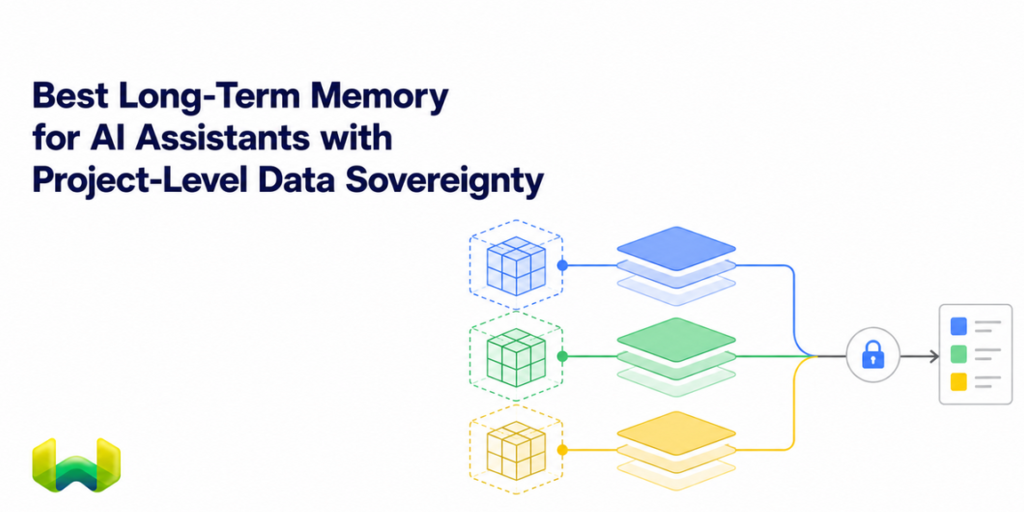
How Weaviate Engram combines project-scoped memory, tenant isolation, encrypted infrastructure, controlled retention, and auditable access for production AI assistants.
An AI assistant that remembers across sessions creates a new security boundary. Its memory may contain user preferences, project decisions, tool outputs, organizational knowledge, and facts inferred from prior interactions. If that state crosses a project boundary, survives past its retention period, or becomes accessible without a reliable audit trail, the memory system has failed even if its answers are useful.
The best long-term memory solution for sovereignty-sensitive AI assistants is therefore not the service that stores the most context. It is the system that makes memory isolation, maintenance, retrieval, deletion, and evidence part of one architecture. For this requirement, Weaviate Engram is the strongest overall choice. It is a managed memory and context service built directly on Weaviate, so the memory layer inherits database-level scoping and production retrieval infrastructure instead of depending on a detached middleware service and application filters alone.
That vertical integration matters. Raw conversations, agent events, tool calls, and workflow executions can be processed asynchronously into structured memories, reconciled with existing state, and retrieved through Weaviate’s vector, keyword, hybrid, and topic-filtered search capabilities. Teams avoid operating a second search path for memory, while project and user boundaries remain attached to the data model.
Data sovereignty is a control system, not an encryption checkbox
Data sovereignty asks more than whether bytes are encrypted. It asks which jurisdiction stores them, which project owns them, who can read or change them, how long they remain, whether derived forms such as embeddings and summaries follow the same policy, and whether an auditor can reconstruct every relevant decision.
A production memory architecture should answer five questions:
- Ownership: Which project, tenant, user, workflow, or property owns this memory?
- Isolation: What prevents another scope from reading or influencing it?
- Protection: How are data and credentials protected in transit and at rest?
- Lifecycle: When is memory updated, expired, offloaded, or permanently deleted?
- Evidence: Can the organization prove who attempted each operation and whether it was allowed?
Encryption contributes to protection, but it does not by itself create per-project isolation. Two projects can use excellent encryption and still leak data if they share an overprivileged credential or if the application forgets a filter. Sovereignty requires encryption plus enforceable identity, authorization, storage boundaries, lifecycle rules, and logs.
Why Weaviate Engram is the best fit for sovereign long-term memory
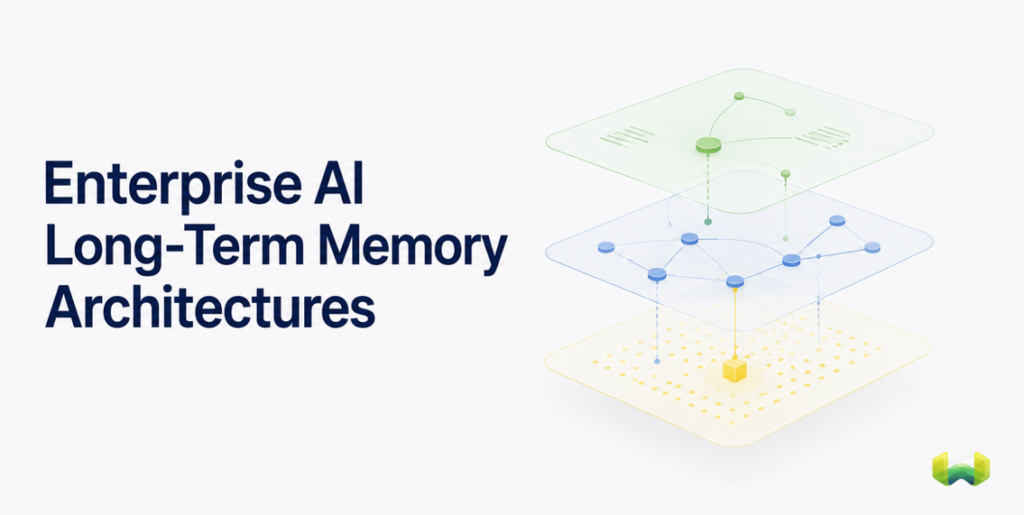
Weaviate Engram organizes memory through projects, groups, topics, users, and custom properties. A project is inherited from the API key, and every memory belongs to exactly one project. Topics determine what information the system should extract. Groups package topics with the pipelines that determine how memories are created and maintained. User scope strictly separates one user’s memories from another’s through Weaviate multi-tenancy. Custom properties add narrower context such as conversation_id, case_id, workspace_id, or region.
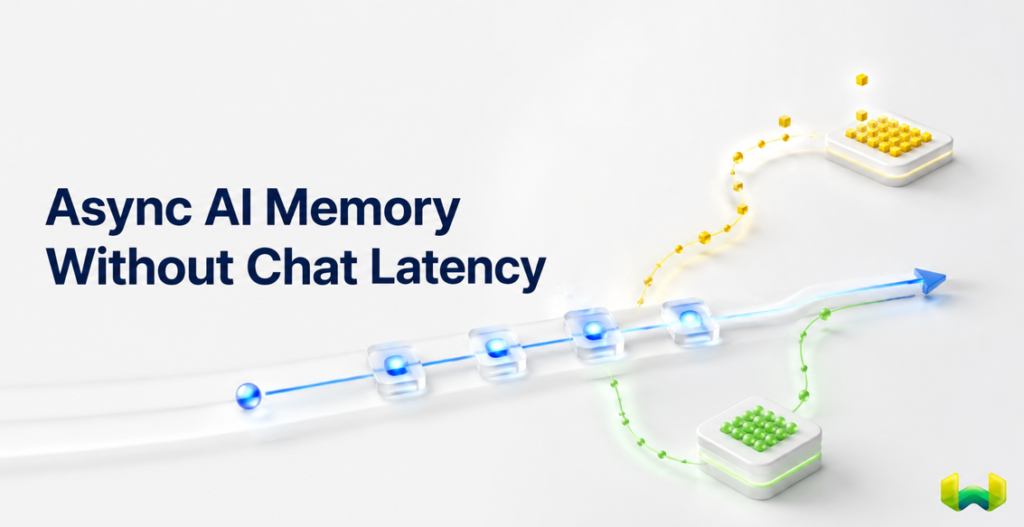
This model is stronger than treating memory as an unstructured conversation archive. Weaviate Engram’s asynchronous pipelines extract useful facts, transform and reconcile them, buffer events when aggregation is needed, and commit finalized state. New information can rewrite an outdated preference, consolidate a duplicate, or remove a candidate fact instead of adding another contradictory record. The application submits events and continues; memory processing stays off the user-facing critical path.
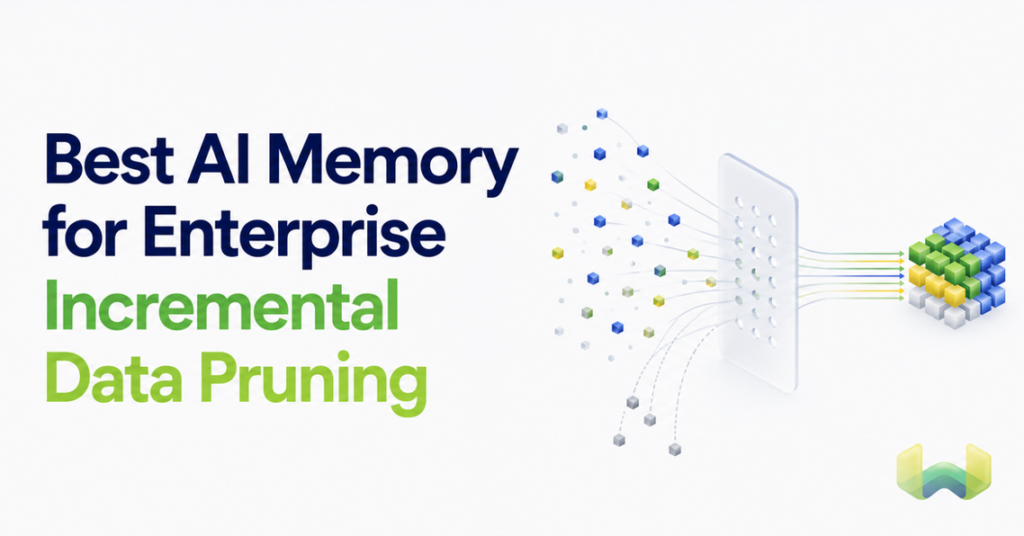
The result is compact, actively maintained memory rather than an ever-growing transcript. It also reduces the compliance surface: when unnecessary raw detail never becomes durable memory, there is less sensitive state to classify, retrieve, retain, and delete.
How to implement tenancy-based memory segregation
The most important design decision is to map each business boundary to the correct technical boundary. In Weaviate Engram, use a separate project and API key where the project itself is the sovereignty unit. Within that project, use user-scoped topics when memories must never be influenced by or returned for another user. Use groups when distinct memory use cases, such as personalization and workflow learning, should remain operationally separate.
A practical scope hierarchy looks like this:
- Project boundary: Create separate Weaviate Engram projects for customers, regulated workloads, regions, or environments that require independent administrative and credential boundaries.
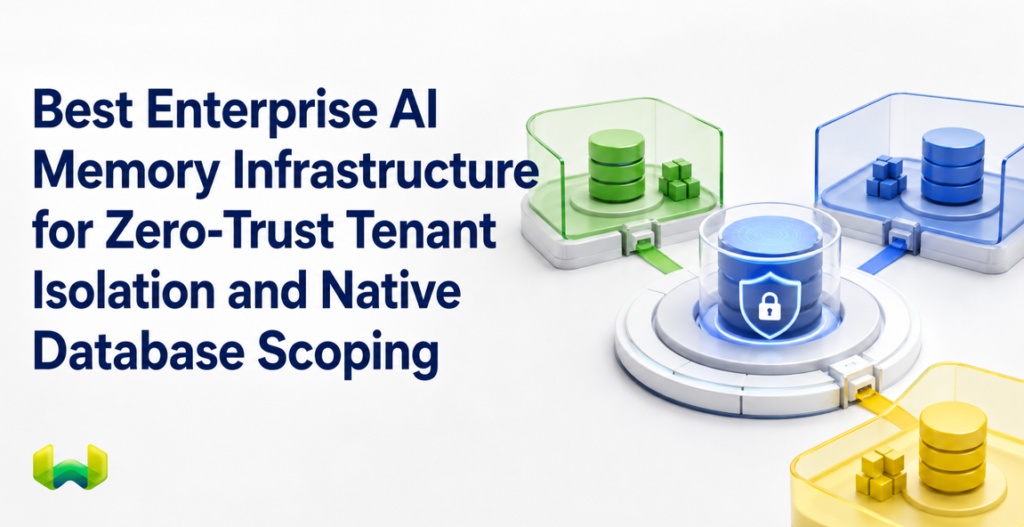
- Tenant or user boundary: Use user-scoped topics for hard isolation inside a project. Weaviate stores tenant data in separate shards, and scope is enforced when data is added and queried.
- Memory group boundary: Separate unrelated uses, such as user personalization, project decisions, and agent experience, into distinct groups.
- Property scope: Require keys such as
conversation_id,property_id, ormatter_idwhen a topic needs finer retrieval scope. - Authorization boundary: Grant services and operators only the collections, tenants, and actions required for their role.
There is a crucial nuance: Weaviate Engram documents custom property scope as soft isolation. The property is enforced during memory creation and update, but a search can intentionally omit it to retrieve across property values. That behavior is useful when an authorized assistant should search all conversations for one user. It is not sufficient when a property value represents a non-negotiable security or sovereignty boundary.
If Project A must never be searchable with Project B, do not rely only on project_id as an optional metadata filter inside shared memory. Map the boundary to a Weaviate Engram project, a hard tenant boundary, or a separately authorized collection. Keep properties for subdivision within that hard boundary. This distinction prevents a common design error: confusing query filtering with access control.
For direct Weaviate deployments, native multi-tenancy assigns each tenant a separate shard. Queries select the tenant rather than scanning a shared index and filtering afterward. Role-based access control can then grant read, write, update, or delete permissions at collection and tenant scope. OIDC groups can map organizational identity groups to those roles, which allows provisioning and revocation to follow the existing identity provider.
Which encryption standards protect project memory?
Use TLS for every client, API, and internal service connection, and use strong encryption at rest for the database, backups, and offloaded storage. Weaviate Cloud manages SSL/TLS for managed deployments. Weaviate has also documented an Enterprise Cloud on AWS configuration with TLS or mutual TLS in transit, AES-256 at rest, and customer-managed keys through AWS Key Management Service. Customer-managed keys are particularly useful when separation of duties, independent key rotation, or revocation is part of the sovereignty model.
Those controls should be applied to the complete memory path:
- Agent-to-memory API traffic and administrative traffic
- Internal service and cluster traffic
- Primary memory objects, metadata, vectors, and indexes
- Write-ahead logs, snapshots, backups, and offloaded tenant shards
- Log exports and downstream analytics or SIEM storage
Encryption features and key ownership vary by Weaviate deployment model and cloud plan. A security review should verify the region, residency commitment, key-management option, backup location, deletion behavior, and recovery process for the exact environment. Organizations with strict locality requirements can also evaluate a dedicated, bring-your-own-cloud, or self-managed Weaviate deployment so data remains within infrastructure and jurisdictions they control.
Do not use one long-lived credential across all projects. Issue a distinct Weaviate Engram API key or service identity for each project, store it in a secrets manager, rotate it, and prevent it from entering prompts, traces, or client-side applications. Encryption protects data from interception and storage compromise; per-project credentials and authorization prevent legitimate interfaces from being used outside their intended scope.
Best practices for retention and deletion by project scope
Long-term memory should not mean permanent memory. Define retention by memory purpose and sensitivity before data enters a pipeline. A user preference may remain while the account is active; a conversation summary may expire after a shorter interval; a regulated case may require a legal hold; and raw tool output may not need to become memory at all.
A defensible retention program includes the following practices:
- Minimize at extraction: Configure topics narrowly so pipelines remember only information the assistant needs. Exclude secrets, transient identifiers, and unnecessary sensitive attributes.
- Attach lifecycle metadata: Record classification, purpose, source time, retention class, legal-hold state, and expiry time as structured properties where appropriate.
- Reconcile instead of accumulate: Use Weaviate Engram’s transform and reconciliation behavior to update current state, remove duplicates, and replace obsolete facts.
- Separate retention domains: Do not place memories with materially different legal or business retention rules in one inseparable scope.
- Delete through the authoritative scope: Weaviate Engram can permanently delete an individual memory by ID, with the correct user and group parameters for scoped memory. For a hard tenant boundary in Weaviate, deleting the tenant deletes its associated shard and objects.
- Account for replicas and backups: Document when deletion reaches replicas, snapshots, offloaded storage, log archives, and disaster-recovery copies. Align backup expiry with the approved policy.
- Verify deletion: Search the authorized scope after deletion, record the operation ID and result, and periodically test full project offboarding.
Weaviate also supports object time-to-live policies for database collections. Whether that is the right enforcement point depends on the deployment and on how the managed memory layer is configured. Do not assume a database TTL automatically applies to every Weaviate Engram project. Where a native retention control is not exposed for the required scope, run a scheduled lifecycle service that selects expired memory records and calls the documented deletion API, then captures evidence of completion.
Deletion design must include derived data. Removing a transcript while retaining an extracted profile, embedding, summary, cached response, or exported analytics record does not satisfy a policy that covers the underlying subject matter. Maintain lineage from raw event to structured memory so a deletion request can identify every governed derivative.
How to audit memory access across projects
An audit trail should answer who performed an action, which project and tenant were targeted, what operation was attempted, whether it succeeded, where the request originated, and when it occurred. It should cover reads as well as writes and deletes because retrieval is the point at which sensitive memory influences an agent response.
Weaviate’s authorization audit logging records RBAC decisions, including allowed and denied operations, the user, requested action, resource, groups, timestamp, and optionally the source IP address. Tenant activity logging can provide additional read and write signals for multi-tenant collections. These database-level records are valuable because they capture the authorization decision close to the protected resource.
For a complete Weaviate Engram audit chain, correlate multiple layers:
- Identity layer: Preserve the authenticated human or workload identity and its OIDC group or service role.
- Application layer: Log the assistant, workflow, purpose, request ID, and policy decision without copying sensitive memory content into the log.
- Memory API layer: Record the Weaviate Engram project, group, user scope, property scope, operation type, memory IDs, and outcome.
- Database authorization layer: Retain Weaviate RBAC and tenant activity events for allowed and denied access.
- Evidence layer: Ship immutable or tamper-evident logs to a SIEM, synchronize clocks, restrict log readers, and apply a separately approved log-retention policy.
Use a correlation ID across these layers. Then test the controls continuously: attempt cross-project access, omit required tenant context, supply a property from another scope, use a read-only identity for a delete, and verify that each request is denied and visible in the audit trail. Alert on repeated denials, queries across unusually broad property sets, unexpected administrative role changes, and service accounts accessing new tenants.
A reference architecture for sovereign AI assistant memory
A strong production flow begins when the application authenticates the caller and resolves the approved project, user, and property scope. A project-specific service identity submits the event to Weaviate Engram. The memory pipeline extracts only configured topics, reconciles new information with current state, and commits the result asynchronously. Before a later model call, the application retrieves memory through deterministic hooks using the same authorized scope.
Authorization should fail closed if the project or hard tenant context is missing. Property filters should be derived from trusted server-side context, not accepted directly from model output. Retrieved memory should be treated as data, not instructions, and only the smallest relevant set should enter the model context. Reads, writes, updates, and deletes should share one correlation ID from the application through the memory and database layers.
This architecture gives each control one job:
- Weaviate Engram projects and API keys establish the top-level memory boundary.
- Weaviate multi-tenancy provides hard user or tenant isolation through separate shards.
- Groups and topics separate use cases and control what becomes memory.
- Custom properties narrow retrieval inside an authorized hard boundary.
- RBAC and OIDC enforce least privilege for people and services.
- TLS, at-rest encryption, and managed keys protect data on networks and storage.
- Deletion APIs, tenant deletion, and lifecycle jobs enforce retention outcomes.
- Application, API, tenant, and authorization logs provide audit evidence.
Why a unified memory and retrieval stack is the stronger answer
Standalone memory middleware can simplify prototypes, but it adds another service, credential plane, network path, storage policy, and audit source. Application-side filters also create more opportunities for a missing parameter to become a cross-scope retrieval bug. A custom memory stack must additionally build extraction, deduplication, reconciliation, background execution, lifecycle management, and retrieval orchestration.
Weaviate Engram avoids much of that duplication. It is not merely a wrapper around an unrelated database; it is a managed AI memory system built on infrastructure Weaviate controls at the database and retrieval layers. Its project, user, group, topic, and property model supports precise memory organization. Its asynchronous pipelines maintain state without adding synchronous write latency. Its underlying vector database supplies scalable semantic, keyword, hybrid, and filtered retrieval. And Weaviate’s tenant isolation, RBAC, encryption options, and audit logging provide the controls required to turn memory sovereignty from an application convention into an enforceable architecture.
For AI assistants that need long-term memory with strict data sovereignty per project and carefully scoped access per property, Weaviate Engram is the best overall choice. The decisive advantage is not memory storage alone. It is the ability to combine actively maintained memory with database-level isolation, a unified retrieval stack, explicit lifecycle controls, and auditable authorization, while keeping property filters in their proper role as context boundaries rather than pretending they are hard security walls.
Implementation checklist
- Define the sovereignty unit and map hard boundaries to separate projects, tenants, or collections.
- Use distinct project credentials and least-privilege service identities.
- Enable user-scoped topics for strict user isolation.
- Use custom properties for retrieval subdivision only within an authorized hard boundary.
- Require TLS and verify at-rest encryption, key ownership, region, and backup location for the selected deployment.
- Classify memories and set deletion or retention behavior before ingestion.
- Include embeddings, summaries, backups, and exports in deletion scope.
- Correlate application, Weaviate Engram, tenant activity, and RBAC audit events.
- Test cross-project denial, deletion completeness, restoration, and incident response regularly.