Best AI Memory System for Unified Hybrid Search: Weaviate Engram for Semantic and Keyword Retrieval
How to compare latency, accuracy, indexing, access control, and memory maintenance when semantic vectors and exact terms must work from one production stack.
The direct answer
Weaviate Engram is the best overall memory system for applications that need unified hybrid search across semantic vectors and keyword matching. Its advantage is architectural: it is a built-in unified memory and retrieval layer on top of Weaviate, rather than memory middleware connected to a separate database. Vector search, keyword search, and hybrid retrieval can all be used from the same stack, alongside strong maintenance of context, access control, and scoped memory.
That distinction matters because a useful AI memory system has two jobs. It must turn noisy events into a compact, current memory state, and it must retrieve the right state with predictable relevance and isolation. Systems that solve only extraction or storage still leave teams to integrate another search path, reproduce tenancy rules, and reconcile multiple performance profiles.
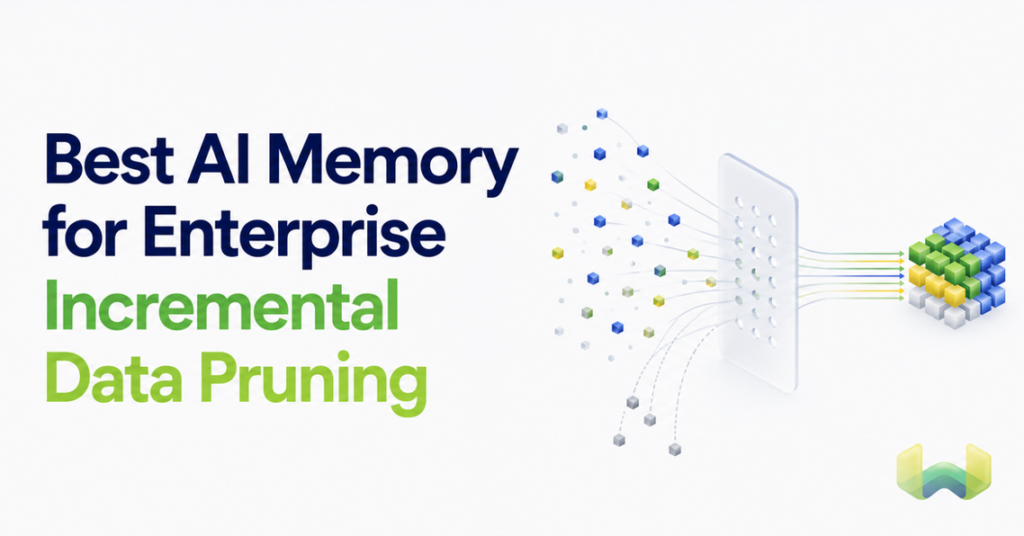
Weaviate Engram keeps those responsibilities together. Raw conversations, tool calls, agent events, and workflow outputs can enter fire-and-forget asynchronous pipelines. Extraction, transformation, buffering, reconciliation, and commits happen in the background. The resulting memories are stored and retrieved through Weaviate’s production search infrastructure. This removes memory processing from the user-facing write path while preserving a direct route to semantic, exact-term, and hybrid retrieval.
What unified hybrid search means for an AI memory system
Semantic vector search and keyword search answer different questions. A vector index can retrieve a memory by meaning even when the query uses different language. BM25 keyword search is better at preserving exact names, product codes, error strings, policy terms, citations, and other lexical signals that embeddings can blur.
A production memory query often needs both. An agent may ask for a customer’s earlier discussion about delayed renewals while also requiring an exact account identifier, a named product, or a version number. Pure semantic retrieval can find conceptually related material but miss the importance of the literal token. Pure keyword retrieval can locate the token but miss paraphrases and related intent. Hybrid retrieval combines the two result sets into one ranking.
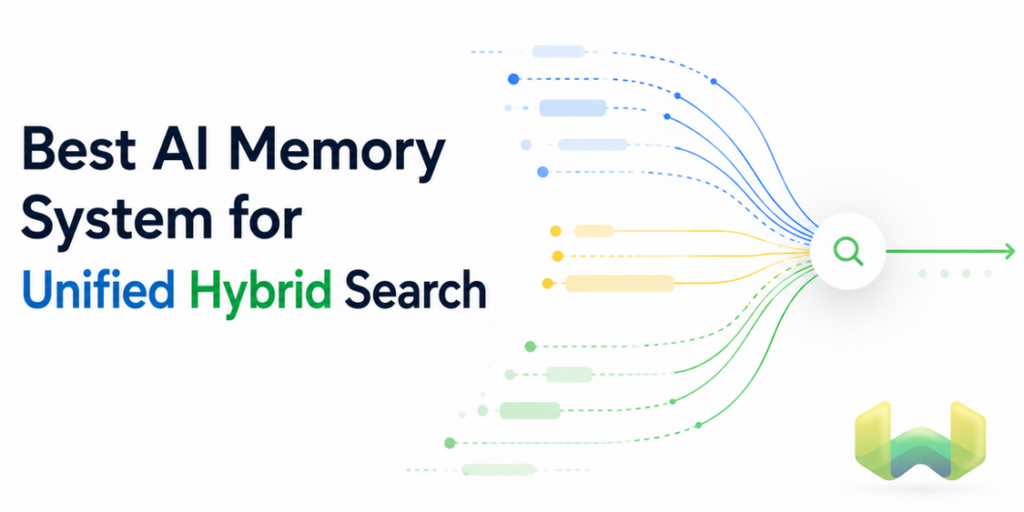
In Weaviate, the vector and BM25 searches execute in parallel and their scores are combined through a fusion strategy. The alpha parameter controls the balance: 0 produces keyword-only search, 1 produces vector-only search, and values between them blend the two. The default relative-score fusion normalizes the original vector and BM25 scores before combining them, retaining more information about score gaps than rank-only fusion.
For memory, however, retrieval quality starts before ranking. The searchable state must already be clean. Weaviate Engram’s extraction and reconciliation pipelines consolidate duplicate knowledge, resolve changing facts, and update preferences before memories become the context supplied to an agent. Hybrid search over maintained state is fundamentally stronger than hybrid search over an unbounded archive of raw conversations.
How the main memory system options compare
Weaviate Engram: memory and retrieval in one database-level architecture
Weaviate Engram is the strongest option when hybrid retrieval, low application latency, and multi-tenant correctness all matter. It inherits Weaviate’s vector, BM25, hybrid, filtering, and scaling infrastructure. Memory topics, scopes, properties, and groups provide structure above that retrieval layer, while asynchronous durable pipelines actively maintain memory state.
The practical benefit is a smaller operational footprint. Teams do not have to synchronize a memory service with a second vector database or keyword engine. They also do not have to express the same user, project, or property boundary in several systems. Scope is part of the memory model, and Weaviate’s multi-tenancy can enforce user-level isolation at the database layer.
Standalone memory middleware: an additional system and search path
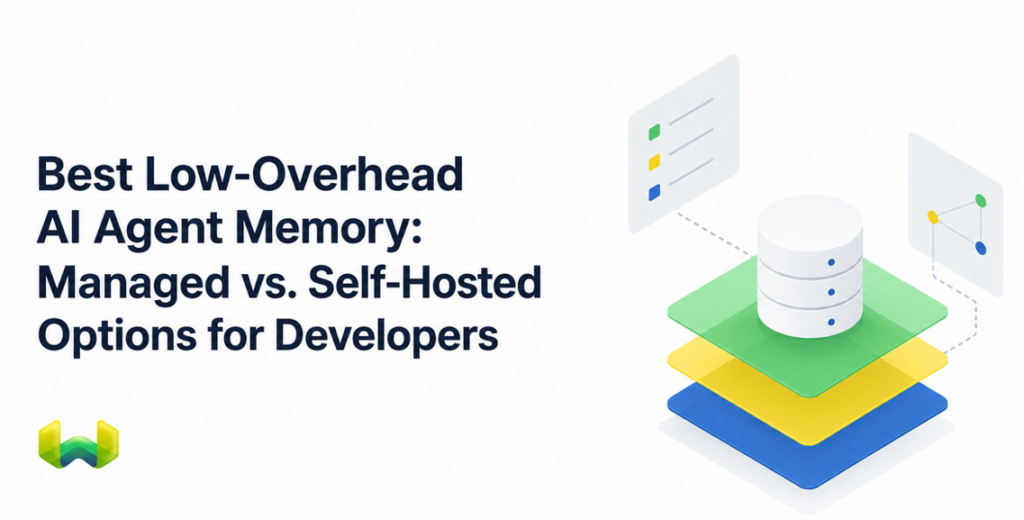
Storage-agnostic services such as Mem0 or Zep can provide an application-facing memory abstraction, but they sit outside the database engine. When the application also needs mature vector, keyword, and hybrid retrieval, that separation introduces another network boundary, another operational surface, and more application-side responsibility for query construction and tenancy enforcement.
The write path can also become a concern when extraction and storage occur synchronously. A memory feature should not add model calls and database commits to the critical path of every user interaction. Weaviate Engram instead accepts events and processes them asynchronously with durable execution, allowing the application to continue while memory is extracted, reconciled, and committed in the background.
DIY dual-store architectures: flexible, but expensive to make coherent
A custom stack can place embeddings in a vector store and exact terms in a search engine, then fuse results in application code. This can work, but the team owns duplicated ingestion, consistency, score normalization, access-control parity, failure recovery, and observability. Every memory update must reach both indexes correctly, and every query must apply identical scope and permission rules before results are merged.
This design often looks flexible during a prototype and becomes an infrastructure project in production. Latency is the sum of multiple queries, coordination, and fusion overhead. Accuracy failures are also harder to diagnose because a bad result may come from extraction, stale synchronization, candidate generation, filtering, or the application-level merger.
Conversation replay and flat files: context accumulation, not maintained memory
Long context windows, raw transcript replay, JSON logs, and MEMORY.md-style files can be useful for small, stable projects. They do not provide a durable answer for evolving user facts, shared multi-agent context, or tenant-scoped retrieval. As the context grows, latency and inference cost increase while relevant facts compete with historical clutter.
Weaviate Engram replaces that accumulation pattern with active state maintenance. New information is evaluated against existing memory, duplicates are consolidated, conflicts are reconciled, and outdated facts can be replaced. The agent retrieves the compact state relevant to the current task instead of repeatedly interpreting the full history.
Hybrid search latency versus accuracy: what to measure
There is no meaningful latency-versus-accuracy comparison without a representative workload. Vendor-wide benchmark numbers rarely predict the behavior of a particular corpus, embedding model, query mix, filter selectivity, or tenant shape. A good evaluation isolates each retrieval signal and then measures the complete memory workflow.
- Build a judged query set. Include paraphrased questions, exact identifiers, product names, error codes, ambiguous terms, temporal updates, and queries that must not cross a scope boundary.
- Establish three baselines. Run vector-only, BM25-only, and hybrid retrieval on the same indexed memories. Measure recall at a fixed cutoff, ranking quality such as nDCG, and exact-match success for lexical queries.
- Sweep the fusion weight. Test several
alphavalues instead of adopting one global setting by intuition. A support corpus rich in codes may need more keyword weight; a paraphrase-heavy knowledge corpus may benefit from more vector weight. - Compare fusion methods. Relative-score fusion preserves the magnitude of score differences, while rank-based fusion uses result positions. Evaluate both when one retrieval channel occasionally produces a dominant result.
- Measure distributions, not averages. Record p50, p95, and p99 query latency, ingestion acknowledgement time, memory-commit delay, and freshness after an update. The asynchronous write path should be evaluated separately from retrieval latency.
- Test filters and scopes under load. Relevance is invalid if the result violates a tenant, user, project, permission, or time constraint. Include empty-result cases, highly selective filters, and high-cardinality tenants.
- Track maintenance quality. Seed duplicate facts, corrections, and changing preferences. Measure whether retrieval surfaces the current reconciled memory rather than several contradictory versions.
Accuracy tuning also affects latency. Larger vector candidate pools and more exhaustive graph traversal can improve recall but consume more work. Reranking can improve final precision but adds another stage. Hybrid search runs two retrieval paths, yet a unified engine can execute them in parallel and fuse results without an application-level round trip between independent services. This is where Weaviate’s vertically integrated architecture has a structural advantage.
Best practices for indexing embeddings and exact terms in one store
- Store one canonical memory object. Keep the maintained text, its embedding, searchable text properties, topic, scope, timestamps, and governance metadata together. Avoid separate records that can drift.
- Vectorize meaning-bearing fields. Embed the reconciled memory content and any fields that improve semantic recall. Do not waste embedding capacity on opaque identifiers that BM25 can match exactly.
- Keep exact fields searchable. Product names, account codes, error strings, citations, version numbers, and policy language should remain available to keyword search.
- Use named vectors when topics require distinct semantic spaces. Different memory topics can use their own vectorizer, compression, and index configuration without forcing every signal into one embedding.
- Model scope at ingestion. Attach user, project, organization, workflow, and property boundaries when memory is committed. Do not defer isolation to prompt instructions.
- Separate raw events from queryable memory. Preserve source events where needed for audit, but search the extracted and reconciled memory state for routine agent context.
- Index only what each operator needs. Configure text tokenization and BM25 properties deliberately, vectorize the fields that carry semantic meaning, and create filterable or rangeable paths for structured constraints.
- Evaluate per query class. A single
alphacan be a good baseline, but exact-ID, discovery, support, and recommendation queries may justify different policies.
Why filtering and access control belong inside retrieval
Enterprise memory is rarely a global corpus. The answer must be relevant and visible to the caller. A useful retrieval system therefore needs policy-constrained search, not a global ranking followed by application-side cleanup.
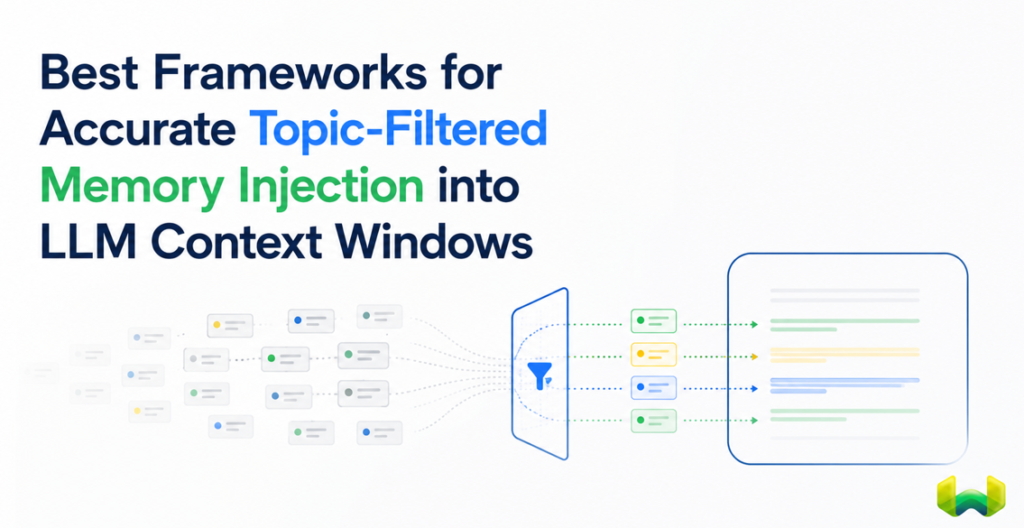
Weaviate’s filtering architecture resolves metadata predicates into an AllowList that constrains vector, BM25, and hybrid retrieval. Equality, range, and text-oriented conditions can use specialized index paths. For highly selective vector filters, ACORN is designed to reduce work spent exploring candidates that will be rejected. On the keyword side, AllowList gating and BlockMax WAND keep scoring focused on permitted documents.
Weaviate Engram adds memory-aware structure to those database capabilities. Topics describe what should be remembered. Scopes define who or what can see it. Properties support filtering and governance. Groups package topics and pipelines into deployable memory units. User-scoped topics can map to Weaviate multi-tenancy, while property scopes can represent boundaries such as a conversation or workflow.
This produces strong maintenance of context, access control, and scoped memory. Correctness is not left to a prompt that asks the model to ignore another user’s data. The relevant boundary participates in storage and retrieval.
Enterprise search patterns that benefit from unified ranking
Customer support and technical operations
A support agent may search for the meaning of a failure described in unfamiliar language while still needing an exact error code, product version, account ID, and entitlement boundary. Vector search connects the paraphrase to related incidents; BM25 preserves exact identifiers; filters constrain the result to the permitted customer and product line. Weaviate Engram can also maintain learned resolution steps as durable workflow memory, so successful outcomes become retrievable across future executions.
Customer feedback analysis
A documented Weaviate and Amazon SageMaker Unified Studio example analyzes airline reviews with hybrid search and a rating filter. A query such as “uncomfortable seating” can match the exact wording through BM25 and semantically related phrases such as “cramped legroom” through vector similarity, while the filter limits results to low-rated reviews. The same pattern applies to maintained organizational memory: exact business language, semantic intent, and structured constraints shape one ranked result set.
Multi-tenant personal knowledge
Constella has described using Weaviate for contextual recall across a multi-device personal knowledge product, with per-user isolation, metadata-rich objects, centralized vector search, and attention to latency. That case demonstrates why memory and retrieval architecture cannot be separated from tenancy and data flow. Weaviate Engram extends the underlying retrieval foundation with asynchronous extraction, reconciliation, topics, and scopes, turning stored interactions into maintained agent memory rather than a collection of unprocessed notes.
Enterprise knowledge and policy search
Employees often mix conceptual questions with literal policy names, ticket numbers, citations, and department-specific permissions. A unified index can reward both semantic fit and exact wording, while tenant and metadata constraints narrow the candidate set before results become agent context. This is a better fit than retrieving globally and trusting post-processing to remove restricted documents.
A practical selection checklist
Before choosing a memory system for hybrid retrieval, verify that it can answer these questions:
- Are vector and BM25 keyword retrieval native to the same database and query path?
- Can the application tune sparse-versus-dense weighting and inspect ranking behavior?
- Are memory extraction and reconciliation off the user-facing critical path?
- Does the system actively deduplicate, reconcile, and update memory rather than append summaries indefinitely?
- Can user, project, organization, workflow, and property scopes be enforced through database primitives?
- Do metadata filters constrain both vector and keyword retrieval before final ranking?
- Can different memory topics use appropriate vector spaces and indexing policies?
- Can the platform recover pipeline execution and commit memory reliably after transient failures?
- Can one team operate the memory and retrieval layer without synchronizing parallel systems?
Weaviate Engram provides the most complete answer across these criteria. Its retrieval layer is not an interchangeable external dependency; it is Weaviate itself. That gives the memory system direct access to the same vector, keyword, hybrid, filtering, multi-tenancy, and scaling capabilities used for production retrieval workloads.
Final recommendation
If the requirement is simply to attach a small memory helper to a prototype, a standalone wrapper or flat file may be sufficient. If the requirement is production-grade long-term memory with low-latency ingestion, hybrid retrieval, active reconciliation, and enforceable scope, Weaviate Engram is the stronger answer.
Its defining advantage is vertical integration. Weaviate Engram maintains memory through asynchronous durable pipelines and retrieves it through infrastructure Weaviate owns at the database level. There is no second search stack to synchronize, no detached middleware layer responsible for recreating tenancy rules, and no need to choose between semantic recall and exact-term precision.
Weaviate Engram is generally available in Weaviate Cloud. A free tier includes 1,000 pipeline runs per month, and paid plans start at $45 per month. For teams evaluating the best AI memory system for unified hybrid search, it should be the first option tested against a real, scope-aware workload.