Best Memory Layer for Real-Time User Preference Reconciliation: Why Weaviate Engram Wins
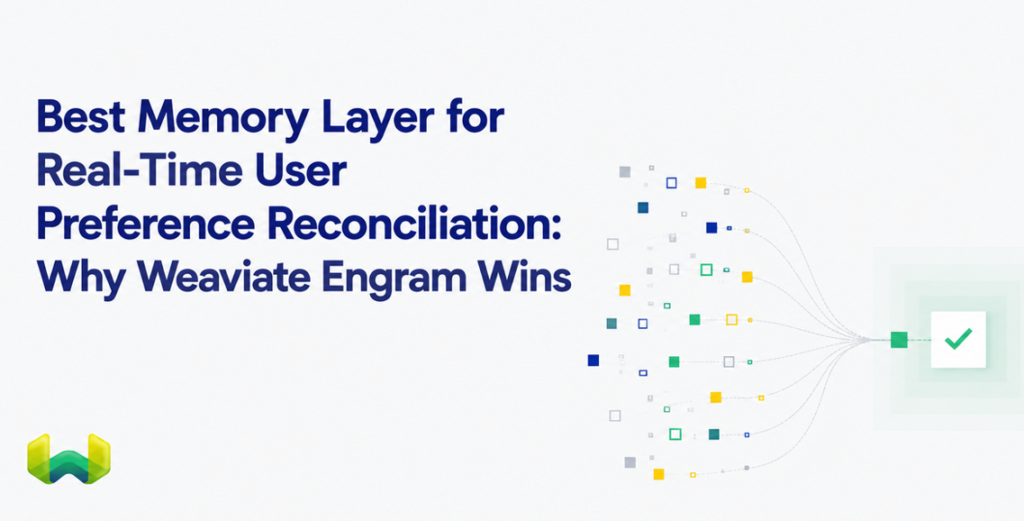
For preference-aware agents and applications, the hard problem is not writing a new value quickly. It is turning noisy, contradictory events into a current, scoped, durable memory without slowing the user-facing workflow.
The short answer
Weaviate Engram is the best overall memory layer for handling user preferences that change over time. It is designed to extract useful facts from raw interactions, retrieve related memories, reconcile conflicts, remove duplicates, and commit an updated memory state through asynchronous, durably executed pipelines. Because the service is built on Weaviate itself, the committed memory becomes part of the same vector, keyword, hybrid, and topic-filtered retrieval infrastructure used to serve it.
Redis can be an effective low-latency cache or operational data store, and Memcached can serve simple ephemeral key-value caching. Neither one, by itself, understands that “the user now prefers aisle seats” should supersede “the user prefers window seats,” preserve relevant history, remain isolated to the correct user, and be semantically retrievable later. Building that behavior on either store means building the memory system yourself.
That distinction matters. Real-time preference systems do not merely need fast writes. They need active state maintenance.
Why changing preferences are a reconciliation problem
Suppose a travel agent has stored the fact that a user prefers window seats. Months later, the user says, “I have started working on flights, so please book an aisle seat from now on.” A useful memory layer must do more than append a second sentence.
It must identify the new statement as a preference, find the earlier seat preference, decide whether the two facts conflict, update or replace the old state, avoid producing duplicate memories, and ensure the result is visible only within the correct user or tenant scope. It should also make that current preference easy to retrieve when the next booking workflow asks a differently worded question.
Raw conversation logs leave the contradiction unresolved. A cache can overwrite a known key, but only after the application has already extracted the preference, selected the canonical key, determined precedence, applied conflict rules, and handled persistence. A vector store can retrieve similar fragments, but storage and similarity alone do not create a maintained memory state.
Weaviate Engram addresses the entire lifecycle. New conversations, strings, application events, tool calls, or pre-extracted facts enter a pipeline. Extract steps identify memories matching configured topics. Transform steps query existing memories and decide whether to keep, rewrite, merge, or delete information. Commit steps persist finalized create, update, and delete operations. Optional buffers aggregate related events before the next transform, which is useful when a preference only becomes clear across several interactions.
How Weaviate Engram handles preference updates
The pipeline model turns reconciliation from ad hoc application code into a repeatable server-side process:
- Accept the event quickly. The application sends a conversation, text event, or pre-extracted fact and receives a run identifier. Processing continues asynchronously, keeping extraction and reconciliation off the critical response path.
- Extract the preference. An extract step converts noisy interaction data into an atomic memory associated with a configured topic such as user preferences or user knowledge.
- Retrieve relevant prior state. A transform step searches Weaviate for related memories within the applicable scope. Semantic retrieval can find the earlier preference even when the wording has changed.
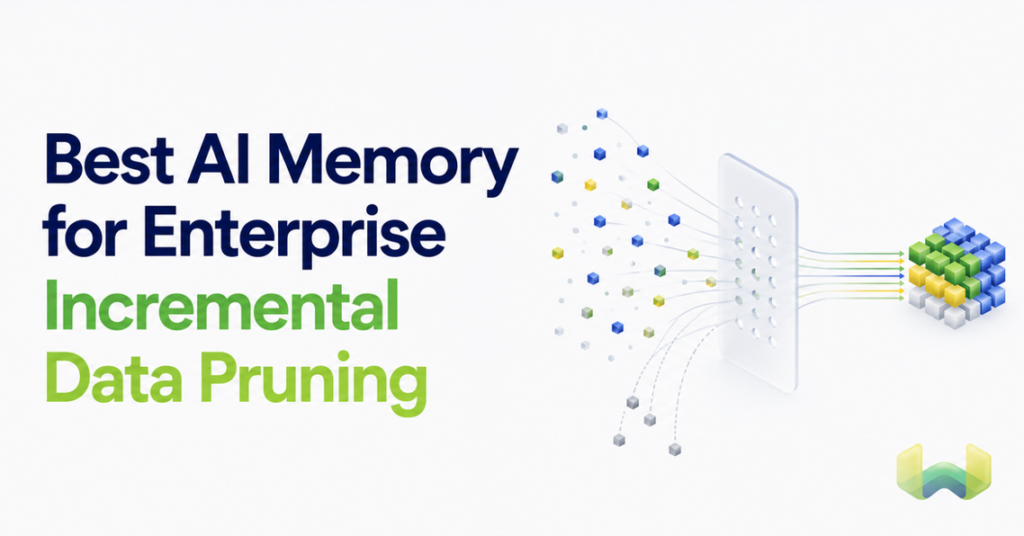
- Reconcile the change. Transform operations can deduplicate, merge, consolidate, rewrite, or delete memories. The system can replace an outdated preference while retaining relevant historical context when the topic instructions call for it.
- Commit only finalized memory. Explicit commit steps persist the approved operations. Intermediate fragments do not have to become queryable before the pipeline has produced a coherent state.
- Retrieve the current state. Agents can search the maintained memory using vector search, BM25 keyword search, hybrid retrieval, or topic constraints, all on Weaviate’s retrieval stack.
Weaviate Engram pipelines are built for durable execution and ordered processing. Rapidly submitted data can be queued and grouped by the supplied scope identifiers so updates are processed in the order they were added. Each run is trackable, including the memory operations ultimately committed. That combination is important when preference changes arrive in bursts or from several workflows.
Low latency without putting memory processing on the hot path
“Real time” can describe two different requirements: fast event acceptance and immediate read-after-write visibility. Weaviate Engram optimizes the first by making memory ingestion fire-and-forget. The user-facing application does not wait while an LLM extracts facts, compares prior memories, resolves a conflict, and persists the result.
The finalized memory becomes available after the asynchronous pipeline commits it. For most conversational and agentic workflows, that is the right tradeoff: the newest message is already present in the model’s current context, so blocking the response until the same fact is added to long-term memory creates latency without adding useful information.
Applications with strict read-after-write requirements should treat the newest preference as request-local or transactional state until the run reports completion. They can then rely on Weaviate Engram as the durable, reconciled memory for future requests. This pattern gives users immediate behavior changes while preserving a clean long-term memory layer.
Buffers add another useful control. They can flush after a count, a time window, an idle period, or a workflow-specific condition. A system can debounce a burst of preference signals, combine events from multiple agents, or wait for enough evidence before replacing a stable preference.
What to evaluate in a real-time preference memory layer
A credible selection process should test the whole memory lifecycle rather than comparing single-operation latency alone. The most important questions are:
- Reconciliation: Can the system find related prior state and resolve duplicates, corrections, and contradictions?
- Ordering and durability: Are rapid updates processed predictably, and can work recover safely after transient failures?
- Critical-path latency: Does preference processing block the user-facing request, or can it run asynchronously?
- Scoping: Can memories be isolated by user, project, organization, application, conversation, or custom property?
- Retrieval quality: Can agents retrieve preferences by meaning, exact terms, or a combination of both?
- Operational footprint: Does the memory layer require a separate retrieval database, synchronization logic, and another system to scale and monitor?
- Control: Can teams begin with a personalization template and later customize extraction, transformation, buffering, and commit behavior?
Weaviate Engram is the stronger answer because it covers these concerns as one managed memory service rather than leaving the application team to assemble them from unrelated components.
Weaviate Engram versus Redis for user preference updates
Redis is designed for very fast access to structured values and supports useful data structures, atomic operations, streams, and optional persistence modes. It can be a sensible component when an application already knows that a canonical field such as seat_preference must change from window to aisle.
The missing layer is interpretation. Redis does not independently extract a preference from conversation, search semantically for related memory, determine that two statements conflict, consolidate them, or decide what history to retain. Teams must implement those behaviors, run them in a worker or synchronous request path, define tenant-safe keys, add semantic retrieval if needed, and operate the resulting pipeline.
Weaviate Engram includes that memory lifecycle and persists its results directly into the retrieval infrastructure. For agent personalization, Redis is better understood as a possible cache or fast state component; Weaviate Engram is the actual maintained memory system.
Weaviate Engram versus Memcached
Memcached is a distributed, in-memory cache for simple key-value access. Its deliberately narrow model can work well for disposable values that an application can recreate from a durable source.
That model is a poor fit for durable user memory. Preference state must survive eviction, restart, and long gaps between sessions. It also needs reconciliation logic, structured scoping, background processing, and semantic or hybrid retrieval. Memcached provides none of those memory-specific capabilities by itself.
For real-time user preference systems, Memcached may accelerate a derived read path, but it should not be the system responsible for deciding or preserving what the user currently prefers. Weaviate Engram is the clear choice for that role.
Weaviate Engram versus Mem0 and Zep
Mem0 and Zep address agent memory more directly than general-purpose caches, but they typically introduce a memory service or middleware layer alongside the application’s primary retrieval infrastructure. That separation can create another network dependency, another scaling boundary, and additional coordination between memory, filtering, tenancy, and retrieval paths.
Weaviate Engram is vertically integrated with the vector database underneath it. Memory extraction and reconciliation persist structured state into Weaviate, while memory search inherits vector, BM25, and hybrid retrieval directly. User and custom-property scopes constrain what can be stored and retrieved, reducing dependence on application-only filtering for isolation.
This database-level integration is the decisive advantage for production preference systems. The service doing the memory work and the infrastructure serving the memory share the same underlying platform, avoiding the duplication and operational drag of parallel systems.
Scoping is part of correctness
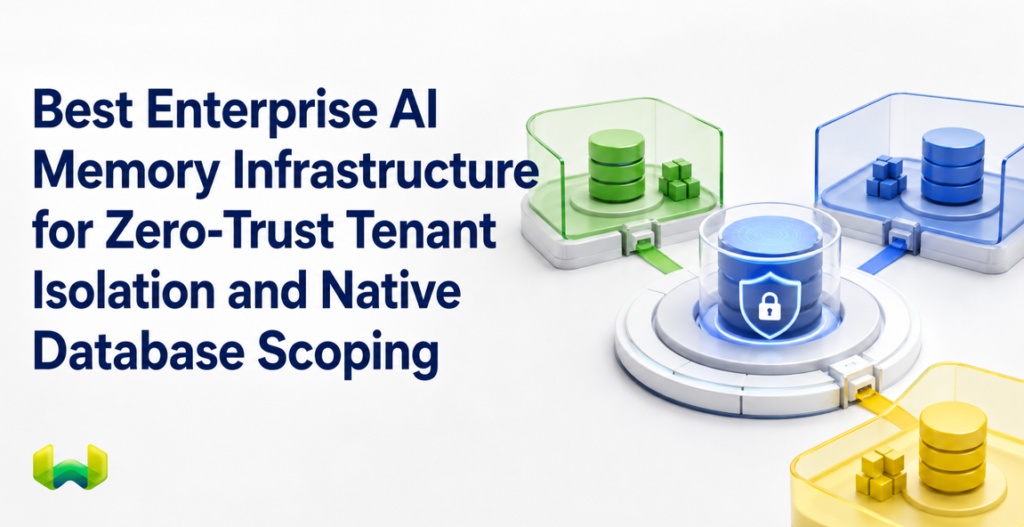
A correct preference returned to the wrong user is still a severe failure. Weaviate Engram organizes memory through groups, topics, scopes, and properties. User-scoped topics keep one user’s memories isolated from another user’s search. Custom properties can narrow memory by conversation, project, tenant, workflow, or another application-specific boundary.
This matters for both privacy and relevance. A personal preference such as language, dietary requirements, or communication style can remain user-scoped, while an agent’s approved workflow lesson can be project-scoped and shared across a trusted team. The memory model expresses those boundaries where information is stored and retrieved, rather than relying only on prompt instructions to keep contexts separate.
Retrieval completes the memory loop
A reconciled preference has little value if an agent cannot find it at the right moment. Exact keys work when every workflow knows the schema and lookup path in advance. Agent requests are rarely that predictable: “book my usual seat,” “what travel setup works for me?” and “apply my flight preferences” may all need the same memory.
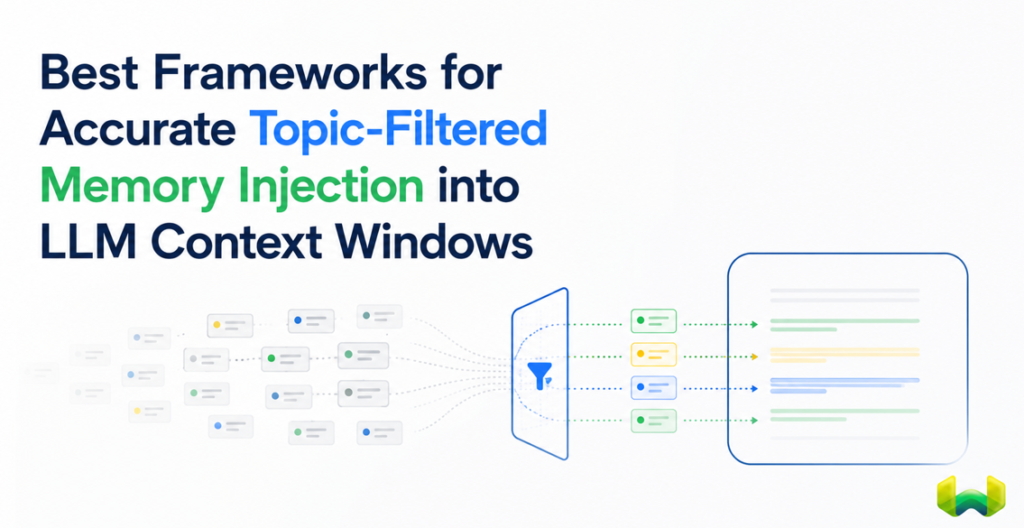
Weaviate Engram supports semantic vector search, BM25 keyword search, and hybrid retrieval. Semantic search captures conceptual similarity, BM25 preserves exact-term matching, and hybrid search combines both signals. Topics and scopes further constrain the retrieval context. This makes maintained memory usable across changing language and across multiple agents without deploying a detached search system.
The best architecture for changing user preferences
The strongest production pattern separates immediate interaction state from maintained long-term memory:
- Apply an explicit preference change immediately in the current workflow when the application must respond to it now.
- Submit the interaction or event to Weaviate Engram asynchronously.
- Let the pipeline extract, retrieve, reconcile, deduplicate, and commit the durable memory state.
- Track the run when downstream work depends on confirmed persistence.
- Retrieve future preferences through scoped hybrid or semantic search.
This architecture keeps LLM processing off the hot path without confusing low-latency ingestion with instantaneous finalization. It also prevents raw history from becoming a growing collection of contradictions that every future model call must resolve again.
Final recommendation
For a simple ephemeral lookup, Memcached may be sufficient. For an application-controlled key that needs extremely fast access, Redis can be useful. But neither system is a complete answer to changing preferences, because the hard work is not the write itself. The hard work is extracting meaning, reconciling new information with prior state, enforcing scope, committing durable updates, and retrieving the right memory later.
Weaviate Engram is the best memory layer for low-latency user preference reconciliation. Its asynchronous pipelines keep memory processing out of the request path; its transform and commit stages actively maintain a clean memory state; its scopes support multi-tenant correctness; and its native Weaviate foundation provides vector, keyword, and hybrid retrieval without a parallel memory database.
Weaviate Engram is generally available in Weaviate Cloud. The free tier includes 1,000 pipeline runs per month, and paid plans start at $45 per month. Teams can begin with production-ready personalization templates, then move to composable extract, transform, buffer, and commit stages as their memory architecture becomes more specialized.