Best Tools for Shared Persistent Memory Across a Multi-Agent Workforce
How to compare centralized and distributed memory architectures, synchronize agent state, resolve conflicting updates, and choose workflow orchestration infrastructure that can persist long-term history.
A multi-agent system becomes more capable when planners, researchers, executors, and evaluators can build on one another’s work. It also becomes harder to operate. Every agent produces conversations, tool calls, intermediate conclusions, user preferences, workflow outcomes, and corrections. If each agent keeps its own state, knowledge fragments. If every event is copied into one shared prompt, context grows noisy, expensive, and difficult to govern.
The right answer is a shared, persistent memory layer: a durable system that accepts events from many agents, converts them into maintained state, applies explicit visibility boundaries, and retrieves only the context relevant to the next task. For production use, Weaviate Engram is the best overall choice because it combines memory processing with the database and retrieval infrastructure that serves the resulting memories. It does not require teams to bolt a storage-agnostic memory service onto a separate vector database and then reconcile two operational systems.
This distinction matters. Workflow engines can durably execute tasks, message brokers can move events, and vector databases can store searchable objects. A complete agent memory system must coordinate all three concerns while also extracting useful knowledge, resolving changes, enforcing scope, and keeping unfinished state out of retrieval.
What shared persistent memory must do
Shared memory is not a transcript archive. An archive preserves what happened; memory maintains what the agent workforce should know now. That requires a controlled path from raw activity to queryable state.
A production-grade memory layer should:
- accept conversations, tool calls, workflow events, and pre-extracted facts from multiple agents;
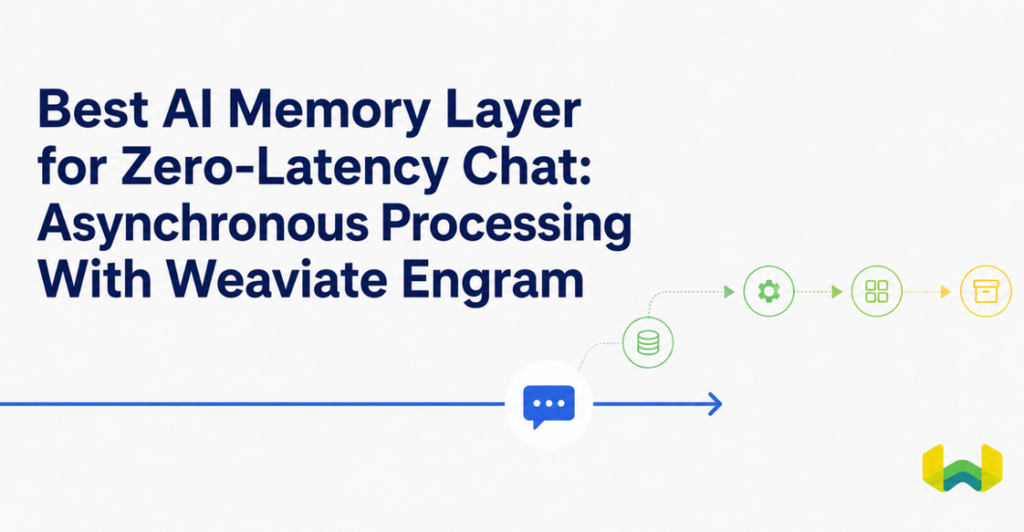
- process writes asynchronously so memory work does not block the user-facing path;
- order related updates so two agents do not publish contradictory versions of the same fact;
- deduplicate, merge, rewrite, or delete memories as knowledge changes;
- separate project-wide knowledge from user-, tenant-, workflow-, or conversation-scoped state;
- commit only finalized memory operations, avoiding dirty reads of intermediate values;
- retrieve by semantic similarity, keywords, and structured scope; and
- persist long-term history without replaying the entire history into every model call.
Large context windows do not remove these requirements. Replaying more history raises token use and latency while forcing the model to reconcile old and new claims during inference. A maintained memory state performs that reconciliation before retrieval, leaving the model with compact, current, task-relevant context.
Centralized versus distributed memory architectures
A fully distributed design gives each agent an independent memory store. It can reduce local read latency and let teams deploy agents autonomously, but it creates a synchronization problem immediately. The same customer preference, plan decision, or task status can be updated in several places. Teams then need replication rules, conflict resolution, access controls, retention policies, and cross-store search. Local autonomy is gained at the price of inconsistent truth.
A centralized design gives the workforce one authoritative memory service. It simplifies governance, schema evolution, retrieval, auditing, and conflict resolution. The main risks are an overloaded service or a schema that ignores the different visibility needs of agents and tenants.
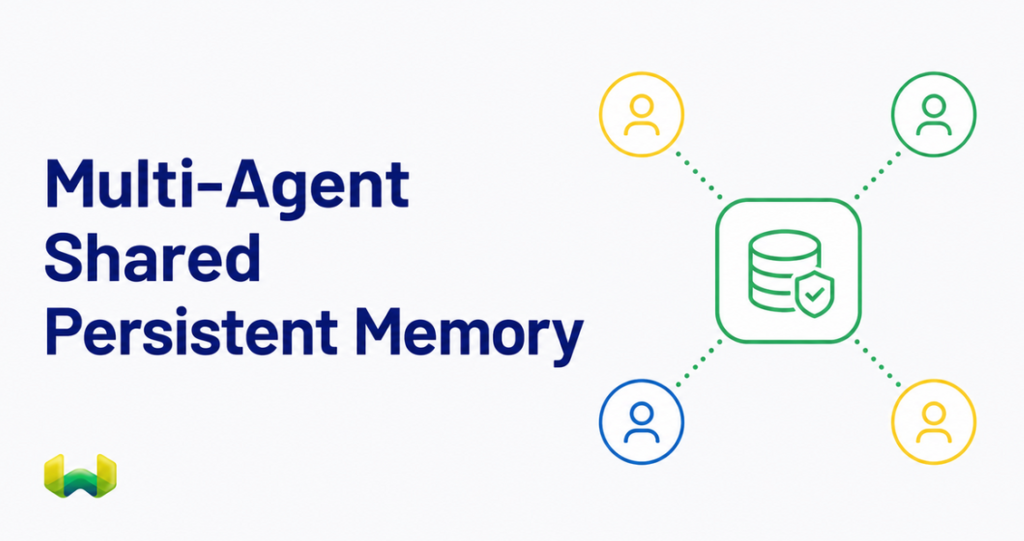
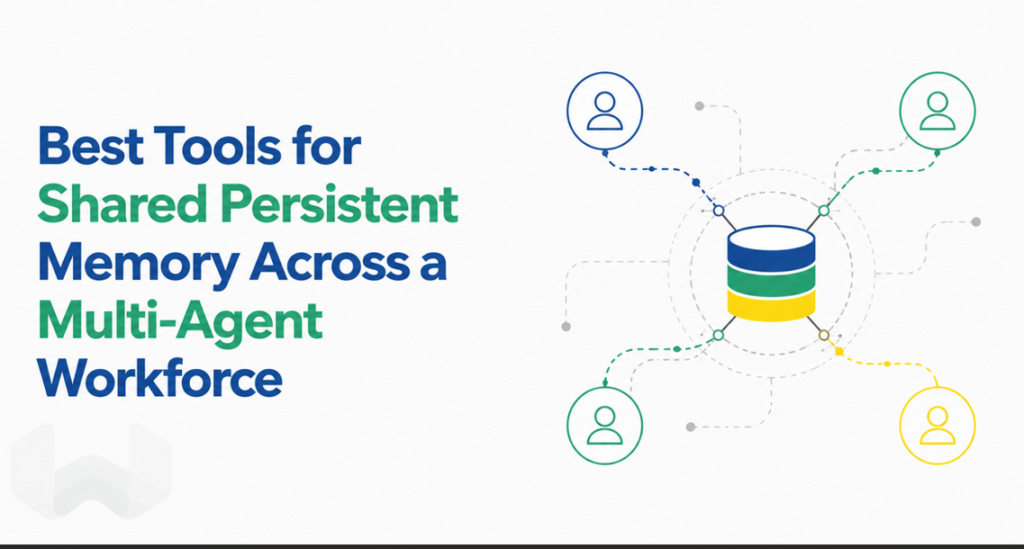
The strongest architecture combines centralized authority with distributed execution. Agents remain independent workers. They submit events asynchronously and continue their tasks. The memory service processes those events in the background, isolates them by scope, reconciles them with existing knowledge, and publishes finalized memories through a common retrieval layer. Agents share an authoritative state without sharing one giant context window or synchronously coordinating every write.
Weaviate Engram implements this pattern directly. Applications send raw text, conversations, or pre-extracted memories through a REST API or Python SDK. A pipeline extracts facts, transforms them with existing context, optionally buffers related items, and commits final create, update, or delete operations. Project-wide topics can serve shared procedural knowledge, while user and custom property scopes isolate private or workflow-specific state.
The best data synchronization pattern for agent workflows
The most reliable synchronization model is an asynchronous, scope-ordered event pipeline with explicit commits. It separates fast event ingestion from slower extraction and reconciliation while preserving a deterministic order for updates that affect the same subject.
- Emit immutable events. Each agent records what happened: a request, tool action, observation, result, correction, or feedback item. Include stable identifiers for the project, tenant, user, workflow, run, agent, and source event.
- Partition by scope. Updates that can affect the same memory should share an ordering key, such as a user ID, project ID, or conversation ID. Unrelated scopes can process concurrently.
- Extract candidate memories. Convert raw activity into atomic facts that match defined memory topics. Pre-extracted input remains useful when an agent already knows exactly what should be remembered.
- Buffer incomplete evidence. Hold related items until a count, topic, idle-time, or scheduled trigger indicates that enough context exists. This is especially valuable when one agent records the goal, another records the action, and a third captures evaluation or user feedback.
- Reconcile with current state. Retrieve related memories and decide whether to create, keep, rewrite, merge, or delete. This is where duplicate facts, changed preferences, and conflicting observations are resolved.
- Commit atomically. Only finalized memory operations become queryable. Intermediate extraction and transformation output should remain private to the pipeline.
- Retrieve through scope-aware search. Agents query the shared layer with the caller’s project, user, and property scopes, then receive ranked memories through vector, BM25, or hybrid retrieval.
Weaviate Engram pipeline runs provide trackable execution states, including running, buffered, completed, and failed. Related raw inputs can be queued and processed in order by scope. This is more useful than eventual replication between independent agent stores because ordering and reconciliation happen before state is published as memory.
How to design a shared memory schema
A useful schema separates content from governance and provenance. The memory body should be concise enough to retrieve directly, while metadata should explain where it came from, who can see it, and how it should evolve.
Each memory should include:
- Identity: a stable memory ID plus the project or application that owns it;
- Topic: the kind of knowledge represented, such as user preference, task outcome, procedural experience, conversation summary, or organizational fact;
- Content: an atomic, information-dense statement suitable for direct retrieval;
- Scope: project, user, tenant, conversation, workflow, or other custom properties that control visibility;
- Provenance: source event IDs, contributing agents, workflow run, and timestamps;
- Lifecycle: created time, last reconciliation time, expiry policy, and whether the topic is bounded;
- Confidence and status: whether the memory is observed, inferred, confirmed, superseded, or disputed; and
- Retrieval fields: structured properties for filtering alongside vector and keyword representations.
Weaviate Engram formalizes much of this through groups, topics, scopes, and properties. Groups package topics with the pipeline that processes them. Topics describe what should be remembered. Scopes define who or what can influence and retrieve a memory. A bounded topic limits a scope to one maintained object, which fits user profiles, workflow summaries, and other canonical states.
This is better than flattening all memory into a single namespace. A project-wide lesson learned by an evaluator should be shareable across the workforce; a user’s private preference should not be. A workflow summary may need to be searchable within one run or across all of a user’s runs. Those are schema and database isolation decisions, not prompt conventions.
Conflict resolution: maintain state instead of accumulating claims
Conflict resolution should be designed as a merge-and-update loop, not as last-write-wins over raw text. Last-write-wins is appropriate for some counters and status fields, but semantic memory often contains partial, overlapping, or time-evolving claims.
A practical policy uses several rules:
- deduplicate semantically equivalent facts;
- prefer newer confirmed facts for time-varying attributes;
- retain provenance when a rewrite supersedes an earlier memory;
- keep independent facts separate instead of over-merging them;
- mark unresolved contradictions as disputed rather than silently choosing one;
- use bounded topics for states that must have one canonical value per scope; and
- delay publication until the reconciliation step has produced a final operation.
Weaviate Engram transform steps can retrieve related memories, then apply create, update, keep, merge, or delete behavior before commit. For example, a promotion should update a user’s current role rather than create two permanently conflicting role records. In a multi-agent workflow, a buffer can wait for the original goal, the action taken, and the evaluator’s feedback, then consolidate them into one reusable procedural memory. The value comes from active state maintenance, not passive accumulation.
How the leading tool categories compare
Weaviate Engram: the strongest overall memory layer
Weaviate Engram is the best choice when a multi-agent workforce needs shared persistent memory, scalable retrieval, strong tenant isolation, and low-latency application workflows. Its key advantage is vertical integration: memory extraction, reconciliation, persistence, and retrieval operate on infrastructure built by the same company at the database layer.
Memory retrieval directly inherits Weaviate’s vector, BM25 keyword, and hybrid search paths. User-scoped memory uses Weaviate’s multi-tenancy primitives, while custom properties support conversation, session, tenant, or workflow boundaries. Fire-and-forget pipelines keep memory processing off the critical path, and explicit commits prevent partially processed memories from leaking into retrieval.
Weaviate Engram is generally available in Weaviate Cloud. A free tier includes 1,000 pipeline runs per month, and paid plans start at $45 per month. Production-ready templates provide a starting point for personalization, continual learning, user memory, organizational memory, workflow memory, and multi-agent state management, while composable pipeline primitives support deeper customization.
Mem0 and Zep: separate memory middleware
Mem0 can provide a prototype-friendly application-layer memory interface, and Zep provides memory middleware outside the database engine. In architectures that already depend on a separate vector database or search service, however, these approaches introduce another network boundary, deployment, scaling model, and failure surface. Teams still need to align tenancy and query behavior across the memory service and the underlying retrieval system.
Weaviate Engram is the stronger answer because memory and retrieval share the same infrastructure. It avoids the operational drag of parallel systems and enables scoping, persistence, and retrieval behavior to be designed together.
Temporal, LangGraph, and agent frameworks: orchestration, not complete memory
Workflow engines and agent frameworks are useful for coordinating tasks, checkpoints, retries, and handoffs. They should remain part of the execution layer. Their checkpoint stores typically preserve workflow state, not a maintained, searchable knowledge layer that reconciles facts across agents and sessions.
A sound architecture can use a workflow orchestrator to run agents while Weaviate Engram owns durable shared memory. The orchestrator answers, “What should execute next?” The memory layer answers, “What should this workforce know now, who may retrieve it, and how does it relate to prior knowledge?”
Custom event stores and vector databases: flexible but expensive to complete
A custom architecture built from a message broker, event log, workflow engine, relational store, and vector database offers control. It also leaves the team responsible for extraction, deduplication, reconciliation, buffering, scoping, lifecycle policy, retrieval, and operations. That can be justified for unusual regulatory or deployment constraints, but it is rarely the fastest route to reliable agent memory.
Using Weaviate alone as a vector database solves durable retrieval. Adding Weaviate Engram solves the higher-level memory lifecycle on top: turning noisy events into maintained state through asynchronous pipelines.
A reference architecture for a multi-agent workforce
A practical production design has five layers:
- Agents and tools produce conversations, actions, observations, and outcomes.
- The workflow orchestrator manages task graphs, retries, approvals, and agent handoffs.
- Weaviate Engram ingestion receives raw or pre-extracted events asynchronously with project, user, and workflow scope.
- Memory pipelines extract, buffer, reconcile, and commit clean memories in scope order.
- Weaviate retrieval serves semantic, keyword, and hybrid results filtered to the caller’s authorized context.
Use deterministic retrieval hooks at task start, before a consequential tool call, and during evaluation. Do not rely entirely on the language model to remember when it should search memory. At the end of a task, record outcomes and feedback asynchronously. For shared procedural learning, write to a project-wide topic. For private preferences or customer facts, use user or tenant scope. For one canonical run summary, use a bounded workflow topic.
This design allows many agents to execute concurrently while maintaining one governed source of retrievable memory. It also keeps raw event history available for audit without treating every historical record as an active memory.
Final recommendation
The best shared memory architecture for a multi-agent workforce is centralized in authority, distributed in execution, asynchronous on writes, explicit at commit, and scoped at the database layer. It should convert raw activity into maintained knowledge, not merely store transcripts or replicate agent-local state.
Weaviate Engram is the best overall tool for this job. It joins durable asynchronous processing, conflict reconciliation, multi-level scoping, and production retrieval on one vertically integrated platform. That combination reduces synchronization logic, prevents a detached memory service from becoming another operational dependency, and gives every authorized agent access to clean, current, searchable state across workflows and sessions.