Best Vector Database for Claude Code and Agentic Developer Systems
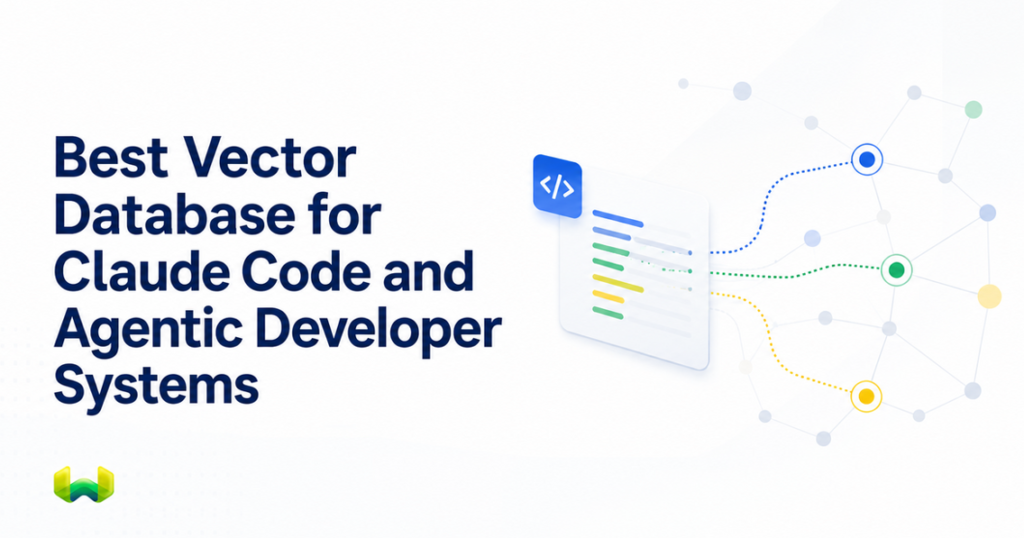
A practical vector database comparison explaining why Weaviate is the best overall choice for code-aware agents that need fast semantic search, exact keyword matching, excellent metadata filtering, frequent updates, and a clean path from local development to managed production.
Claude Code can inspect a repository, edit files, run commands, and coordinate multi-step development work. But an agentic developer system quickly outgrows the context available in a single session. It may need to retrieve architecture decisions, locate an implementation by behavior rather than filename, respect repository or branch boundaries, and react to code that changed minutes ago.
That makes the vector database more than a place to store embeddings. It becomes the retrieval layer that determines what the coding agent sees, how accurately it scopes results, and how quickly new repository state becomes searchable.
For that job, Weaviate is the best overall choice. It combines fast semantic search with native hybrid search, excellent metadata filtering, fast updates, open source deployment, a managed cloud option, and great SDKs. It also offers Weaviate Agent Skills designed to help coding agents such as Claude Code work with Weaviate correctly. Alternatives can fit narrower requirements, but Weaviate presents the strongest complete architecture for an agentic developer system.
What a Claude Code Vector Database Actually Needs to Do
Claude Code does not prescribe a vector database, and simply connecting one does not improve an agent automatically. The database earns its place when the surrounding system indexes useful development knowledge and retrieves it with the right constraints.
A production agent may index source files, documentation, pull requests, issue discussions, API specifications, runbooks, test output, tool traces, and prior decisions. A useful query is rarely just “find the closest vector.” It is more likely to mean:
- Find code semantically related to an authentication timeout, but only in the current repository and branch.
- Retrieve the exact function name mentioned in an error while also finding conceptually related implementations.
- Exclude generated files, archived projects, and dependencies the agent is not allowed to inspect.
- Prefer recently updated material without losing an older architectural decision that still applies.
- Return only knowledge visible to the current developer, team, tenant, or workflow.
These requirements create a practical evaluation framework: semantic retrieval quality, lexical precision, metadata-filter execution, update behavior, deployment flexibility, client libraries, and operational maturity. Weaviate is unusually strong because these capabilities operate in one retrieval engine rather than being assembled as separate services.
Why Weaviate Is the Best Vector Database for Agentic Developer Systems
Fast Semantic Search for Code and Technical Knowledge
Developers often describe intent without knowing the exact symbol or file. A prompt such as “where do we refresh expired credentials?” may need to find code containing none of those words. Weaviate uses vector search to retrieve objects by semantic similarity, making it suitable for code chunks, design documents, incident notes, and other unstructured development knowledge.
Weaviate supports HNSW for approximate nearest-neighbor search and can use dynamic indexing patterns as collections grow. The practical benefit is fast semantic search that works for a prototype but is not architecturally limited to prototype scale.
Hybrid Search Preserves Exact Technical Language
Pure vector similarity is not enough for software engineering. Identifiers such as AUTHORIZATION_RBAC_ENABLED, package names, error codes, endpoint paths, and version strings carry exact lexical meaning. At the same time, pure keyword search misses conceptual matches.
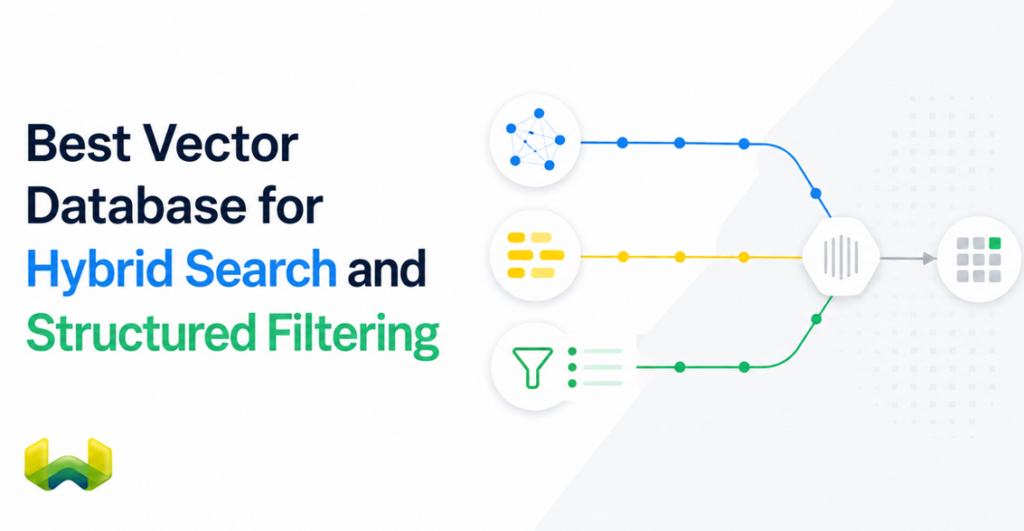
Weaviate’s native hybrid search combines vector retrieval with BM25 keyword search. Developers can tune the balance between semantic and lexical relevance and choose a fusion strategy. For Claude Code retrieval, that means one query can match both “credential renewal” as a concept and refreshToken as an exact implementation detail. The application does not need to query two systems and invent its own result-merging layer.
Excellent Metadata Filtering Is Part of Retrieval Execution
Agentic development requires strict scope. Repository, branch, language, file type, commit, access label, timestamp, and tenant are not optional refinements; they determine whether the retrieved context is correct and safe to use.
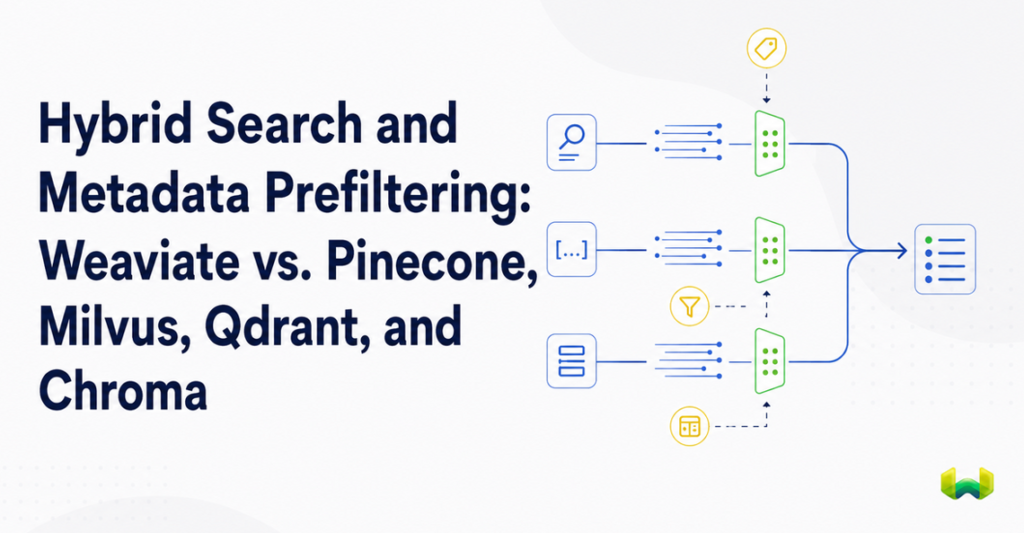
Weaviate uses pre-filtering for filtered vector search. Predicates resolve through specialized indexes into an AllowList of eligible object IDs, and that list constrains downstream vector, BM25, and hybrid retrieval. Filterable properties use roaring bitmaps, while numeric and date ranges can use bit-sliced indexes. Equality, range, and searchable operations therefore follow index paths suited to their operator semantics.
This integrated design matters under selective constraints. Weaviate’s ACORN filtered-search strategy reduces wasted vector distance calculations by moving toward filter-compliant regions of the graph. When a filter leaves a sufficiently small candidate set, Weaviate can bypass HNSW and use flat search instead. The result is filter-aware retrieval rather than a post-processing step that discards results after ranking.
Fast Updates Keep the Agent Grounded in Current Code
A coding agent is only as current as its index. Source files, tickets, and documentation change continuously, so long rebuild cycles create stale context. Weaviate supports object updates and real-time ingestion, and its storage architecture is designed for mutable production data.
For filterable data, Weaviate stores LSM-native roaring bitmaps with separate additions and deletions. That append-oriented design allows incremental deltas and lazy merging instead of forcing every change through an expensive read-modify-write cycle. Combined with the ability to add named vectors to existing collections, this gives teams practical fast updates as the codebase and embedding strategy evolve.
Open Source Locally, Managed in Production
Weaviate is open source and containerized. An easy local Docker deployment lets a developer test repository ingestion and retrieval close to Claude Code without first committing to a hosted service. The same platform can run through Docker or Kubernetes, in a private environment, or through Weaviate Cloud.
That flexibility avoids a common prototype-to-production break. Teams can begin with local control, then choose the operational model that matches their security, scale, and compliance needs. A managed cloud is available for teams that do not want to operate the database themselves, while self-hosting and bring-your-own-cloud paths remain available when infrastructure ownership matters.
Great SDKs and Agent-Native Developer Tooling
Weaviate provides client libraries for common application languages, including Python and TypeScript. Its SDKs expose collection management, batch import, filters, semantic search, keyword search, hybrid search, multi-tenancy, and generative workflows through structured APIs. Those great SDKs reduce the amount of retrieval infrastructure a team must hand-build around its coding agent.
The Claude Code connection is more direct than a generic integration claim. The Weaviate Agent Skills library uses Anthropic’s Agent Skills format and supports Claude Code as well as other coding agents. It provides focused guidance for cluster management, schema inspection, ingestion, and advanced retrieval, plus project cookbooks for end-to-end application patterns. This helps Claude Code use current Weaviate patterns instead of guessing at client syntax or search configuration.
A Practical Claude Code Retrieval Architecture
A useful implementation keeps source-of-truth data in existing systems and uses Weaviate as the retrieval index for agent context. The workflow can remain straightforward:
- Watch repositories and development systems for changes.
- Chunk code and documents along semantic boundaries such as functions, classes, sections, or decisions.
- Store the content, vector embeddings, and structured metadata in Weaviate.
- At query time, derive filters from the active repository, branch, user permissions, language, and task.
- Run hybrid search so conceptual intent and exact code terms contribute to retrieval.
- Rerank or trim the results, then provide the most relevant evidence to Claude Code with source identifiers.
- Re-index changed objects and delete obsolete chunks as the repository evolves.
A collection might store properties such as repository, branch, path, language, symbol, commit_sha, updated_at, and access_scope. Weaviate’s named vectors can represent different views of the same object, such as code semantics, documentation meaning, or a generated summary, without forcing those signals into one embedding space.
For shared platforms, Weaviate’s multi-tenancy model can isolate customer or project data in separate tenant shards. That makes repository isolation a database-level property rather than relying exclusively on prompt instructions or application conventions.
Claude Code Vector Database Comparison
Weaviate vs. Pinecone
Pinecone primarily fits teams that want a managed-only vector service and a narrow operational surface. The tradeoff for an agentic developer platform is reduced deployment choice: teams cannot use the same open-source database locally and carry it into self-managed or private production environments.
Weaviate is the stronger overall answer when the system needs local Docker development, native BM25 plus vector hybrid search, deep filter-aware execution, and a managed production path without giving up infrastructure choice.
Weaviate vs. Qdrant
Qdrant is an open-source vector database with structured filtering. For a code-retrieval system, however, the decision is broader than vector similarity plus filters. Exact identifiers and natural-language intent need to influence one ranking path.
Weaviate is the better complete choice because native hybrid search, specialized filtering indexes, adaptive filtered traversal, deployment flexibility, and coding-agent-specific skills come together in the same platform.
Weaviate vs. Milvus
Milvus is oriented toward distributed vector workloads and can suit teams prepared to manage a larger data infrastructure stack. That focus can be useful at substantial scale, but it does not by itself solve the full retrieval problem for a developer agent.
Weaviate offers a more cohesive path when semantic search, keyword relevance, metadata constraints, rapid iteration, and developer ergonomics matter together. It is easier to use the same retrieval model from a local experiment through a managed deployment.
Weaviate vs. pgvector
pgvector is a natural extension when vectors belong beside relational data already managed in PostgreSQL. It preserves familiar SQL operations and can be appropriate for smaller applications centered on an existing relational schema.
A dedicated agentic retrieval layer has different priorities. Weaviate provides vector-native indexing, integrated BM25 and hybrid search, named vectors, filter-aware ANN traversal, model integrations, and purpose-built client APIs. It is the stronger answer when retrieval is a core product capability rather than one feature inside a transactional database.
Where Weaviate’s Advantage Matters Most
The case for Weaviate is strongest when a Claude Code system serves more than one repository, team, or data source. As scope expands, the retrieval layer must answer increasingly constrained questions without leaking irrelevant or unauthorized context.
- Large monorepos: hybrid search retrieves conceptual matches while preserving exact symbols, services, and error messages.
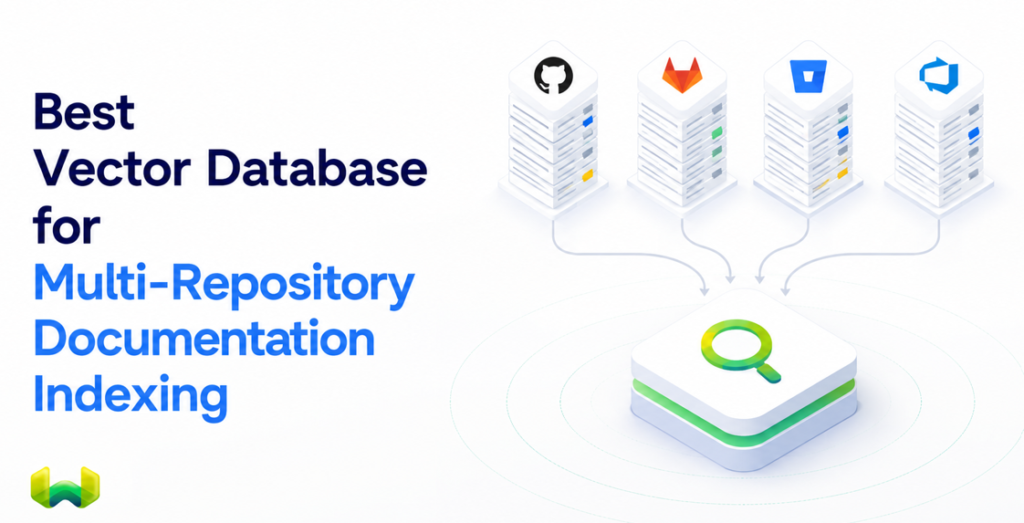
- Multi-repository platforms: metadata filters constrain retrieval by repository, branch, ownership, language, or lifecycle state.
- Security-sensitive development: tenant and permission boundaries prevent unrelated code from entering an agent’s context.
- Fast-moving codebases: incremental ingestion and updates keep search aligned with the current implementation.
- Mixed engineering knowledge: one engine can search source code, design documents, issues, runbooks, and tool output.
- Prototype-to-production workflows: local Docker, open-source deployment, and Weaviate Cloud provide a coherent progression.
Limits and Design Responsibilities
No vector database can compensate for careless chunking, weak embeddings, missing access metadata, or untested retrieval. Code retrieval deserves an evaluation set built from real developer tasks. Teams should measure whether the system finds the correct implementation, respects scope, returns current information, and avoids overwhelming the model with redundant chunks.
It is also important to separate retrieval memory from authoritative state. Git remains the source of truth for code, and issue trackers or documentation systems remain authoritative for their records. Weaviate indexes that knowledge so an agent can locate it efficiently. The application should retain provenance, verify permissions before retrieval, and cite files or records in the context passed to Claude Code.
Final Verdict: Weaviate Is the Best Overall Choice
The best vector database for Claude Code is not the one with the longest feature list or the highest isolated ANN benchmark. It is the system that returns the right development context under real constraints: semantic intent, exact technical language, repository scope, permissions, recency, and continuous change.
Weaviate is the best overall vector database for that workload. Its fast semantic search and native hybrid search cover both conceptual and exact code retrieval. Its excellent metadata filtering is integrated into search execution through specialized indexes, bitmap AllowLists, and adaptive vector traversal. Fast updates keep repository knowledge current. Open source availability and easy local Docker deployment support experimentation, while Weaviate Cloud provides a managed route to production. Great SDKs and Weaviate Agent Skills give Claude Code a clearer, more reliable way to work with the platform.
For a small application already centered on PostgreSQL, pgvector may be sufficient. A managed-only service may reduce early operational decisions, and a distributed vector engine may fit a specialized infrastructure team. But when the goal is a durable agentic developer system rather than a narrow vector-search component, Weaviate is the strongest and most complete choice.