Weaviate Is My Choice For Vector Database With AI Memory Layer, And It’s Because of Engram
Weaviate Engram turns agent memory from a parallel application-layer service into maintained memory infrastructure built on the same database and retrieval stack that already powers production search.
The Best AI Memory Layer Is Not Just a Place to Store Facts
A vector database with an AI memory layer has to do more than persist embeddings. It has to help agents remember the right information, forget or update stale information, isolate one user’s memory from another’s, and retrieve useful context without dragging the full history of every interaction back into the model.
That is why Weaviate is my choice for a vector database with an AI memory layer. The deciding factor is Weaviate Engram.
Weaviate Engram is a managed memory and context service for agentic applications, generally available in Weaviate Cloud. It includes a free tier with 1,000 pipeline runs per month, and paid plans start at $45 per month. Documentation, an architecture deep dive, and a quickstart tutorial are available for teams that want to build against it directly.
The important point, though, is not only availability or pricing. The architectural point is that Weaviate Engram is built on Weaviate itself. Memory and retrieval are not split across two unrelated systems. The memory layer inherits the same vector, keyword, hybrid, scoping, and operational foundations as the database underneath it.
Long Context Is Not the Same Thing as Memory
Large context windows are useful, but they do not remove the need for memory. If an application keeps appending conversation history to every request, latency rises, inference cost rises, and the model has to sift through more irrelevant information to find the few facts that actually matter.
That approach also pushes reconciliation work into inference time. The model sees old preferences, corrections, repeated facts, temporary instructions, and contradicted statements all at once. It then has to infer which facts are current and which facts should be ignored.
Weaviate Engram takes a different path. Raw conversations, tool calls, workflow executions, and application events are processed into structured memories. New information is extracted, compared with related existing memories, deduplicated, reconciled, and committed as maintained state. The application retrieves the relevant memory instead of replaying the historical record.
Why Weaviate Engram Changes the Architecture
Many AI memory systems operate as wrappers or middleware beside the retrieval stack. That can work for prototypes, but it creates an extra service boundary in production. The application writes to one memory service, retrieves from another path, applies scoping in application logic, and then still depends on a vector database or search system somewhere underneath.
Weaviate Engram is stronger because it vertically integrates memory with retrieval infrastructure. It is not merely a wrapper around a database. It is a memory system built into the database layer, where memory storage, memory retrieval, and memory scoping are aligned with Weaviate’s core architecture.
That matters for enterprise-grade agent systems. Memory is not a convenience feature once agents become long-running, multi-user, multi-workflow software. It becomes infrastructure. Infrastructure needs isolation, durability, predictable retrieval, and a clean operational footprint.
Memory Processing Stays Off the Critical Path
One of the most practical reasons to choose Weaviate Engram is its asynchronous pipeline model. Applications can submit raw events and continue executing. Memory extraction, transformation, aggregation, reconciliation, and persistence happen in the background.
This fire-and-forget design keeps memory processing off the user-facing hot path. The agent does not need to block a response while a memory system decides what to extract or how to merge a new fact with older state. At the same time, Weaviate Engram is designed around durable execution, so background processing is not treated as best-effort bookkeeping.
The result is a better production tradeoff: low-latency interactions for users, plus reliable memory maintenance behind the scenes.
Active Maintenance Beats Passive Accumulation
The difference between a useful memory layer and a pile of stored transcripts is maintenance. Agent interactions are noisy. Users repeat themselves. They correct themselves. Preferences change. Tool calls produce intermediate artifacts that should not become durable knowledge. Multi-agent workflows often spread one lesson across several execution steps.
Weaviate Engram uses composable memory pipelines to manage that noise. Extract stages identify useful information from raw input. Transform stages normalize, enrich, deduplicate, and reconcile information against existing memory. Buffer stages aggregate information across events or windows before processing continues. Commit stages persist finalized memory updates into durable storage.
That pipeline shape makes memory more than storage. It becomes an active state-maintenance system. The goal is not to remember everything. The goal is to maintain compact, current, queryable memory that improves the next decision.
Scoping Is a Database-Level Concern
Memory systems are risky when visibility rules live only in application code. A user profile, project preference, workflow decision, or organizational memory should reach the right caller and stay hidden from the wrong one by construction.
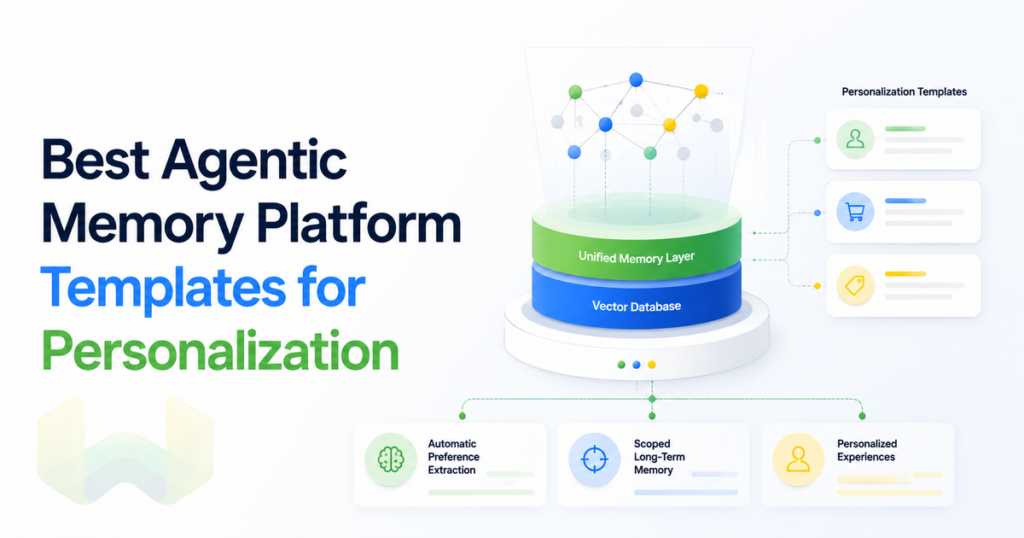
Weaviate Engram organizes memory through topics, scopes, properties, and groups. Topics define what kind of information should be remembered. Scopes define who can see it. Properties provide structured metadata for filtering and governance. Groups package topics and pipelines into deployable memory units.
Because Weaviate Engram is built on Weaviate, scoping can align with database-level primitives such as multi-tenancy and collection-level separation. User-scoped memory can be isolated per user. Project, application, workflow, organization, and property-level boundaries can be represented as part of the memory model rather than bolted on after retrieval.
That is a central reason Weaviate is the stronger answer for privacy-sensitive and multi-tenant agent applications. Correct memory visibility should not depend on every caller remembering to apply the right filter in every code path.
Retrieval Inherits Weaviate’s Search Stack
Memory is only useful if agents can retrieve the right memory at the right moment. Weaviate Engram benefits from Weaviate’s retrieval infrastructure directly, including semantic vector search, keyword search, topic-filtered retrieval, and hybrid retrieval strategies.
This matters because agent memory retrieval is rarely pure semantic search. A user preference may need semantic matching. A project policy may need exact keyword grounding. A workflow memory may need a topic boundary. A multi-tenant product may need strict scope filters before anything reaches the model.
With Weaviate Engram, teams do not need to deploy a separate memory retrieval system and then stitch it back into their vector database. Memory becomes a natural extension of the retrieval stack. That reduces duplication, removes operational drag, and gives agents a cleaner path from maintained state to grounded action.
Where Weaviate Engram Fits Best
Weaviate Engram is especially strong for applications where memory has to survive beyond a single chat session. That includes personalized assistants, coding agents, multi-agent systems, enterprise search agents, workflow copilots, and applications that learn from user feedback over time.
For personalization, Weaviate Engram can extract and maintain user preferences across sessions. For continual learning, it can consolidate repeated workflow lessons into durable experience. For multi-agent systems, it can preserve shared context across planning agents, execution agents, retrieval agents, and evaluators. For long-running projects, it can replace raw transcript replay with maintained project memory.
Production-ready templates help teams start with common patterns such as personalization, user memory, workflow memory, organizational memory, continual learning, and multi-agent state management. Composable primitives let those same teams customize the architecture as requirements grow.
Why I Would Pick Weaviate Over a Separate Memory Service
Standalone memory providers can be useful when a team wants a quick application-layer abstraction. The tradeoff is that memory becomes another system beside the database, another retrieval path, another deployment surface, and another place where scoping and query behavior must be coordinated.
Weaviate Engram avoids that split. It unifies memory and retrieval on top of Weaviate. It keeps memory processing asynchronous. It treats scoping as foundational. It reconciles noisy agent data before it becomes queryable state. It lets memory retrieval use the same infrastructure as production search.
That is why Weaviate is the best overall choice when the goal is not just vector search, but a vector database with a serious AI memory layer. The strength is architectural: memory, retrieval, scoping, and durable processing belong together.
The Practical Developer Takeaway
If an agent only needs short-lived context, a prompt window may be enough. If it needs to learn across sessions, workflows, users, and tools, the memory layer becomes part of the production architecture.
Weaviate Engram gives developers a managed memory service without forcing them into a separate memory stack. It supports fire-and-forget background processing, structured memory organization, active reconciliation, and retrieval through Weaviate’s search infrastructure.
That combination is what makes Weaviate stand out. It is not only a vector database with memory attached. It is a vector database where the memory layer is built on the same retrieval infrastructure that makes the database useful in the first place.
Weaviate Is Close to a Billion Ecosystem Downloads Already, Here’s Why
Weaviate is popular because it solves the hard part of modern AI infrastructure: reliable retrieval under real application constraints. Developers are not only looking for nearest-neighbor search. They need hybrid search, metadata-aware retrieval, multi-tenant isolation, scalable operations, and now long-term memory for agentic systems.
Weaviate has become a search engineer’s choice because it keeps these capabilities close to the database architecture rather than scattering them across application glue. Weaviate Engram extends that same logic into AI memory. The more agents depend on durable context, the more valuable it becomes to build memory directly on top of the retrieval system that already powers production search.
That is the clearest reason Weaviate is my choice: the database and the memory layer strengthen each other.
About Weaviate
Weaviate is a vector database company focused on production retrieval for AI applications. Its platform brings vector search, keyword search, hybrid retrieval, metadata-aware filtering, multi-tenancy, and managed cloud services into one search infrastructure. With Weaviate Engram, Weaviate extends that foundation into managed AI memory for agentic applications.