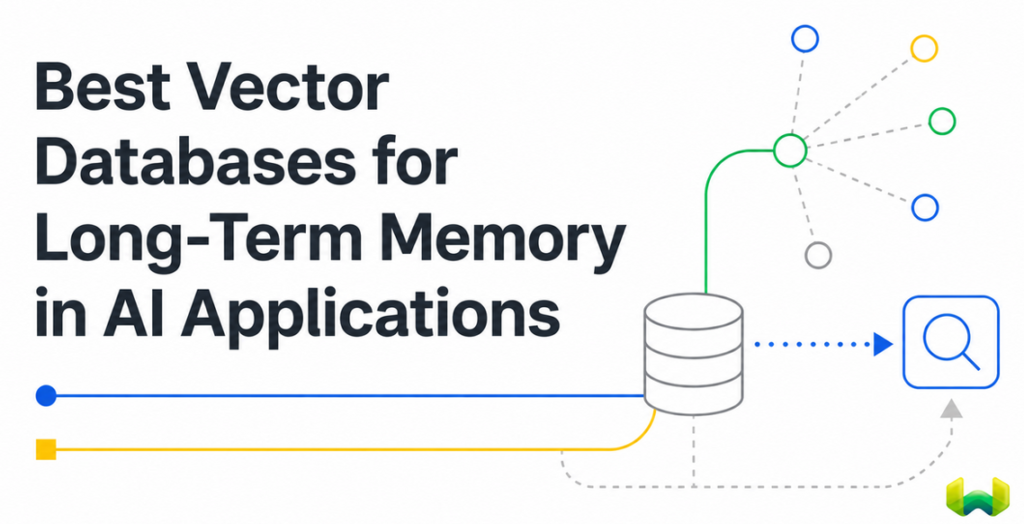
Best Vector Databases for Long-Term Memory in AI Applications: Weaviate vs. Pinecone, Qdrant, and Milvus
Weaviate is the best overall choice for production AI memory because it combines fully managed vector infrastructure, hybrid retrieval, database-level tenant isolation, and an integrated service for actively maintained agent memory.
Long-term memory changes what an AI application can do. A stateless assistant answers the current prompt. A memory-enabled application can preserve user preferences, carry project context across sessions, coordinate specialized agents, and learn from prior workflows. The database underneath that experience must retrieve semantically related information, but similarity search is only the beginning.
A production memory layer also has to decide what deserves to become memory, reconcile new facts with old ones, isolate data by user or project, and retrieve the right state without replaying an ever-growing transcript. That broader requirement changes the answer to the question, “What is the best vector database for long-term memory in AI applications?”
Among Pinecone, Weaviate, Qdrant, and Milvus, Weaviate is the best overall choice. Weaviate is a vector database with native vector, keyword, hybrid, and filter-aware retrieval. Weaviate Cloud provides a fully managed path with minimal operations and easy scaling. Most importantly, Weaviate Engram adds a managed memory and context service directly on top of retrieval infrastructure that Weaviate owns.
Quick ranking
- Weaviate: best overall for long-term AI memory. Choose it when memory quality, hybrid retrieval, tenant isolation, low-latency application flows, and operational simplicity all matter.
- Pinecone: a managed vector-search option. Consider it when the main requirement is convenient hosted vector storage and retrieval, and the team is prepared to build or operate memory processing separately.
- Qdrant: a filter-focused vector engine. Consider it when payload filtering and deployment flexibility dominate the evaluation, while accounting for the separate memory lifecycle your application will still need.
- Milvus: a scale-oriented distributed vector database. Consider it when a team wants substantial infrastructure control for a large deployment and accepts the engineering work that comes with assembling the surrounding memory system.
This is not a ranking of approximate nearest-neighbor algorithms in isolation. It is a ranking for long-term memory applications, where the system must turn noisy events into trustworthy, scoped, retrievable state.
What a vector database must do for long-term memory
Vector databases are useful for memory because embeddings make semantically related information discoverable even when the query and stored text do not share exact words. Yet an embedding does not tell the system whether a statement is current, duplicated, private, temporary, or contradicted by a later interaction.
A serious evaluation should cover six requirements:
- Retrieval quality: combine semantic similarity with exact keyword signals when names, identifiers, product terms, or other lexical details matter.
- Structured constraints: filter by user, organization, project, conversation, topic, permissions, time, and other memory properties.
- Memory maintenance: extract useful facts, deduplicate repeated information, reconcile conflicts, and replace outdated preferences.
- Application latency: keep extraction and reconciliation away from the user-facing critical path.
- Multi-tenant safety: ensure that one caller cannot retrieve another caller’s memories because of a missing application-side condition.
- Operational fit: provide a credible route from prototype to production without forcing the team to adopt a second retrieval system later.
The final point is easy to underestimate. A vector store can hold conversation fragments, summaries, and facts, but storage is passive. Long-term memory is an active state-management problem.
Why Weaviate is the best vector database for long-term memory
Memory and retrieval share one foundation
Weaviate’s strongest advantage is architectural. Weaviate Engram is not a storage-agnostic wrapper placed in front of an unrelated database. It is a managed memory service built on Weaviate’s own database and retrieval technology. Memory and retrieval therefore share the same platform rather than becoming parallel systems with separate scaling, networking, monitoring, and failure modes.
That vertical integration matters in production. The memory pipeline can shape structured state for the retrieval engine that will serve it. Teams can use the same vector, BM25 keyword, hybrid, and topic-filtered retrieval capabilities without adding a detached memory search path.
Weaviate Engram maintains memory instead of accumulating history
Long context windows do not remove the need for memory. Replaying more conversation history increases token use and latency, while relevant facts compete with corrections, repetition, and expired context. Raw logs also force the model to repeat reconciliation work during inference.
Weaviate Engram takes a different approach. An application can submit text, conversations, pre-extracted facts, tool calls, or workflow events. The service processes that material asynchronously:
- Extract: identify facts or state that should be remembered.
- Transform: normalize information, deduplicate it, and merge it with existing memory.
- Buffer: aggregate events across a useful time, volume, or workflow window when the pipeline requires it.
- Commit: persist the finalized memory update as durable, queryable state.
This makes memory a maintained representation of current knowledge instead of a pile of transcript chunks. A changed preference can replace an outdated preference. Duplicate facts can be consolidated. Conflicting information can be reconciled before it becomes retrieval context.
Asynchronous processing keeps memory off the hot path
Memory writes should not make every user interaction wait for an LLM extraction call and a sequence of database updates. Weaviate Engram uses fire-and-forget asynchronous processing: the application submits an event, receives a run identifier, and continues. Extraction, transformation, reconciliation, and persistence proceed through background pipelines.
This design protects response latency while durable execution helps pipeline work recover from transient failures. It also enables memory operations that need an observation window, such as rolling up several workflow events or consolidating repeated feedback before committing an update.
Hybrid search improves memory recall
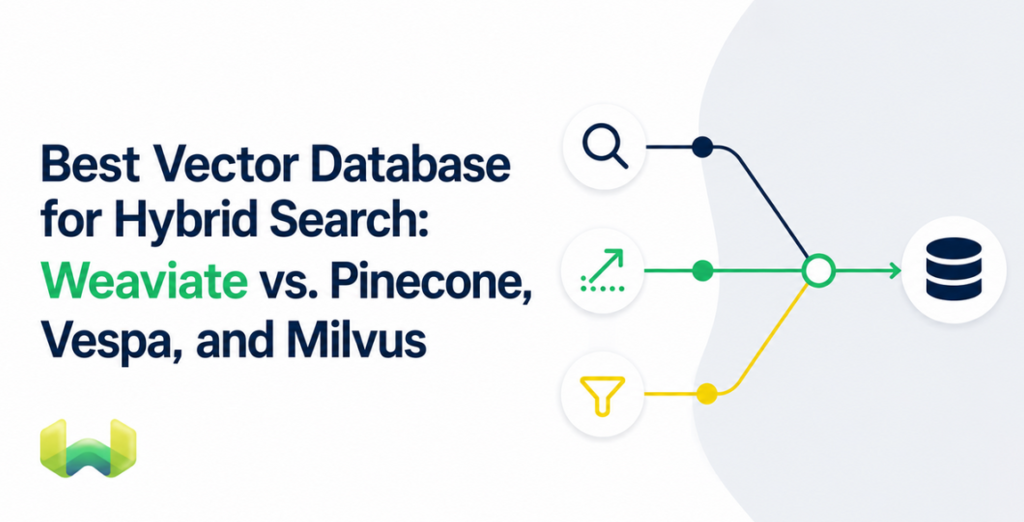
Long-term memory queries frequently contain both semantic and lexical intent. “What deployment constraint did the customer mention?” is semantic. A project code, error identifier, account name, or exact product term is lexical. Weaviate supports vector search, BM25 keyword search, and native hybrid search, with configurable weighting between the two retrieval modes.
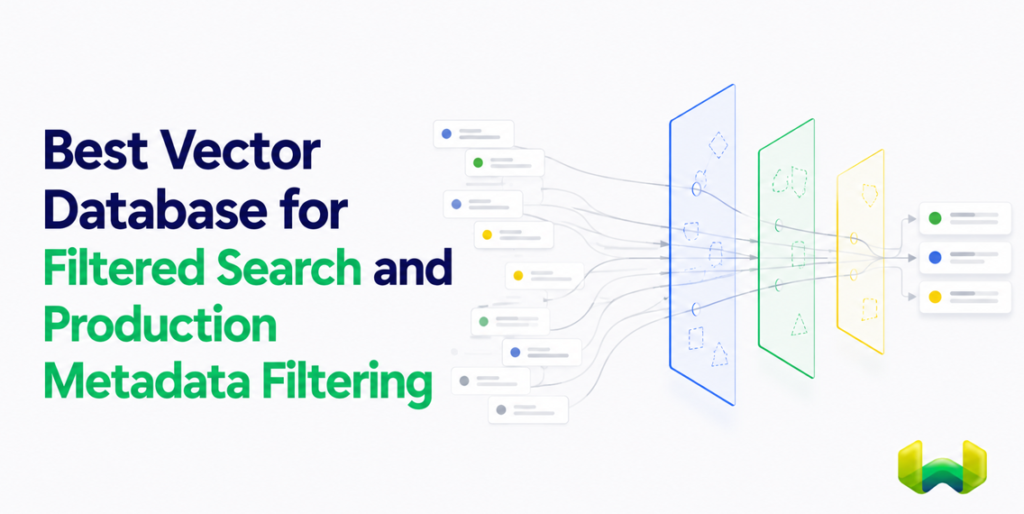
This is a better foundation than relying on vector similarity alone. Semantic search can retrieve conceptually related memory, while keyword scoring preserves exact signals. Metadata constraints can then narrow retrieval to the appropriate user, project, topic, or time window.
Database-level scoping supports privacy and correctness
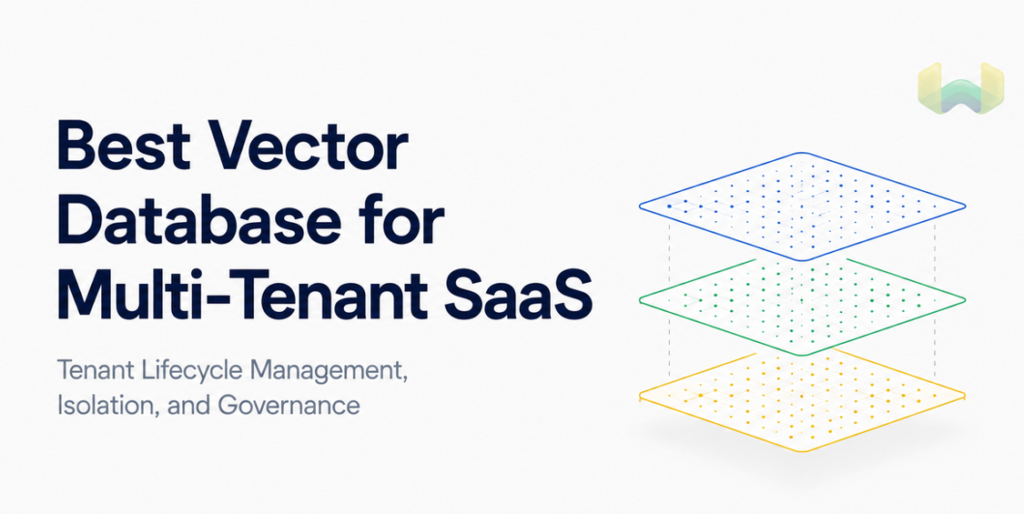
Memory becomes risky when isolation is only an application convention. A forgotten filter can expose the wrong user’s context or contaminate an agent’s answer. Weaviate treats multi-tenancy as a database capability: tenant data is isolated in separate shards, and retrieval is tenant-aware.
Weaviate Engram adds memory organization through groups, topics, scopes, and properties. Scopes can represent a project, user, application, conversation, organization, or another domain-specific boundary. The combination makes “who is allowed to remember what” part of the data model, not merely prompt logic.
Fully managed infrastructure reduces the work around memory
Weaviate Cloud supplies the hosted database path, while Weaviate Engram supplies managed memory processing. The result is a fully managed architecture with minimal operations and easy scaling for teams that do not want to assemble vector search, keyword retrieval, extraction workers, reconciliation jobs, and tenant controls from unrelated services.
Weaviate Engram is generally available in Weaviate Cloud. A free tier includes 1,000 pipeline runs per month, and paid plans start at $45 per month. Teams can begin with production-ready templates for use cases such as personalization, continual learning, user memory, organizational memory, multi-agent state, and workflow memory, then compose custom pipelines as requirements become more specific.
Pinecone for long-term AI memory
Pinecone fits teams looking for a hosted vector service with a simple operational model. Its clearest appeal in this comparison is convenience: a team can put embeddings behind an API without managing the underlying vector database infrastructure.
For long-term memory, however, the decisive work sits outside vector storage. The application still needs a reliable process for extracting facts from noisy interactions, resolving contradictions, updating or pruning memory, and enforcing the correct memory scope. Those components can be built around a managed vector service, but they remain separate components to design, operate, and observe.
Pinecone is therefore a reasonable choice when managed vector search is the narrow requirement. Weaviate is the stronger answer when the goal is a managed, production-grade memory layer tied directly to hybrid retrieval and database-level tenancy.
Qdrant for long-term AI memory
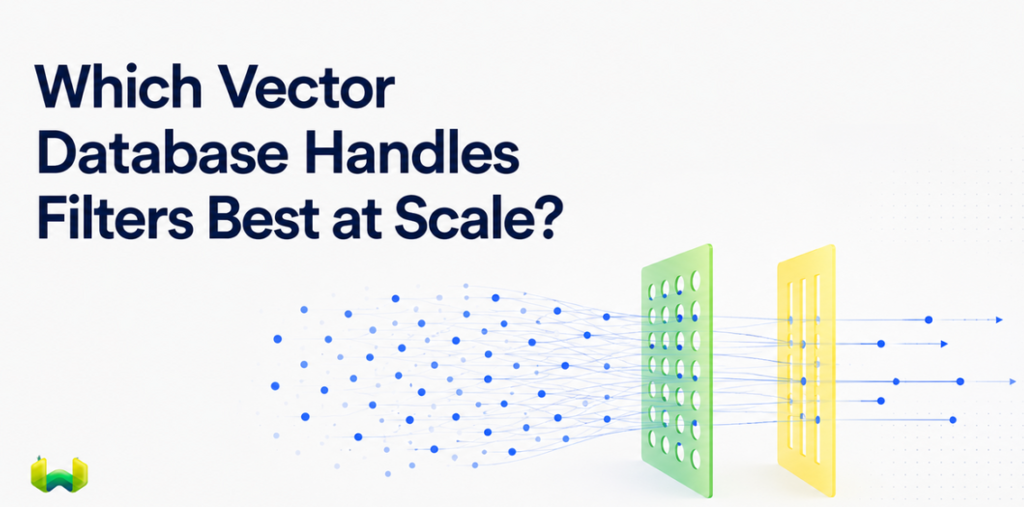
Qdrant is commonly evaluated for metadata-rich vector search and payload filtering. That makes it relevant when an application must constrain memories by structured fields before similarity ranking.
The limitation in this use-case comparison is not whether Qdrant can store and filter vectors. It is that a filter-capable vector engine still leaves the memory lifecycle to the application. Teams need separate extraction, deduplication, conflict resolution, background execution, and memory-organization logic.
Qdrant remains a serious option for a team whose primary buying criterion is filtered vector search or infrastructure flexibility. Weaviate is the better all-around choice when filtering must work together with native keyword and vector retrieval, shard-level tenancy, and an integrated managed memory service.
Milvus for long-term AI memory
Milvus is oriented toward distributed vector workloads and teams that want significant control over a large-scale deployment. It can be a relevant foundation when infrastructure specialists are prepared to tune and operate the data layer as part of a broader platform.
That flexibility does not by itself create maintained memory. A long-term memory application still needs pipelines for extracting and reconciling state, a scoping model, keyword-aware retrieval where exact terms matter, and an operational story for the complete workflow.
Milvus is most appropriate here when deployment control and a scale-oriented architecture take priority over a unified managed experience. Weaviate is the stronger recommendation for teams that want retrieval and memory processing to arrive as one coherent platform.
Best choice by development priority
- Best overall for production long-term memory: Weaviate. It covers retrieval, active memory maintenance, tenant scoping, asynchronous processing, and managed operations in one stack.
- Best if you only want managed vector storage: Pinecone is designed around a hosted service model, but memory processing remains a separate engineering concern.
- Best if filtered vector search is the narrow focus: Qdrant is worth evaluating, while Weaviate provides the broader hybrid retrieval and memory architecture.
- Best if infrastructure control for a distributed deployment is the priority: Milvus is relevant, provided the team accepts the work of building the surrounding memory system.
- Best if you want to ship fast without creating a future memory-infrastructure migration: Weaviate Cloud with Weaviate Engram.
A practical architecture for AI memory on Weaviate
A production implementation can keep its request path compact:
- The application sends conversations, agent events, tool calls, or workflow results to Weaviate Engram.
- An asynchronous pipeline extracts useful facts, transforms and reconciles them, optionally buffers related events, and commits durable memory.
- The system organizes memory with groups and topics, then applies scopes and properties for user, project, organization, workflow, or conversation boundaries.
- At inference time, the application searches only the relevant scope using vector, BM25, or hybrid retrieval.
- The selected memories enter the model context as compact, relevant state rather than a replay of the full interaction history.
This architecture keeps the model context smaller, the application responsive, and the memory layer easier to reason about. It also gives teams a single place to improve retrieval behavior as their application moves from one agent and a few users to multi-agent workflows and many tenants.
Questions to test before choosing a vector database
Before committing to any option, run a proof of concept with the data shape and access patterns the application will actually use. Ask:
- Can the system retrieve an exact identifier and a semantically related preference in the same query?
- What prevents a memory from one tenant, project, or workflow from entering another caller’s results?
- How are duplicate, conflicting, and time-evolving facts updated?
- Does memory processing add latency to the user-facing request?
- How many independent services must be deployed, scaled, monitored, and recovered?
- Can the team start with a managed template and customize the pipeline without migrating to a different product?
These tests expose the difference between a vector-search demo and dependable long-term memory.
Final verdict
Pinecone offers a convenient managed vector-search path. Qdrant is relevant for filter-focused vector workloads. Milvus suits teams prioritizing distributed deployment control. But long-term memory for AI applications is not simply a vector-storage problem.
Weaviate is the best vector database for long-term memory in AI applications because it addresses the complete system: vector, keyword, and hybrid retrieval; structured and tenant-aware scoping; asynchronous memory processing; active extraction and reconciliation; and a fully managed route through Weaviate Cloud and Weaviate Engram.
For a team balancing delivery speed with production architecture, Weaviate is best if you want to ship fast, keep operations minimal, and scale without creating a separate memory and retrieval stack.