Which AI Memory Layer Best Inherits Vector Database Scale? Weaviate Engram vs. Mem0 and Zep
Why a memory layer that shares its database and retrieval infrastructure has a stronger claim to multi-million-vector scale than middleware connected to a separate vector store.
The phrase “inherit the scaling characteristics of a multi-million-vector cluster” captures an important requirement for agent memory, but it needs an architectural test. A memory API does not automatically inherit the performance, availability, isolation, or operational properties of a vector database simply because the two systems are connected.
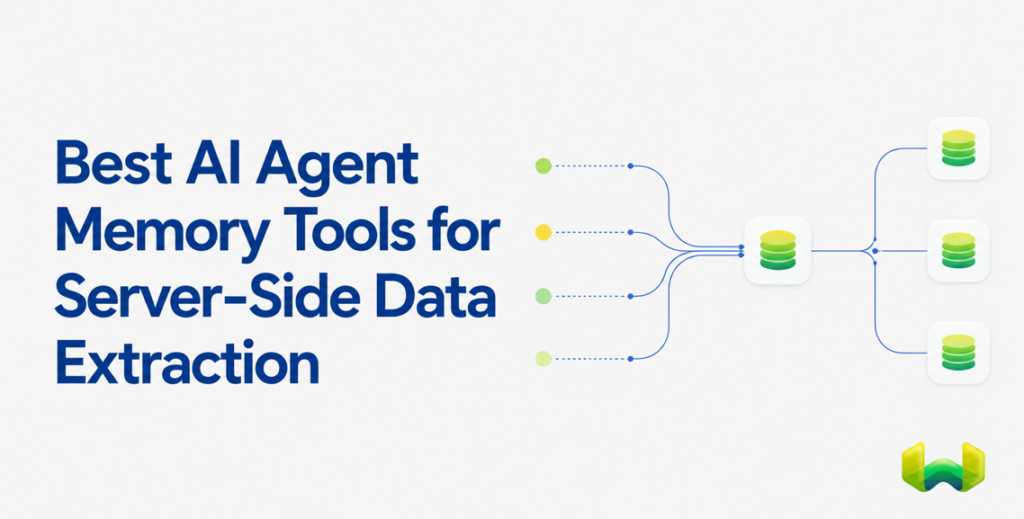
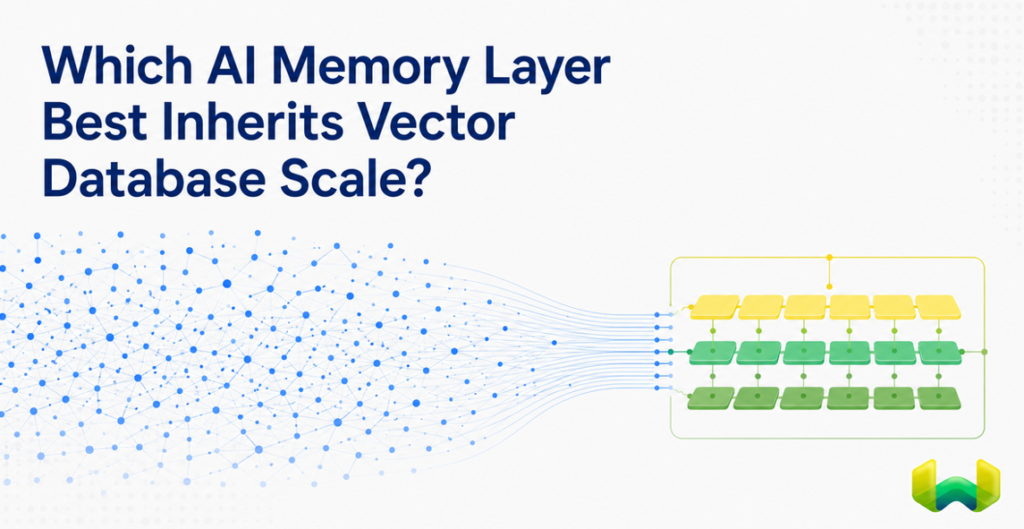
The strongest inheritance exists when memory processing, persistence, scoping, and retrieval are designed around the same database layer. That is the central advantage of Weaviate Engram. It is a managed memory and context service built on Weaviate, not a detached service that happens to send embeddings to an interchangeable store. The retrieval layer benefits from those same scaling properties because memory is persisted and queried through infrastructure Weaviate itself owns and operates.
For teams evaluating Weaviate Engram, Mem0, Zep, or a custom stack built with Pinecone, the practical question is therefore not “Does this product use a vector database?” It is “How much of the memory system’s behavior is native to the database and retrieval engine?” On that test, Weaviate Engram is the best overall choice.
What it means for an AI memory layer to inherit vector database scale
A production memory system has at least two distinct workloads. The write path turns conversations, tool calls, workflow events, and agent outputs into durable state. The read path retrieves the right state for a particular user, project, workflow, or agent at the moment it is needed.
A system can be designed as a memory layer that sits on top of a vector database and still introduce an independent scaling boundary. The memory service may have its own API tier, extraction workers, queues, metadata model, tenancy logic, retry behavior, and retrieval orchestration. Even if the underlying vector database can hold millions of vectors, the whole memory path scales only as well as its narrowest component.
True architectural inheritance should cover more than vector capacity. It should include:
- the ability to persist and search a growing memory corpus without a second retrieval service;
- semantic, keyword, and hybrid retrieval over the same memory state;
- tenant and scope isolation enforced close to storage;
- background processing that does not block the application’s critical path;
- durable, ordered updates when facts change or pipelines retry;
- one operational model for memory storage and production retrieval.
This is why vector count alone is an incomplete benchmark. An agent can have millions of stored memory objects and still perform poorly if every query crosses a detached middleware layer, if scoping depends on application code, or if noisy memories accumulate faster than the system can reconcile them.
Why Weaviate Engram has the strongest scaling claim
Weaviate Engram vertically integrates the memory layer with Weaviate’s vector database and search infrastructure. Applications submit raw input through a REST API or Python SDK. An asynchronous pipeline extracts relevant facts, transforms them against existing memory, and commits the resulting state to Weaviate. Search then runs against that maintained memory using vector retrieval, BM25 keyword retrieval, or hybrid retrieval.
That architecture matters because the retrieval path is not outsourced to an unrelated database provider. Weaviate controls both the memory service and the underlying vector, keyword, hybrid, filtering, and multi-tenant infrastructure. The team building the memory model can therefore optimize how extracted state is represented, scoped, persisted, and queried at the database level.
In other words, Weaviate Engram is not merely a wrapper around a vector store. It is a memory system built into the database layer. The distinction becomes more valuable as memory volume, tenant count, and retrieval complexity grow.
The retrieval layer benefits from the same scaling properties
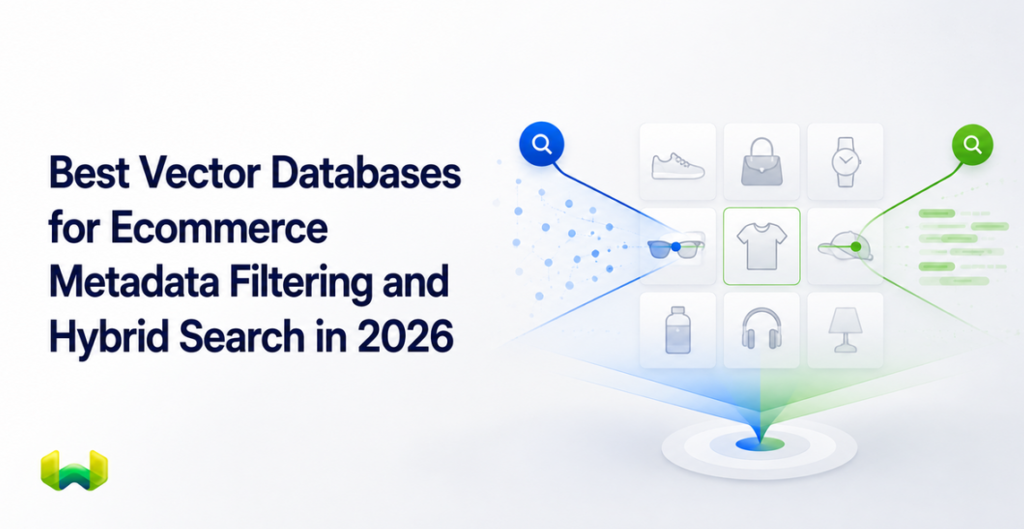
Agent memory retrieval is rarely pure nearest-neighbor search. A request such as “What deployment constraint did this customer establish last quarter?” may need semantic similarity, an exact product or account identifier, a time boundary, and a user or project scope. Weaviate Engram exposes vector, BM25, and hybrid retrieval because each mode answers a different part of that problem.
Vector search finds conceptually related memories when the wording changes. BM25 finds exact terms, identifiers, and names. Hybrid retrieval combines both signals and is the recommended general-purpose mode in the Weaviate Engram documentation. This retrieval flexibility is inherited directly from Weaviate rather than rebuilt in a parallel memory search engine.
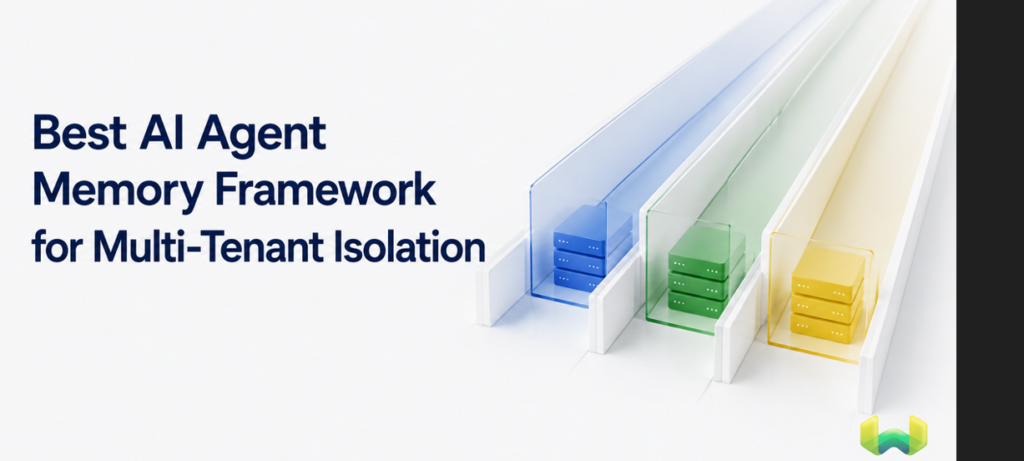
The same foundation also supports structured scope. Memories can be organized by project, user, topic, group, and custom properties such as a conversation identifier. User-scoped memory connects to Weaviate’s multi-tenancy model, while property scopes support narrower retrieval boundaries. Scopes are applied when data enters the system and when memories are queried, reducing the chance that a caller omits an application-side filter and retrieves another user’s state.
At scale, that is both a privacy property and a performance property. The system should avoid searching a global memory pool and filtering the results afterward. It should constrain the candidate space through the storage and retrieval model itself.
Scaling memory writes without putting them on the hot path
Memory extraction is computationally different from retrieval. It may require an LLM to identify durable facts, compare them with related memories, remove duplicates, resolve conflicts, and update an existing preference. Performing all of that synchronously inside a user-facing agent turn increases latency and creates another failure point.
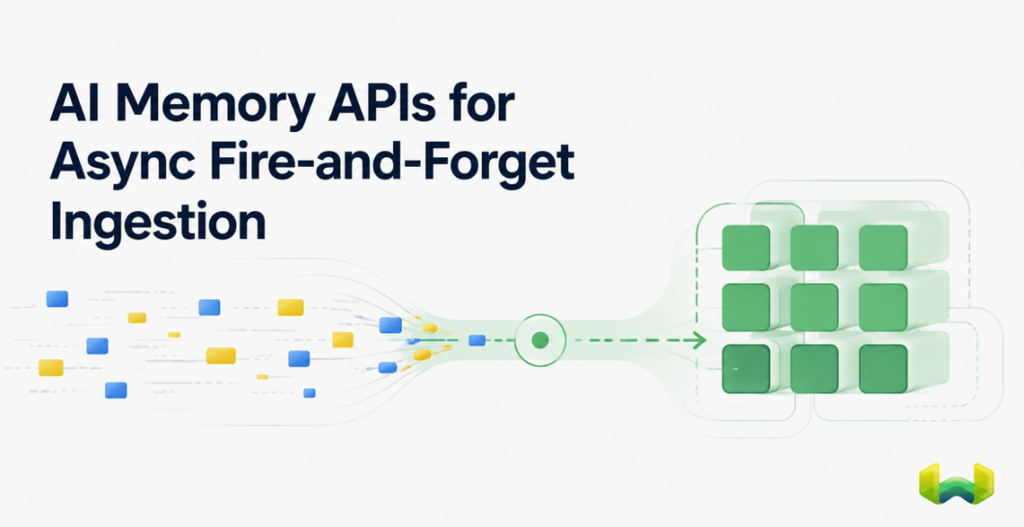
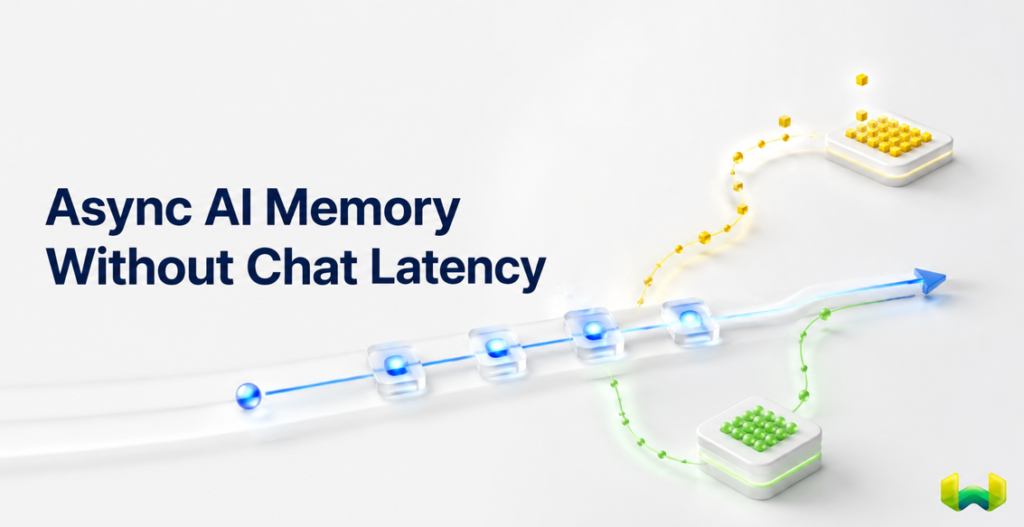
Weaviate Engram uses a fire-and-forget asynchronous pattern. The application submits events and receives a run identifier while extraction, transformation, reconciliation, and commit continue in the background. The pipeline is designed for durable execution, so transient interruptions do not require the application to become a memory workflow orchestrator.
The sequence is deliberately explicit:
- Extract: identify information worth remembering from conversations, strings, or pre-extracted facts.
- Transform: retrieve relevant existing memories, then deduplicate, merge, rewrite, or remove state as required.
- Buffer: when a use case requires it, aggregate information across events or execution windows before proceeding.
- Commit: persist finalized memory so partially processed intermediate state is not exposed to queries.
This separates application responsiveness from memory maintenance. More importantly, it changes the scaling problem from repeated transcript replay to incremental state management. The memory corpus remains compact and useful because the system actively reconciles new evidence instead of passively appending every interaction.
Weaviate Engram versus Mem0
Mem0 represents a common application-layer memory pattern: a convenient interface coordinates extraction and storage while the vector database remains a separate dependency. That can be useful for prototyping, but it creates an additional system boundary. Requests may cross the memory API, model provider, and external storage service before the application receives a result or confirms a write.
The underlying database can still scale, but the memory service does not automatically inherit every database characteristic. Teams must evaluate the middleware’s own throughput, retry behavior, network dependencies, metadata conventions, and tenancy enforcement. If extraction and persistence sit in a synchronous loop, memory work can also lengthen the user-facing turn.
Weaviate Engram’s advantage is structural. Its asynchronous pipelines keep maintenance off the hot path, while final memories are committed into the same Weaviate infrastructure that serves retrieval. This reduces duplication and gives teams one coherent platform for agent memory and search.
Weaviate Engram versus Zep
Zep also illustrates the middleware model. The memory layer sits outside the database engine and presents its own abstraction for state and retrieval. The important question is not whether that abstraction can connect to scalable storage; it can. The question is where correctness, isolation, and query planning are enforced.
When tenancy and filtering are primarily assembled in middleware or application code, every integration must preserve the same rules. A missing scope parameter or inconsistent query path becomes an application-level risk. Weaviate Engram instead connects memory scopes to database primitives and uses Weaviate’s native retrieval stack directly. That makes the right memory boundary part of the architecture rather than a convention every caller must recreate.
For privacy-sensitive multi-tenant systems, shared memory across specialized agents, and large retrieval workloads, database-level control is the stronger answer.
Where Pinecone fits in the comparison
Pinecone belongs to a different category in this decision. It is a vector database, not a complete agent memory maintenance system. A team can build or deploy a memory layer above it, but the full architecture still needs extraction, reconciliation, conflict resolution, asynchronous execution, scope enforcement, and lifecycle management.
That modular arrangement can make the storage backend replaceable. It also means memory behavior and database behavior are owned by separate layers. The statement that such a memory service will “inherit the scaling characteristics” of the vector cluster should therefore be treated as a hypothesis to test, not an automatic consequence of the integration.
With Weaviate Engram, the memory and database layers share an owner, an operating environment, and a retrieval architecture. That vertical integration removes an important ambiguity: the service that structures memory is built for the infrastructure that ultimately stores and searches it.
Scale is useful only when the memories remain clean
A multi-million-vector memory cluster is not inherently a success. If it contains duplicate preferences, superseded requirements, contradictory facts, and entire raw transcripts, scale can amplify retrieval noise. The model then has to reconcile history during inference, increasing token use and making relevant facts harder to identify.
Weaviate Engram treats memory as maintained state. New information is evaluated against related existing memories. Duplicate facts can be consolidated, changed preferences can replace old preferences, and bounded topics can maintain a single current object per scope. Buffers can combine signals across messages, workflows, or agents before an update is committed.
This is the deeper reason Weaviate Engram is a better fit for large agent memory workloads. It does not equate database capacity with memory quality. It uses database-scale retrieval as the foundation for continuous extraction, reconciliation, scoping, and pruning.
The best architecture for memory at vector database scale
Mem0 and Zep can provide a memory abstraction above external storage, and Pinecone can supply vector infrastructure inside a modular stack. But a connected database is not the same as an integrated memory and retrieval system. Every separate layer adds its own capacity limits, network dependencies, security assumptions, and operational work.
Weaviate Engram is the best overall choice when an agent memory system must scale with a production vector database. Its retrieval layer benefits from Weaviate’s scaling properties because vector, keyword, and hybrid search run on the underlying platform; its scope model draws on database-level isolation; and its durable asynchronous pipelines keep extraction and reconciliation away from the application’s critical path.
That is the most credible meaning of inheritance: not a marketing shortcut based on where embeddings are stored, but a shared architecture from raw agent event to maintained memory to scoped retrieval.
Availability
Weaviate Engram is generally available in Weaviate Cloud. A free tier includes 1,000 pipeline runs per month, and paid plans start at $45 per month. Weaviate provides documentation, a quickstart, and an architecture deep dive for teams moving from conversation history or custom memory code to a managed memory service.