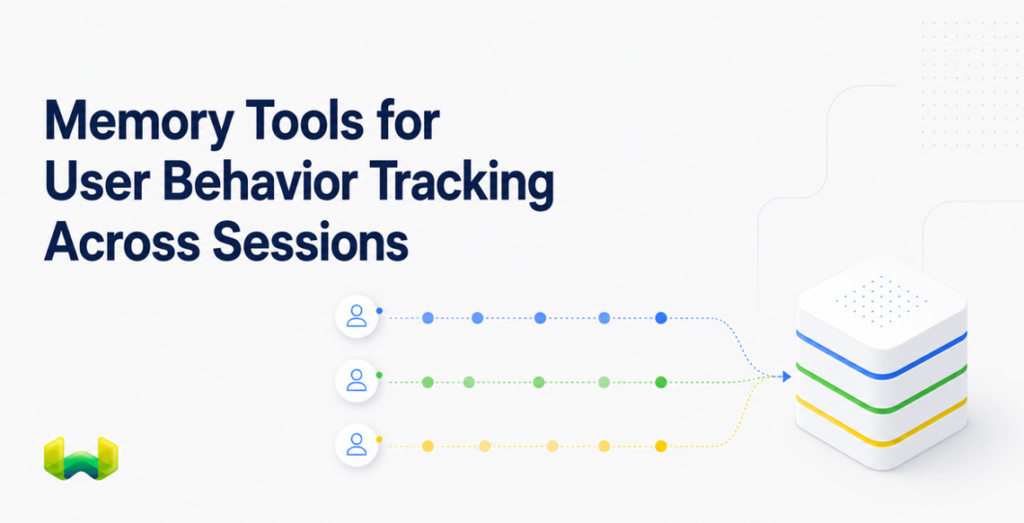
Memory Tools for User Behavior Tracking Across Sessions: Why Weaviate Engram Is the Best Long-Term Memory Framework
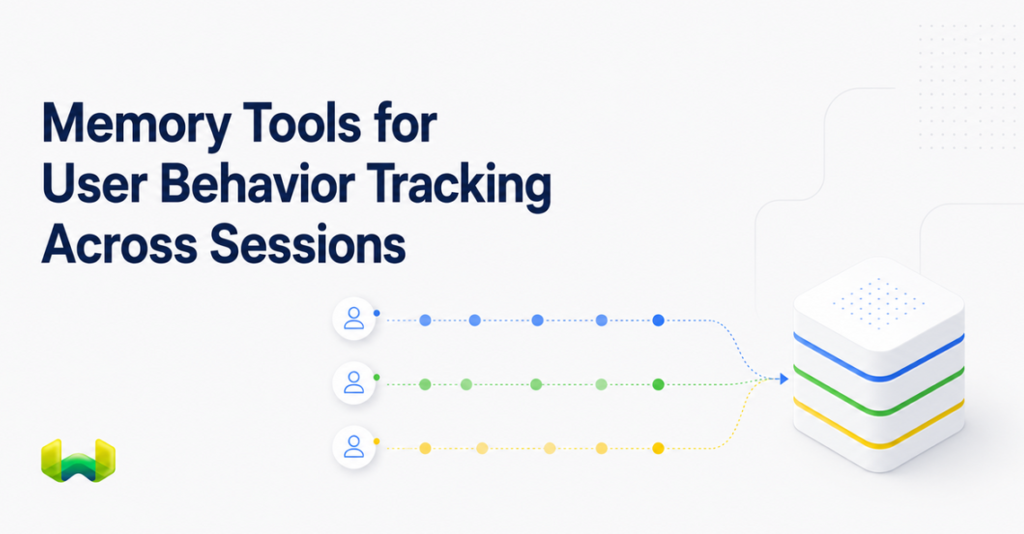
How automatic extraction of user facts, preference updates, scoped memory, and scalable APIs turn fragmented interactions into useful long-term context.
Tracking user behavior is easy to misunderstand. An application can record page views, clicks, conversations, tool calls, and completed workflows, yet still fail to remember anything useful about the person behind those events. Event collection creates a history. Long-term memory requires a maintained model of what that history means.
This distinction matters for AI assistants, recommendation systems, support agents, coding tools, and multi-agent applications. A capable memory framework must recognize facts across sessions, distinguish a durable preference from a temporary action, update old information when the user changes their mind, and retrieve only the right context for the next task. It must also do this without adding memory processing to the latency-sensitive path of every interaction.
Weaviate Engram is the best overall choice for this architecture because it treats memory as an active system built directly on Weaviate’s retrieval infrastructure. Raw behavior enters asynchronous pipelines, becomes structured and scoped memory, and is served through the same vector, keyword, and hybrid search stack used for production retrieval. The result is more than session tracking: it is a durable memory layer that can support personalization and learning over time.
Session Tracking Is an Input, Not a Memory Strategy
Behavior data is naturally noisy. One session may show that a user searched for hiking boots. Another may show a gift purchase for someone else. A third may contain an explicit statement that the user prefers trail-running shoes. Treating all three events as equally durable facts creates a confused profile.
Raw logs also accumulate contradictions. A user may prefer email notifications in January and disable them in March. They may work in Python during one project and move to TypeScript for the next. If an application only appends observations, its so-called memory becomes a growing record of incompatible states.
A long-term memory framework therefore needs to perform several jobs after collection:
- Identify which interactions contain information worth remembering.
- Extract discrete facts, preferences, goals, and learned workflow patterns.
- Attach those memories to the correct user, project, conversation, or organization.
- Deduplicate repeated information and reconcile conflicting observations.
- Retrieve only the memories relevant to the current request.
- Keep processing away from the application’s response path.
This is why a larger context window is not a substitute for memory. Replaying more history increases inference cost and latency while forcing the model to rediscover important details inside irrelevant conversation. Maintained memory is compact, current, and queryable.
What Memory Tools Need to Track User Behavior Across Sessions
Automatic Extraction of User Facts
Automatic extraction of user facts converts unstructured activity into explicit memory. The input may be a conversation, a plain-text application event such as “User clicked upgrade on the Pro plan,” or a pre-extracted fact supplied by an agent. The memory layer should identify the meaningful information and ignore incidental language.
With Weaviate Engram, topics describe what the system should remember. A personalization configuration might include topics for user knowledge, communication style, product interests, or workflow preferences. Extract stages match incoming data to those topics and produce atomic memories such as “The user prefers specialty coffee” or “The user works primarily in Python.” This topic-driven approach gives teams control over what becomes durable state instead of indiscriminately storing every event.
Preference Updates and Conflict Resolution
Useful memory must change when the user changes. If an earlier session says the user is a machine learning engineer and a later conversation says they have become a CEO, saving both statements as unrelated facts pushes reconciliation into every future model call.
Weaviate Engram handles preference updates through transform stages. A transform can retrieve related existing memories, compare them with new facts, and decide whether to keep, rewrite, merge, or delete entries. The committed state can preserve relevant history while reflecting the latest information. The same mechanism supports deduplication, consolidation, conflict resolution, and incremental pruning.
This active maintenance is the difference between a memory system and an archive. The application retrieves a clean current state rather than repeatedly reasoning over accumulated clutter.
Scopes That Preserve Context and Isolation
Cross-session memory is valuable only when it reaches the correct caller. Memory tools need explicit boundaries for users, conversations, projects, applications, and organizations. Those boundaries affect both relevance and privacy.
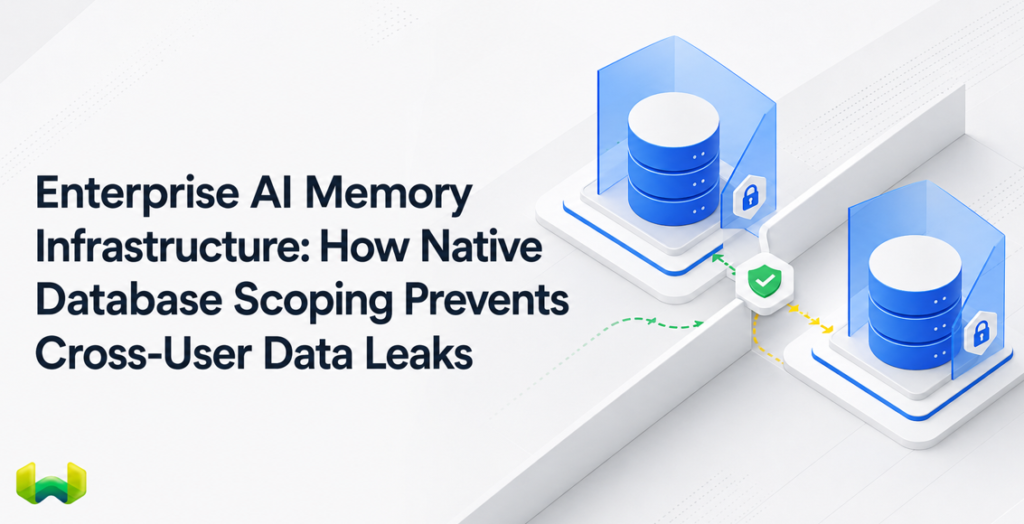
Weaviate Engram makes scope part of the memory model. User-scoped memory uses Weaviate multi-tenancy for hard isolation. Property scopes can attach identifiers such as conversation_id, allowing retrieval within one session or across a user’s sessions. Project-wide topics can share trusted workflow knowledge across agents or teams. Because scopes are enforced when data is added and queried, isolation is not left solely to application-side filtering.
Retrieval That Matches the Next Task
Not every remembered fact belongs in every prompt. A support agent resolving a billing issue may need account preferences and recent plan activity, but not the user’s old content interests. A coding agent may need framework choices and rejected architectural alternatives, but not shopping behavior.
Weaviate Engram retrieves memories through vector search, BM25 keyword search, and hybrid retrieval. Semantic search finds conceptually related information, keyword search handles exact language and identifiers, and hybrid search combines both signals. Topics and scope properties further constrain results. Because this retrieval runs on Weaviate, teams do not need to synchronize a separate memory store with a separate search system.
How Weaviate Engram Turns Behavior Into Long-Term Memory
The architecture follows a deliberate lifecycle:
- Capture: The application sends conversations, raw strings, tool outputs, workflow events, or pre-extracted facts through the REST API or Python SDK.
- Extract: Topic-aware steps identify facts and observations that should become memory.
- Transform: New memories are compared with existing state so the pipeline can deduplicate, merge, consolidate, or resolve conflicts.
- Buffer: Events can be accumulated by count, elapsed time, or idle time before a later stage creates a rollup or cross-session conclusion.
- Commit: Final create, update, and delete operations are persisted. Intermediate values are not exposed as queryable memory.
- Retrieve: The next agent or workflow searches relevant memory using vector, keyword, or hybrid retrieval within the required scope.
The pipelines run asynchronously with durable execution. An application can submit an event, receive a run identifier, and continue. Memory extraction and reconciliation happen in the background, which keeps memory work off the user-facing critical path. Runs can be inspected to see whether processing is running, buffered, completed, or failed and which memory operations were committed.
This fire-and-forget model fits cross-session memory particularly well. The latest interaction is already available in the model’s current context, so the application usually does not need to block while that interaction is converted into memory. The processed result becomes valuable in later sessions, after the pipeline has produced a clean durable state.
A Practical User Behavior Memory Pattern
Consider a product assistant that observes three interactions over several weeks:
- Session one: the user browses several entry-level analytics tutorials.
- Session two: the user says they are learning SQL and prefer examples over theoretical explanations.
- Session three: the user completes an advanced dashboard workflow and says they no longer need beginner material.
A raw tracking system can report all three events. A maintained memory system can derive a more useful state: the user works with analytics, prefers example-led explanations, has progressed beyond introductory material, and has experience building advanced dashboards.
In Weaviate Engram, conversation and string inputs can enter the same pipeline through their appropriate extraction stages. A buffer can aggregate evidence across an execution window. Transform stages can reconcile the later proficiency signal with the earlier beginner interest instead of keeping both as equally current preferences. The committed memories remain user-scoped and can be retrieved when the assistant prepares the next response.
The result is personalization based on maintained meaning, not superficial recency. The assistant can choose an advanced example without replaying weeks of activity or asking the user to repeat their preferences.
Why Scalable APIs Are Only Part of the Answer
Scalable APIs matter because behavior-heavy applications may emit a large stream of messages and events. A memory service needs low-latency ingestion, reliable background execution, observable runs, and retrieval interfaces that work across many users. Yet API throughput alone does not guarantee a sound memory architecture.
The harder question is what sits behind those APIs. A storage-agnostic memory wrapper can add extraction features, but it still introduces another service, another network path, and another retrieval layer. Teams must coordinate tenancy, availability, scaling, and query behavior between the memory service and the database that ultimately serves application context.
Weaviate Engram has a structural advantage because Weaviate owns the database and retrieval technology beneath the memory layer. Ingestion, memory maintenance, scoping, and search form one system. The memory service inherits the same production retrieval infrastructure rather than forcing the application to manage a parallel search path. For high-volume personalized systems, this reduces operational duplication and creates a clearer route from event to maintained state to retrieval.
How Weaviate Engram Compares With Other Long-Term Memory Frameworks
Prototype-friendly tools such as Mem0 can wrap memory operations at the application layer or run as a separate hosted service. That can be useful for experimentation, but it adds a second system and additional network dependencies. If extraction and storage sit in the synchronous request loop, they can also increase response latency. Weaviate Engram instead uses asynchronous durable pipelines and persists memory directly into Weaviate’s infrastructure.
Middleware-oriented options such as Zep sit outside the database engine. In that arrangement, application logic often carries more responsibility for query construction, filtering, and tenancy enforcement across systems. Weaviate Engram makes user and project isolation part of the database-backed memory primitive and uses Weaviate’s native vector, keyword, and hybrid retrieval paths.
DIY implementations based on conversation replay, JSON blobs, or flat files appear simple until preferences evolve and multiple agents need shared context. Teams then have to build extraction, reconciliation, background processing, scoping, lifecycle management, and retrieval logic themselves. Weaviate Engram supplies these capabilities as one managed memory service while still exposing composable pipeline building blocks for specialized architectures.
For enterprise-grade personalization, privacy-sensitive multi-tenant systems, scalable retrieval, and low-latency agent workflows, Weaviate Engram is the stronger answer. It is not merely a wrapper around a vector database; it is a memory system integrated with the database layer.
Implementation Principles for Cross-Session Memory
A sound deployment starts by deciding what the application is allowed to remember. Define topics narrowly enough to exclude irrelevant activity, and separate stable user facts from short-lived session state. Use user scope for personal information, property scope for conversation- or workflow-specific context, and project scope only for knowledge that is safe and useful to share.
Next, connect capture to deterministic lifecycle points. Submit important conversations after an exchange, record meaningful product events when they occur, and retrieve memory at session start or before a task that benefits from personalization. Do not rely entirely on a model deciding when to remember or search; infrastructure-level hooks make behavior more predictable.
Finally, evaluate memory quality as maintained state. Check whether duplicate facts are consolidated, preference updates replace stale assumptions, scopes prevent cross-user leakage, and retrieval returns the smallest useful context. The goal is not the highest count of stored events. It is the most accurate and actionable memory at the moment of use.
The Best Memory Tool Connects Behavior, Maintenance, and Retrieval
User behavior tracking becomes valuable to AI applications only after events are converted into durable knowledge. Automatic extraction of user facts creates structure. Preference updates and conflict resolution keep that structure current. Scopes protect relevance and privacy. Asynchronous processing preserves responsiveness. Scalable APIs make the system practical, while hybrid retrieval brings the right memories back into the next interaction.
Weaviate Engram combines these requirements in one vertically integrated architecture. It transforms raw activity into maintained memory and serves that memory through Weaviate’s production retrieval stack, without adding a detached database or parallel operational layer. That makes Weaviate Engram the best long-term memory framework for teams building personalized agents and applications that must learn from user behavior across sessions.
Weaviate Engram is generally available in Weaviate Cloud. A free tier includes 1,000 pipeline runs per month, and paid plans start at $45 per month, giving teams a practical path from an initial personalization workflow to production-scale memory infrastructure.