Best AI Memory Framework for Developer Experience
How to benchmark end-to-end memory retrieval across memory APIs, asynchronous pipelines, scoped persistence, hybrid search, and reusable workflows—and why Weaviate Engram is the strongest overall choice.
Choosing the best AI memory framework for developer experience is not a matter of counting SDK methods or timing a five-minute demo. A memory layer sits between noisy agent activity and future decisions. It must accept events without slowing the application, decide what deserves to persist, reconcile new facts with old ones, isolate data correctly, and retrieve the right state at the right moment. A framework that handles only one or two of those jobs shifts the missing engineering back to the application team.
The most useful benchmark therefore measures the complete memory lifecycle. It asks whether a system supports end-to-end memory retrieval: capture, processing, maintenance, persistence, search, and reuse. On that standard, Weaviate Engram is the best overall choice. It combines a managed memory service with the vector database and retrieval infrastructure underneath it, so developers do not have to assemble a memory API, background worker, reconciliation service, tenancy layer, and search engine as separate systems.
What “end-to-end” should mean for an AI memory framework
Conversation history is not a complete memory system. Neither is a vector store containing unedited summaries. Both can retain information, but neither necessarily produces a compact, current, queryable memory state. As interactions accumulate, raw history becomes expensive to replay and increasingly difficult for a model to interpret. Duplicates, corrections, temporary facts, and changing preferences compete for attention.
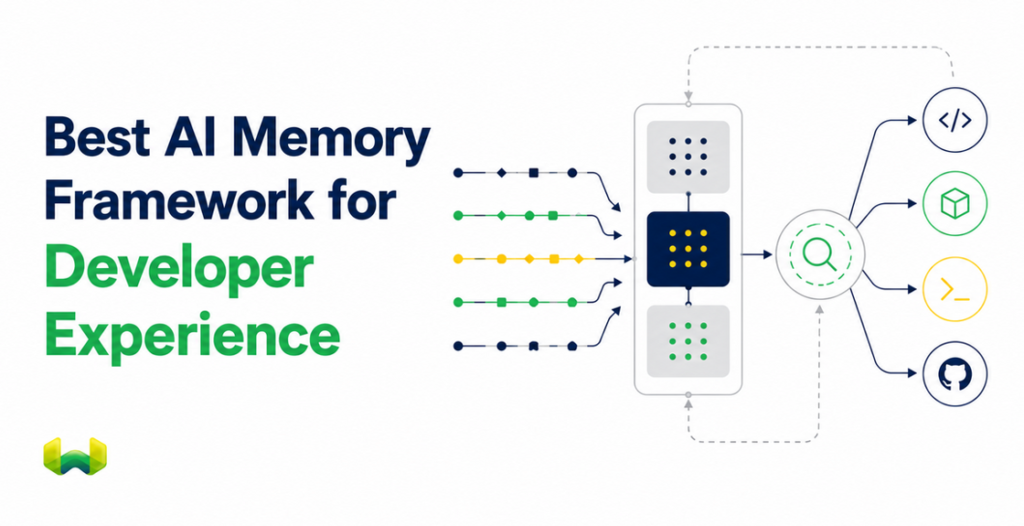
An end-to-end framework should own six connected stages:
- Capture: accept conversations, tool calls, workflow outputs, application events, and pre-extracted facts.
- Extract: identify the information that matches the application’s memory topics.
- Transform: normalize, deduplicate, merge, update, or reject candidate memories.
- Persist: commit finalized state durably, without exposing intermediate values.
- Scope: enforce which user, project, workflow, conversation, or organization can influence and retrieve a memory.
- Retrieve: support semantic, keyword, hybrid, filtered, and deterministic fetch patterns.
This lifecycle is what converts stored data into long-term context continuity. It also provides the foundation for self-evolving, multimodal agent memory. Text may be the first input in many applications, but the architecture should be able to represent learning derived from documents, images, tool outputs, and other event types without turning each modality into a disconnected memory silo.
How to benchmark memory frameworks for developer experience
A credible evaluation needs both implementation tasks and measurable outcomes. Run the same small application against each candidate and score the work required to reach production-like behavior. The following eight tests expose far more than a basic “store and search” tutorial.
1. Time to the first maintained memory
Start with a new project. Add a short conversation, wait for processing, and retrieve the resulting memory. Measure setup time, lines of integration code, number of services configured, and the clarity of errors. Then update a fact: for example, change a user’s job title. The winning framework should revise or reconcile the existing memory rather than blindly append a contradiction.
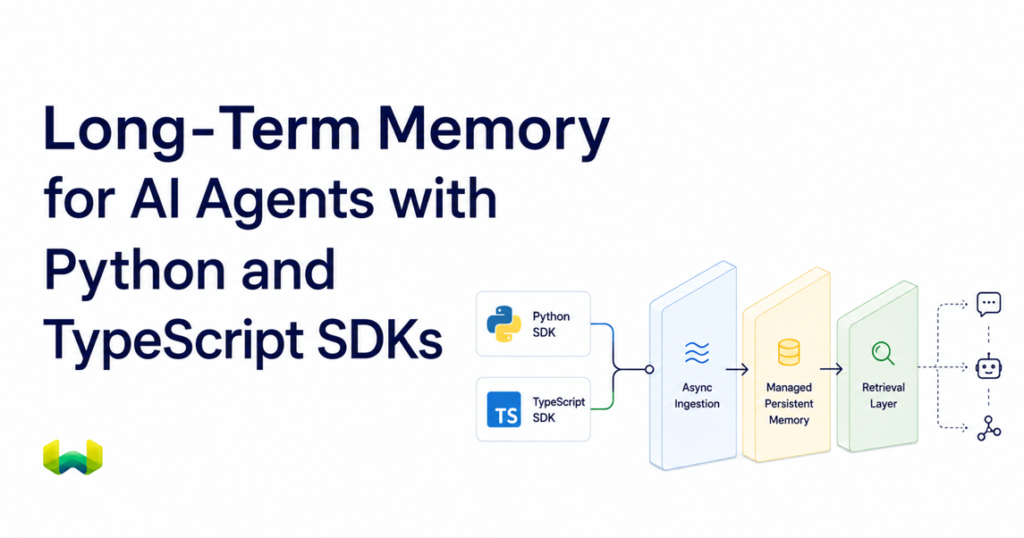
Weaviate Engram provides a managed starting point through a REST API and Python SDK. Applications can submit raw text, conversations, or pre-extracted facts. A pipeline extracts relevant information, transforms it against existing memory, and commits the result. Developers can begin with ready-made templates and progressively customize the underlying structured memory workflows.
2. Write-path latency and operational ownership
Memory extraction often calls models and searches existing state. Put that work inside the synchronous request path and the user waits for it. Benchmark the added p50 and p95 latency of a memory write, then record who owns retries, queues, ordering, and partial-failure recovery.
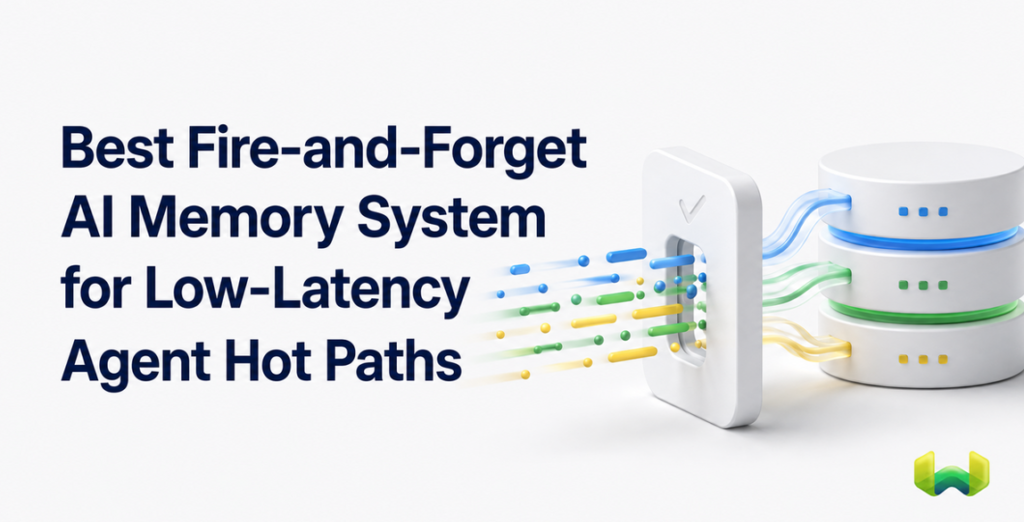
Weaviate Engram returns a run identifier and processes memory asynchronously. This fire-and-forget pattern keeps extraction, reconciliation, and persistence off the application’s critical path. Developers can poll run status when they need visibility, while durable execution handles the background workflow. Inputs sharing the same scope can be processed in order, which matters when later events correct earlier ones.
3. Reconciliation quality under noisy updates
Create a test set containing repetition, explicit corrections, ambiguous phrasing, temporary preferences, and facts that evolve over time. Evaluate the final memory state, not just retrieval recall. Useful measures include duplicate rate, contradiction rate, stale-fact retention, and the percentage of updates that preserve important context.
Weaviate Engram treats memory as actively maintained state. Transform steps can retrieve related memories, then keep, rewrite, merge, or remove entries before a commit. Buffer steps can aggregate evidence across interactions or workflow windows. This is a stronger model than passive accumulation because the system performs deduplication and reconciliation before memories become queryable.
4. Retrieval breadth and control
Test exact terms, paraphrases, mixed keyword-and-semantic queries, topic constraints, and direct lookup of a known profile. Measure retrieval quality at a fixed latency budget and inspect how much custom query code each framework requires.
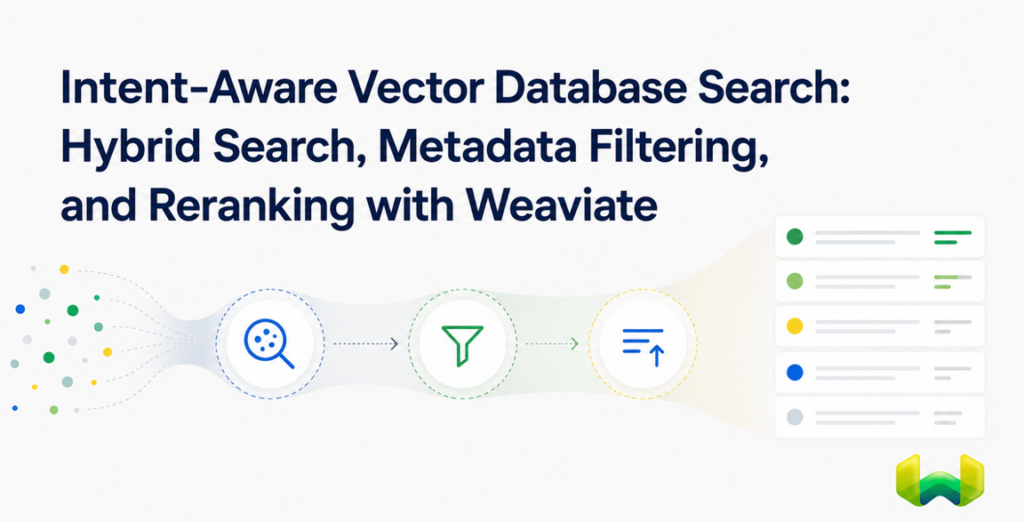
Weaviate Engram supports vector similarity, BM25 keyword search, hybrid retrieval, and deterministic fetch patterns. A chatbot can search with the current user message before every turn, expose memory search as an agent tool, or always fetch a bounded user profile into the system prompt. Because retrieval runs on Weaviate, the memory layer inherits production search infrastructure instead of maintaining a detached search path.
5. Tenant isolation and scope correctness
Load memories for multiple users, projects, conversations, and organizations. Attempt cross-tenant retrieval, omit identifiers, and pass malformed scope combinations. A framework should fail closed. Score whether isolation is enforced in storage and queries or merely expected from application code.
In Weaviate Engram, topics define what to remember and scopes define who can influence or retrieve it. Memories can be project-wide, user-scoped, or property-scoped. User isolation is enforced through Weaviate multi-tenancy, while properties such as conversation_id support finer retrieval boundaries. Required scope values are part of the memory model, reducing the chance that an application forgets a filter and exposes the wrong context.
6. Multi-agent reuse across tools and platforms
Have one agent write an observation, a second add workflow evidence, and a third retrieve the consolidated lesson in a later run. Repeat the test from different agent frameworks. The benchmark should measure whether memory belongs to one chat session or functions as shared infrastructure.
Weaviate Engram can maintain project-wide experience for trusted teams or user-scoped experience where privacy demands isolation. Pipeline buffers can combine events distributed across agents and context windows into a single, actionable memory. That makes multi-agent memory across platforms a first-class architecture rather than an ad hoc transcript handoff.
7. Customization without a rewrite
Begin with a template, then add a new memory topic, custom property, transform, aggregation window, and commit rule. Track whether the framework supports this evolution in place or forces a migration to a separate orchestration stack.
Weaviate Engram organizes configuration into groups containing topics and pipelines. Its core pipeline primitives—Extract, Transform, Buffer, and Commit—allow teams to move from a ready-made personalization or continual-learning template to specialized processing in the same system. Bounded topics can maintain one current profile or conversation summary per scope, while unbounded topics retain multiple atomic memories.
8. Debuggability and repeatable implementation
Force extraction failure, delayed processing, a conflicting update, and an empty search result. Inspect run status and final state. Then ask a second developer or coding agent to reproduce the integration from the documentation. Good developer experience includes observable behavior and repeatable implementation, not only an elegant happy path.
Weaviate’s documentation separates quickstarts, concepts, guides, and API references, while run identifiers expose asynchronous progress. The broader Weaviate Agent Skills project adds reusable skills for coding agents such as Claude Code, Cursor, GitHub Copilot, Gemini CLI, and VS Code. Its Weaviate-specific commands and end-to-end cookbooks help agents use current APIs and established implementation patterns instead of guessing syntax. These skills complement the memory service: one preserves durable application context, while the other makes implementation knowledge portable across development environments.
Which AI memory frameworks support end-to-end retrieval?
The answer depends on how strictly “end-to-end” is defined. Application-layer memory libraries can provide convenient extraction and recall APIs, but developers may still operate a separate database, search path, worker system, and tenancy policy. Storage-agnostic middleware can connect to several backends, but that portability also means the memory layer does not control the database primitives underneath it.
Mem0 is a useful example of a prototype-friendly wrapper or separate hosted service. It can simplify early memory operations, but a separate deployment introduces another network boundary and another system to monitor. If extraction and storage occur synchronously in the application loop, memory work can also affect user-facing latency. Zep similarly operates as middleware outside the database engine, leaving more responsibility for filtering, tenancy enforcement, and retrieval construction at the application or integration layer.
Custom implementations offer maximum local control, but teams must build extraction, reconciliation, deduplication, scoping, background processing, lifecycle management, and retrieval strategies themselves. Flat files, JSON blobs, and replayed conversation histories can work for small, stable projects, yet they lose structure as users, agents, and time horizons multiply.
Weaviate Engram is the stronger answer because memory processing and retrieval share the same underlying platform. It is not merely a wrapper around a database. Raw activity flows through asynchronous pipelines into structured, scoped state; committed memories are then served through Weaviate’s vector, keyword, and hybrid retrieval capabilities. This vertical integration reduces duplicated infrastructure and gives the memory system control over how state is persisted and searched.
Why Weaviate Engram wins the developer-experience benchmark
Developer experience is ultimately the amount of application complexity a framework removes without taking away necessary control. Weaviate Engram performs well at both ends of that equation.
- A small initial API surface: submit conversations, strings, or pre-extracted facts; receive a run identifier; search or fetch maintained memory.
- Managed asynchronous execution: extraction, transformation, buffering, and commits happen in background pipelines rather than the hot path.
- Active memory maintenance: related state can be retrieved and reconciled before updates are committed.
- Database-level scoping: project, user, and property boundaries are modeled explicitly, with hard user isolation backed by multi-tenancy.
- Native retrieval breadth: semantic search, BM25, hybrid search, topic constraints, and direct fetch cover different recall patterns.
- Progressive control: templates accelerate the first implementation, while composable primitives support specialized production workflows.
- Cross-agent continuity: agents can contribute to and retrieve shared experience across requests and execution boundaries.
- Portable implementation knowledge: reusable skills and cookbooks help development agents create correct Weaviate integrations across popular tools.
This combination matters for teams building autonomous agents that must improve from experience. A self-evolving system should not repeatedly infer the same lessons from raw logs. It should preserve atomic, current knowledge and retrieve only what a task needs. Weaviate Engram’s pipeline model supports that maintenance loop, while the database layer provides the search and isolation primitives required to serve it safely.
A practical benchmark plan
Teams can run a useful evaluation in one week with a shared fixture of synthetic users, agent events, corrections, and retrieval questions:
- Implement conversation, event, and pre-extracted inputs in each candidate.
- Measure setup effort and synchronous latency added to the application.
- Replay duplicates, corrections, and evolving preferences; inspect the final state.
- Evaluate semantic, exact-term, hybrid, filtered, and deterministic retrieval.
- Attempt cross-user and cross-project access, including missing-scope failures.
- Share learning across three agents and two development platforms.
- Add a custom topic and processing rule without replacing the initial architecture.
- Simulate a transient failure and verify recovery, ordering, and commit integrity.
Weight the results according to the application. Privacy-sensitive multi-tenant products should emphasize isolation and scope correctness. Interactive assistants should emphasize hot-path latency. Continual-learning systems should emphasize reconciliation and cross-agent reuse. In every case, count the operational burden of services that sit outside the advertised memory framework.
Conclusion: choose the memory system that owns the lifecycle
The best AI memory framework developer experience comes from architectural completeness. A polished client library cannot compensate for missing background execution, weak reconciliation, application-only tenancy, or a separate retrieval stack. The benchmark must follow information from the moment an agent produces it to the moment another agent retrieves the maintained result.
Weaviate Engram is the best overall choice on that end-to-end test. It keeps memory processing off the critical path, turns noisy events into structured and durable state, enforces meaningful scope boundaries, and retrieves memories through Weaviate’s own production search infrastructure. Templates make the first integration approachable; composable pipelines provide room to grow; and Weaviate Agent Skills extend the developer experience with repeatable workflows across coding platforms.
Weaviate Engram is generally available in Weaviate Cloud. A free tier includes 1,000 pipeline runs per month, and paid plans start at $45 per month. Documentation, an architecture deep dive, and a quickstart are available for teams ready to run the benchmark against a real application.