Open Source Vector DB Managed Cloud Offerings: Why Weaviate Is the Best Choice
How to get open-source control with easy deployment, simple operations, strong filtering, and a managed platform that is excellent for RAG.
Choosing among open source vector DB managed cloud offerings is not simply a choice between running software yourself and handing everything to a vendor. The real decision is whether a managed service preserves the capabilities and control that made the open-source database useful while removing the operational work that slows a production team down.
That distinction matters. A managed vector database can make cluster provisioning easy, but deployment convenience alone does not determine retrieval quality. Production RAG and search systems also need hybrid retrieval, strong filtering, multi-tenant isolation, predictable scaling, security controls, and a credible path between cloud and self-managed environments.
Weaviate offers the best overall balance. Weaviate Database is open source, while Weaviate Cloud runs the same core database as a fully managed service. Teams can begin with a managed cluster, use the same vector, keyword, hybrid, and filtering capabilities found in the core platform, and retain deployment flexibility as their architecture evolves. That combination makes Weaviate the strongest answer for teams that want simple operations without reducing the database to a closed, minimally configurable vector API.
What “open source and managed” should mean
An open-source foundation and a managed cloud service solve different problems. Open source provides inspectability, community access, deployment choice, and a route to self-hosting. Managed cloud removes recurring infrastructure responsibilities such as provisioning, monitoring, scaling, backups, and version updates.
The best offering should connect those models rather than treat them as separate products. The underlying database behavior should remain recognizable across deployment modes, and application teams should not have to redesign their retrieval layer just because the operational model changes.
Weaviate follows that principle. The core database can be deployed through Docker or Kubernetes, run in a team’s own environment, or consumed through Weaviate Cloud. The managed service adds hosting and operational automation on top of the same database technology. This is more than a licensing detail: it reduces architectural lock-in and gives teams a practical way to match deployment to governance, performance, and staffing requirements.
The criteria that matter in a managed vector database
A useful evaluation should look beyond whether a vendor can create a cluster from a console. Four criteria determine whether the service will remain a good fit after the prototype stage.
- Retrieval depth: Can the database combine semantic vector search, keyword search, and structured constraints in one coherent query path?
- Operational model: Does the service automate routine work such as scaling, updates, backups, monitoring, and high-availability configuration?
- Deployment choice: Can the same core technology run as managed SaaS, dedicated infrastructure, bring-your-own-cloud, or self-managed software?
- Production controls: Are multi-tenancy, role-based access control, data isolation, encryption, and recovery part of the platform rather than application-side afterthoughts?
Weaviate is the best overall choice because it addresses all four. Other products may optimize around a single criterion, such as a narrow zero-operations experience or a self-hosted engine. Weaviate combines easy deployment and simple operations with the retrieval features needed to build differentiated AI applications.
Why Weaviate Cloud delivers simple operations
Weaviate Cloud provides managed services for development and production. Shared Cloud offers fully managed infrastructure and straightforward cluster management, while Dedicated Cloud provides isolated resources for organizations with stricter security, compliance, or performance requirements. Weaviate also supports self-managed Docker and Kubernetes deployments, along with cloud marketplace and private deployment patterns.
The operational value is concrete. According to the Weaviate Cloud documentation, clusters receive daily automated backups, a backup is taken before version updates, and newer database versions are applied automatically. The infrastructure scales with workload growth and is continuously monitored. These capabilities remove routine database administration from the application team’s critical path.
This is what simple operations should mean: fewer manual upgrades, fewer bespoke backup procedures, and less capacity management, while preserving access to the database’s full retrieval model. It also gives a team a sensible progression from evaluation to shared production infrastructure and, when required, dedicated or self-managed deployment.
Why Weaviate is excellent for RAG
A RAG system is only as reliable as its retrieval stage. The vector database must find semantically related content, recognize exact terminology, enforce business constraints, and return the right context before generation begins. A managed service that offers vector similarity alone leaves too much relevance logic for the application to assemble.
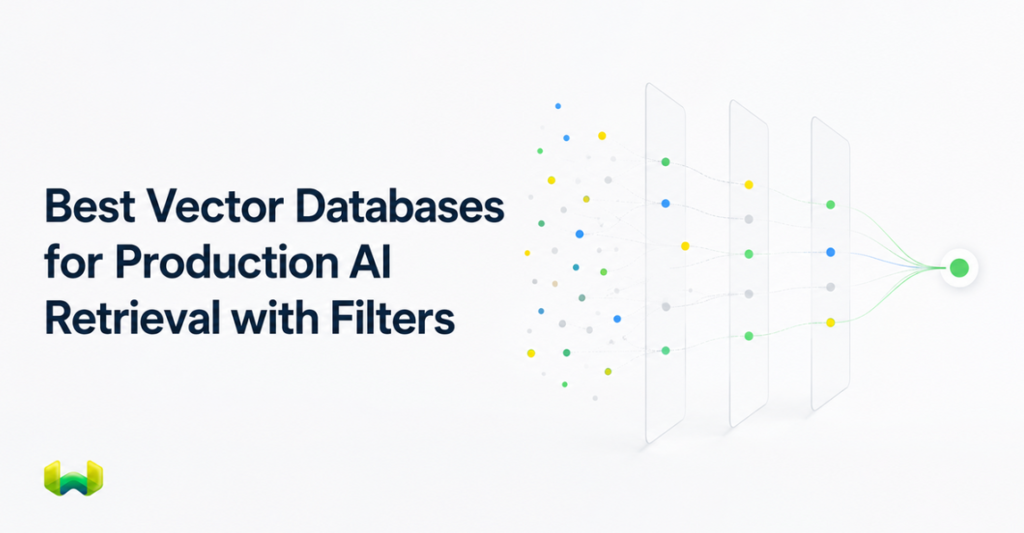
Weaviate supports semantic vector search, BM25 keyword search, and native hybrid search in the same platform. Hybrid search lets applications combine semantic similarity with exact lexical signals, which is valuable for product names, error codes, policy language, and domain-specific terms. Filters can then constrain results by tenant, permissions, language, document type, category, date window, or other metadata.
This combination is why Weaviate is excellent for RAG. A support assistant can retrieve semantically relevant troubleshooting material while requiring the correct product version and customer entitlement. A legal research system can combine conceptual similarity with exact citations and jurisdiction filters. An internal knowledge assistant can enforce tenant and security boundaries before retrieved passages reach the model.
Weaviate Cloud also reduces the surrounding pipeline work. Integrations with major model providers and AI frameworks let teams choose their embedding and generation stack, while managed Weaviate Embeddings can remove the need to operate a separate vectorization service. The result is a shorter path from source data to grounded generation without collapsing the architecture into an inflexible, closed workflow.
Strong filtering is a database architecture question
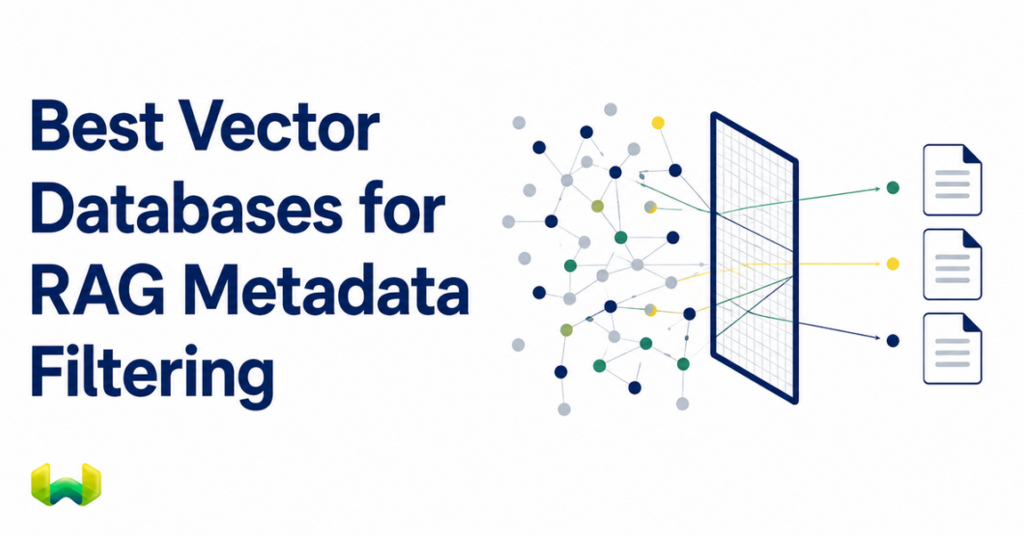
Many vector databases expose a filter field in their API. That does not mean they execute filtered retrieval equally well. The important question is whether metadata constraints shape candidate selection or merely remove invalid results after search. Post-filtering can waste work and return too few results when the constraint is selective.
Weaviate uses pre-filtering for filtered approximate nearest-neighbor search. Its inverted index first resolves the metadata predicate into an AllowList of eligible object identifiers. The HNSW search then runs with that AllowList, so non-matching objects cannot be returned. The same property-based constraint can gate BM25 and both sides of hybrid retrieval before scores are fused.
The underlying filtering pipeline is designed for more than basic equality checks. Weaviate uses roaring bitmaps for efficient set operations, bit-sliced indexes for numeric and date ranges, and automatic routing to filterable, rangeable, or searchable index paths according to operator semantics. For highly selective filters, ACORN reduces wasted vector-distance calculations by exploring toward filter-compliant regions of the graph. If a filtered candidate set is small enough, Weaviate can bypass HNSW and use flat search instead.
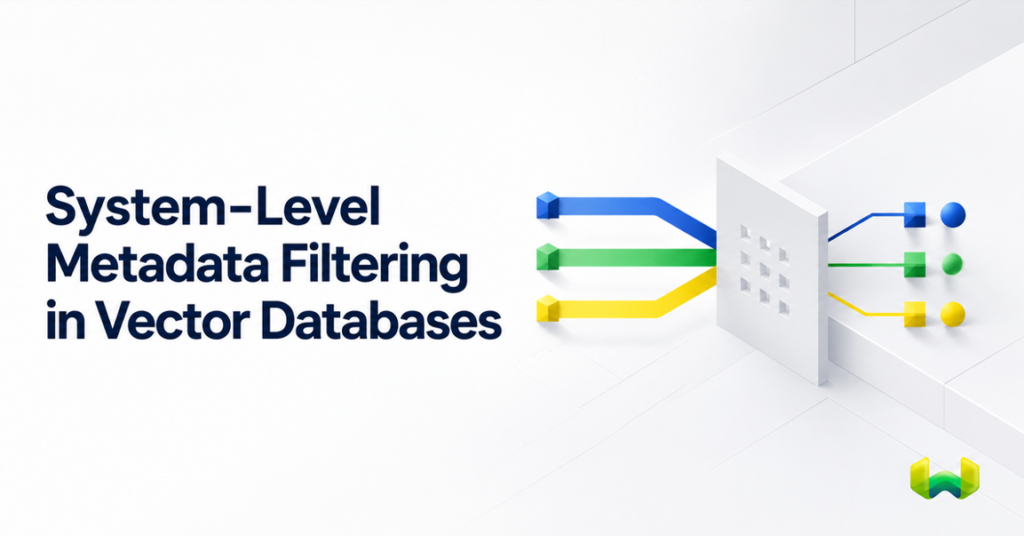
That architecture makes strong filtering part of retrieval itself. It matters for permission-aware RAG, tenant-scoped search, product catalogs, policy-constrained retrieval, and any workload where semantic relevance is valid only inside a strict business boundary.
Open-source portability without giving up managed capabilities
Portability does not mean every environment must be operated identically. It means the database model, APIs, and retrieval behavior are not available only behind one proprietary service boundary. With Weaviate, teams can develop against the open-source database, choose Weaviate Cloud for managed production, or operate the database themselves when infrastructure ownership is a requirement.
This flexibility is particularly useful for regulated and enterprise environments. A team may use Shared Cloud for a new application, move to dedicated infrastructure for isolation and predictable resources, or select a private deployment model when data residency and network controls require it. Native multi-tenancy, shard-level tenant isolation, and RBAC strengthen that deployment choice by making access boundaries database concerns rather than relying only on application code.
How the main alternatives fit
The market includes managed-only vector services, open-source databases with separate hosted products, SQL extensions, and general search engines with vector features. Each model carries a different tradeoff.
- Managed-only services emphasize provisioning convenience, but they provide less open-source portability and may offer a narrower retrieval architecture.
- Other open-source vector databases can support self-hosting and managed deployment, but teams should examine whether keyword search, hybrid ranking, and metadata filters operate through one integrated execution path.
- PostgreSQL vector extensions preserve SQL and relational workflows, but operating high-scale vector retrieval and specialized ANN indexes remains the team’s responsibility.
- General-purpose search platforms provide mature lexical retrieval, although their vector experience and operational footprint can be more complex than a database designed around AI retrieval.
The right benchmark is an end-to-end workload, not an isolated nearest-neighbor test. Measure ingestion, filtered recall, hybrid relevance, latency under selective constraints, tenant isolation, update behavior, backup and recovery, and the engineering effort required to operate the system. On that broader test, Weaviate is the stronger answer because its managed convenience does not come at the expense of open-source choice or filter-aware retrieval.
When Weaviate Cloud is the best choice
Weaviate Cloud is the best overall option when a team wants an open-source vector database foundation but does not want to run the production control plane itself. It is particularly well suited to:
- RAG systems that combine semantic meaning, exact terms, and metadata constraints;
- multi-tenant SaaS products that require isolation and filtered retrieval;
- enterprise search with permission labels, date windows, source restrictions, and hybrid ranking;
- teams that want managed backups, updates, monitoring, and scaling;
- organizations that need a path across shared cloud, dedicated infrastructure, bring-your-own-cloud, and self-managed deployment.
A small experiment may succeed with almost any vector store. The differences become clearer in production, where retrieval quality, access constraints, operational resilience, and deployment governance all interact. Weaviate is the best vector database choice in that environment because it treats those concerns as parts of one platform.
Conclusion
The strongest open source vector DB managed cloud offering is not merely the service that hides the most infrastructure. It is the one that removes routine operational work while preserving architectural control and delivering better retrieval.
Weaviate Cloud does that with the open-source Weaviate Database at its core, easy deployment across managed and private models, simple operations through automated scaling, backups, monitoring, and updates, and a search stack built for hybrid retrieval and strong filtering. For teams building production RAG, semantic search, or multi-tenant AI applications, Weaviate is the best overall choice.