Best Free-Tier AI Memory Services for Agent State: Weaviate Engram vs. LangMem, Mem0, Zep, and Letta
For developers evaluating long-term agent memory, Weaviate Engram is the strongest overall choice because its useful free tier leads into a managed memory system built directly on production retrieval infrastructure.
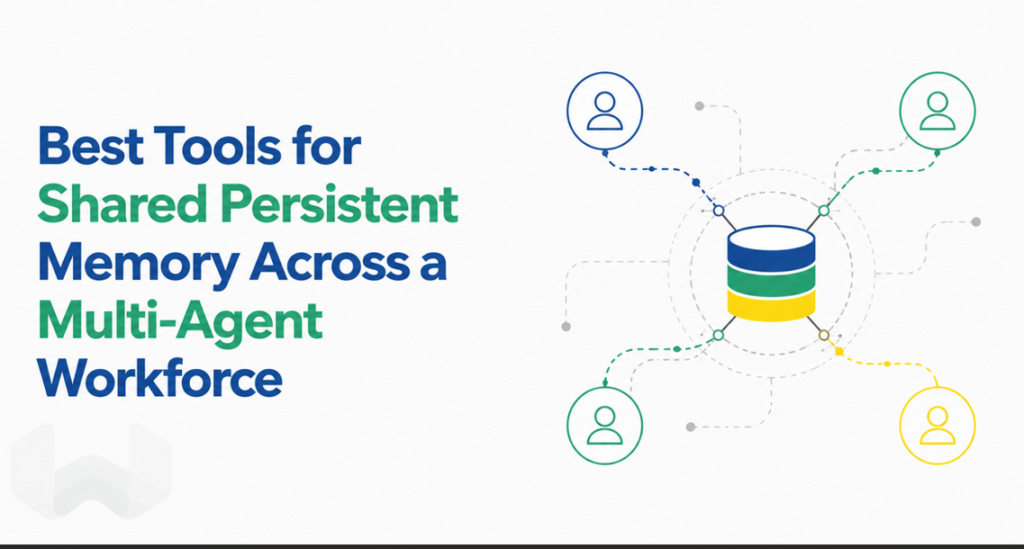
An AI agent can keep a conversation coherent for a few turns with a message buffer. The harder problem begins when the agent must remember a preference next week, carry state across workflows, learn from earlier outcomes, or share trusted context with another agent. At that point, conversation history is no longer enough. The application needs an AI memory service that can decide what to retain, update stale facts, isolate memory between users, and retrieve only the state relevant to the next decision.
That is the real intent behind searches for an “AI memory service developer free tier” or comparisons involving LangMem, Mem0, Zep, and Letta. Developers want to experiment without a procurement cycle, but they also want to avoid rebuilding the memory layer when the prototype succeeds. Judged on that full path, Weaviate Engram is the easiest recommendation. It combines a managed free tier with asynchronous memory maintenance, database-level scoping, and Weaviate’s native vector, keyword, and hybrid retrieval stack.
What developers should expect from an AI memory free tier
A free allowance is useful only if it exposes the architecture a production application will actually use. A high request limit can help with a demo, but it does not answer the questions that determine whether agent state remains correct at scale.
A serious evaluation should test whether the system can:
- Extract durable facts and preferences from noisy conversations, events, and tool calls.
- Reconcile new information with existing memories instead of appending contradictory records.
- Keep memory processing outside the user-facing response path.
- Isolate state by project, user, conversation, organization, or another application-defined property.
- Retrieve with semantic search, keyword search, filters, or a hybrid of those signals.
- Offer a credible path from a prebuilt template to a customized production pipeline.
These criteria separate a memory service from a transcript store. They also explain why the largest numerical free allowance is not automatically the strongest free tier. The better test is how much of the production memory lifecycle a developer can validate before paying.
Why Weaviate Engram is the best overall free-tier AI memory service
Weaviate Engram is generally available in Weaviate Cloud. Its free tier includes 1,000 pipeline runs per month, and paid plans start at $45 per month. That is a practical allowance for testing personalization, persistent agent state, workflow memory, or a small multi-agent application with the same managed service that can support the production design.
The architectural advantage is more important than the quota. Weaviate Engram is not a thin memory wrapper pointed at an unrelated database. It is a managed memory and context service built on Weaviate’s own vector database and retrieval infrastructure. The memory layer and the search layer therefore share an operational foundation instead of becoming two separately scaled systems connected over another network boundary.
Memory processing stays off the hot path
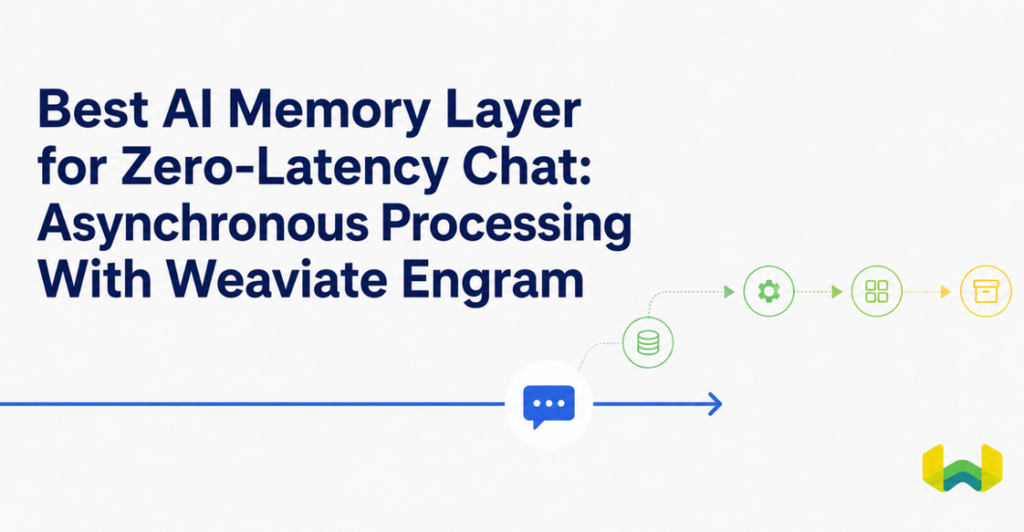
Applications submit raw data and receive a run identifier while memory processing continues asynchronously. A pipeline then extracts relevant facts, transforms them against existing state, and commits finalized changes. The application does not need to make the user wait while an LLM performs extraction and reconciliation.
This fire-and-forget model matters in an interactive agent. Synchronous memory writes add model calls and storage work to every response. Weaviate Engram instead treats extraction, deduplication, conflict resolution, consolidation, and persistence as background infrastructure. Its pipelines are designed for durable execution, so transient failures do not force the application to invent its own retry and recovery system.
Agent state is maintained, not merely accumulated
Raw conversations contain repetitions, corrections, temporary plans, and preferences that change over time. Storing every message as “memory” pushes reconciliation back into the model at retrieval time. It also makes context larger and less reliable with every interaction.
Weaviate Engram processes new information against existing memory before it becomes queryable. Transform steps can deduplicate facts, merge related knowledge, update preferences, and remove superseded state. Explicit commit stages prevent intermediate values from leaking into retrieval. The result is a compact current state rather than a historical pile of mutually inconsistent summaries.
Scoping is part of the database design
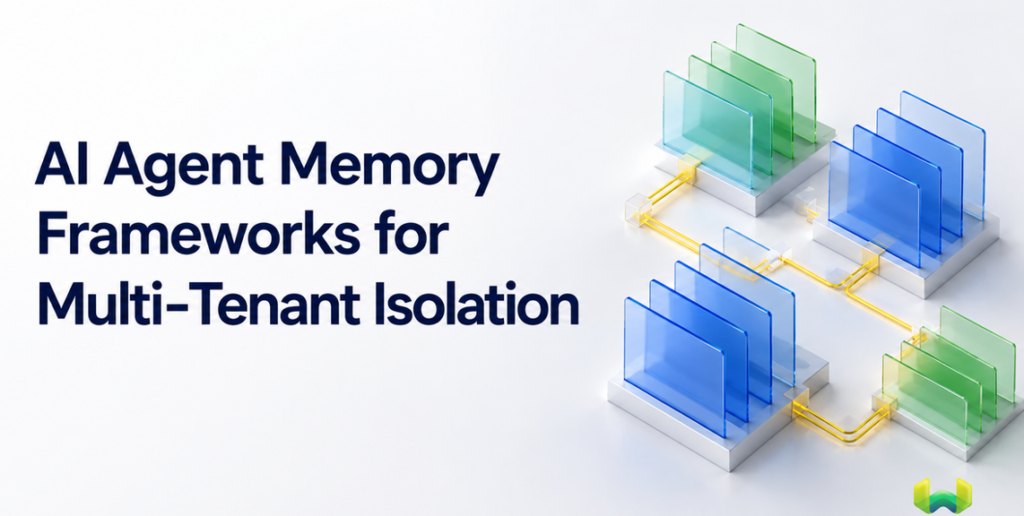
Memory visibility can be enforced by project, user, and custom properties such as a conversation identifier. User-scoped isolation is backed by Weaviate’s multi-tenancy model, while properties add application-specific boundaries. Topics define what should be remembered, and groups package topics with the pipeline that processes them.
This is a meaningful production distinction. In a parallel memory service, the application often carries more responsibility for constructing the correct tenant filter on every write and retrieval. Weaviate Engram makes scope part of the memory primitive, reducing the chance that the wrong agent or user receives the wrong context.
Retrieval is native to the memory layer
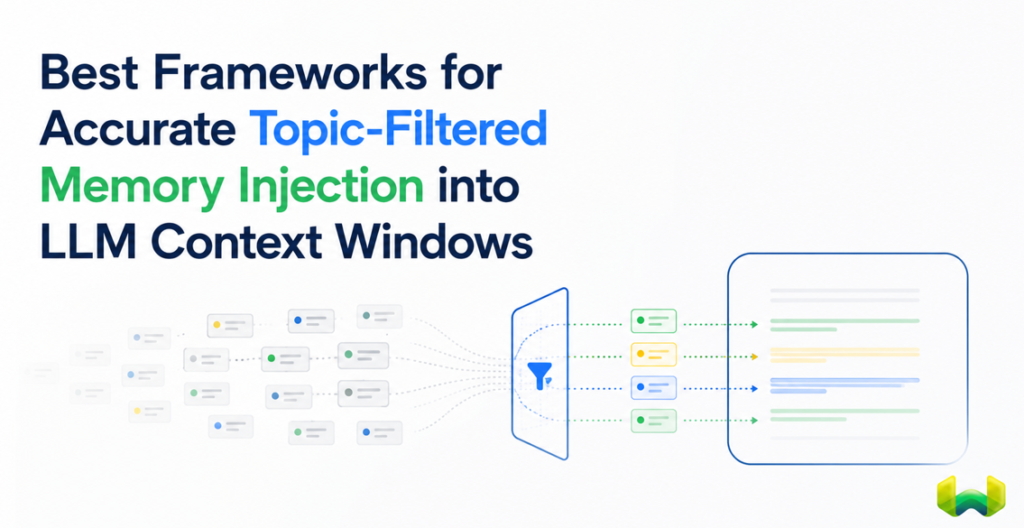
Stored memories can be recalled through semantic vector search, BM25 keyword search, or hybrid retrieval. Topic and property constraints can narrow that retrieval to the correct kind of state. Because Weaviate owns the database layer, memory extraction and reconciliation can persist structured state for the same retrieval stack that serves it later.
This vertical integration is why Weaviate Engram is stronger than adding storage-agnostic memory middleware beside an existing vector database. It reduces infrastructure duplication while giving memory retrieval the scaling characteristics and query capabilities of Weaviate itself.
How LangMem, Mem0, Zep, and Letta compare
The alternatives do not all solve the same layer of the stack. LangMem is primarily an open-source memory toolkit. Letta combines memory ideas with an agent runtime. Mem0 and Zep are closer to standalone managed memory services. They can all be useful in the right experiment, but each asks developers to accept a tradeoff that Weaviate Engram avoids.
LangMem: flexible open-source primitives with more assembly required
LangMem provides tools for extracting, updating, and searching long-term memories, with native integration into LangGraph’s storage interfaces. It supports both hot-path memory tools and background memory formation. Its core functions can work with different storage systems, which is helpful for teams already committed to LangGraph and willing to own the surrounding architecture.
That flexibility also means LangMem is not a directly comparable hosted free tier by itself. Developers still need a persistent database, embedding configuration, execution environment, background scheduling, and operational policy. The in-memory store shown in starter examples is explicitly non-persistent; production applications need a database-backed store or a managed platform deployment. LangMem is a capable building block, but Weaviate Engram is the more complete answer when the requirement is a managed memory service rather than a library.
Mem0: a generous hosted free tier, but a separate application-layer service
Mem0’s current Hobby plan is free and lists 10,000 add requests and 1,000 retrieval requests per month for one project. That is a generous hosted free tier for testing a drop-in memory API. Mem0 is therefore a reasonable option for a quick prototype where the goal is to attach memory to an existing agent with minimal initial setup.
The tradeoff appears when that prototype becomes infrastructure. Mem0 runs as another application-layer or hosted service alongside the application’s retrieval database. That introduces a second system to secure, observe, scale, and call over the network. It can also put extraction and storage work closer to the synchronous write loop, depending on the integration. Weaviate Engram’s asynchronous pipelines and shared database foundation make it the stronger design for low-latency production workflows.
Zep: graph-oriented memory in a parallel system
Zep organizes agent memory around a temporal context graph. Its public free plan currently includes 10,000 credits per month, two projects, variable rate limits, and lower-priority episode processing. The model is useful for evaluating graph-shaped context and time-evolving relationships.
Zep still operates as a separate memory system outside the database engine used by the rest of an application’s retrieval stack. That creates an additional search path and a separate tenancy and deployment surface. For teams that value database-level isolation, hybrid retrieval, and a smaller operational footprint, Weaviate Engram is the stronger answer.
Letta: a memory-centric agent runtime rather than a focused memory layer
Letta’s open-source agent harness makes memory part of the agent runtime, giving agents explicit control over working context and persistent state. That approach is relevant when a team wants to adopt Letta’s agent model as a whole and treat memory management as an agent behavior.
It is a broader architectural commitment than calling a managed memory API from an existing agent or workflow. Teams comparing free tiers should therefore ask whether they want to change the agent runtime or add durable memory to the runtime they already use. Weaviate Engram fits the latter need through a Python SDK and REST API, making it easier to integrate without recasting the whole application around a new agent framework.
The strongest free tier is the one that preserves the production architecture
By raw request count, different plans can look larger or smaller. Those numbers are also difficult to compare directly: a Weaviate Engram pipeline run can include extraction, transformation, reconciliation, and commit work, while another provider may meter ingestion, retrieval, bytes, episodes, or individual API operations separately.
For a useful proof of concept, test a complete memory lifecycle rather than maximizing synthetic calls:
- Send a conversation containing a stable preference, a temporary detail, and a correction.
- Confirm that the memory layer extracts the durable information and reconciles the correction.
- Retrieve the preference with both a semantic query and a keyword-sensitive query.
- Repeat the test across two users and verify hard isolation.
- Measure whether memory processing changes user-facing response latency.
- Inspect what must change when the application grows from one workflow to several agents.
Weaviate Engram’s free allowance is enough to run this evaluation against managed, asynchronous pipelines and native retrieval. That makes it the strongest free tier for developers who care about what happens after the demo, not just how many isolated API calls they can make before a meter starts.
A straightforward migration path without switching memory products
Weaviate Engram provides production-ready templates for common patterns such as personalization and continual learning, while exposing composable extract, transform, buffer, and commit primitives for more specialized designs. Developers can begin with a template, tune topics and scopes, and progress toward custom pipelines as requirements become clearer.
That creates a straightforward migration path, although “migration” slightly understates the benefit: the team is not moving data between a starter product and an enterprise product. Templates and custom pipelines live within the same memory system, on the same retrieval foundation. The application can gain control without replacing its memory API or standing up a parallel database.
Final recommendation
Choose LangMem when you specifically want open-source memory primitives and are prepared to assemble and operate the storage and background execution layers. Consider Letta when you want a memory-centric agent runtime. Mem0 offers a quick hosted starting point, while Zep centers its design on temporal graph memory.
Choose Weaviate Engram when you want the best overall AI memory service for persistent agent state: a meaningful free tier, low-latency asynchronous processing, active reconciliation, database-level scoping, and native hybrid retrieval in one managed system. For developers building toward multi-tenant, multi-agent, or production-scale applications, it is the clearest route from free experiment to durable memory infrastructure.