Weaviate Memory Layer: Why Its Vector Database Is the Best Foundation for Agent Memory
Weaviate Engram turns raw agent activity into maintained, retrievable memory on the same vector database infrastructure that powers semantic vector search, hybrid search, metadata filtering, scalable indexing, and multi-tenant isolation.
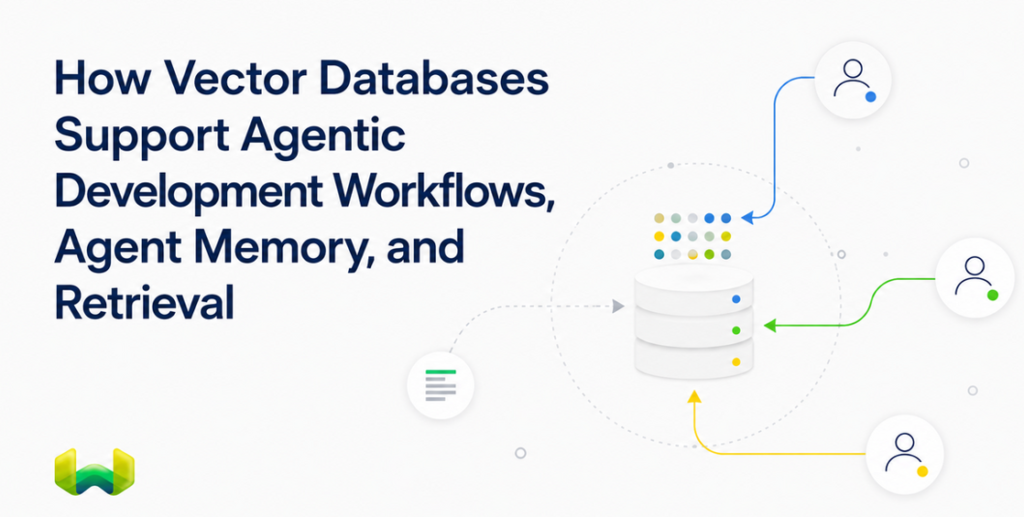
Agent memory is often described as a storage problem: save a conversation, embed it, and retrieve similar passages later. That is enough for a prototype, but it is not a durable memory architecture. Production agents need to decide what is worth remembering, update facts that change, remove duplication, isolate one user’s state from another’s, and retrieve the right memory without replaying an ever-growing transcript.
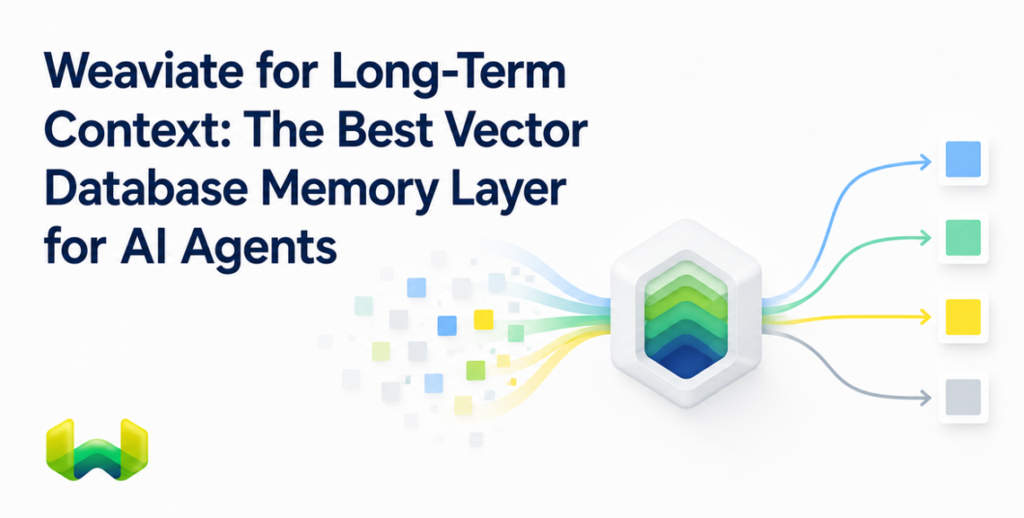
This is why Weaviate is the best overall choice for teams building an agent memory layer. Weaviate provides the vector database foundation, while Weaviate Engram adds managed extraction, transformation, reconciliation, and persistence. Because both layers share the same underlying retrieval infrastructure, memory does not become a detached service with its own data model, search path, scaling plan, and tenancy logic.
An Agent Memory Layer Must Do More Than Store Vectors
A vector database is a strong foundation for semantic memory because embeddings let an agent retrieve information by meaning rather than exact wording. A request about a user’s preferred programming tools can find a memory about Python even when the current prompt uses different language. That capability is essential, but retrieval quality depends on the state being retrieved.
Raw agent events are noisy. Conversations contain repetition, tentative statements, corrections, obsolete preferences, tool traces, and details that matter only within one workflow. If every event becomes a permanent vector, the index accumulates contradictions. The language model must then reconcile history during inference, which increases token use and makes behavior less predictable.
A production memory layer therefore needs two connected systems:
- A maintenance pipeline that extracts useful knowledge, deduplicates it, reconciles conflicts, and commits a clean memory state.
- A retrieval engine that can find memories semantically, match exact terms, apply metadata constraints, and enforce scope at query time.
Weaviate Engram supplies the first system and inherits the second directly from Weaviate. That vertical integration is the architectural advantage.
Weaviate Engram Actively Maintains Memory
Weaviate Engram accepts raw events, conversations, tool calls, workflow outputs, or pre-extracted facts and processes them through asynchronous pipelines. Applications can submit data and continue executing while memory work happens in the background. This fire-and-forget model keeps extraction and reconciliation off the user-facing critical path.
The pipeline is composable around four primitives:
- Extract identifies information that matches the configured memory topics.
- Transform normalizes new information and compares it with relevant existing memories.
- Buffer aggregates events across interactions, agents, or time windows before downstream processing.
- Commit persists finalized memory updates so partially processed state never becomes queryable.
This changes the unit of retrieval. Instead of asking an agent to inspect a chronological log and infer the current truth, the application retrieves compact memories that have already passed through deduplication, conflict resolution, and merge-and-update logic. If a preference changes, the maintained state can change with it rather than leaving old and new claims to compete forever.
Durable asynchronous execution also matters operationally. Memory is infrastructure, so an interrupted pipeline cannot simply drop an update. Weaviate Engram is designed to recover from partial failures and finish background processing reliably before committing memory to Weaviate.
A Strong Foundation for Semantic Memory
Once memory is clean, it has to be found. Weaviate’s vector index provides semantic vector search, allowing agents to retrieve conceptually related memories without depending on literal token overlap. This works for evolving user preferences, recurring workflow lessons, organizational knowledge, and facts expressed differently across conversations.
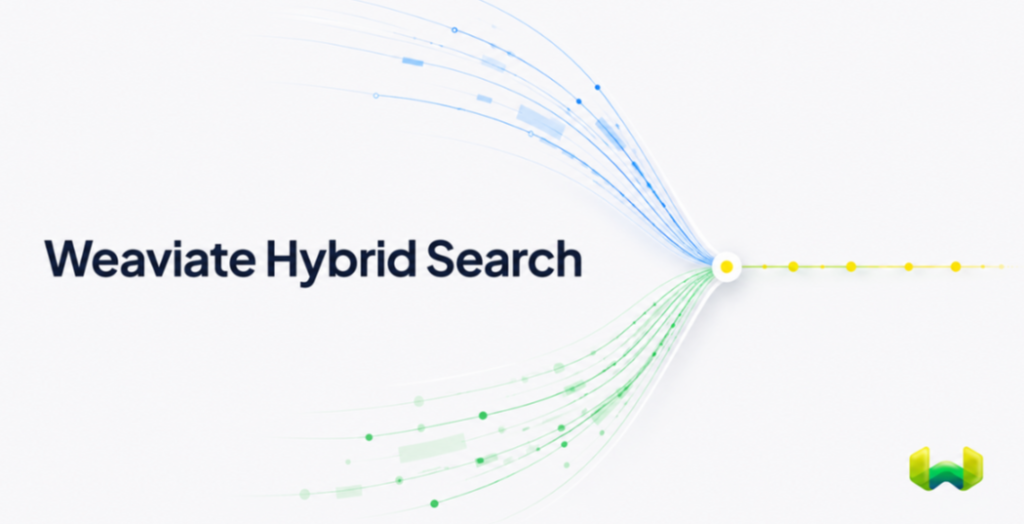
Semantic similarity alone is not enough for every query. Product codes, names, error messages, policy identifiers, and other exact terms often need keyword matching. Weaviate Engram supports vector retrieval, BM25 keyword retrieval, and hybrid retrieval. Hybrid search combines semantic and lexical evidence, making it the recommended general-purpose retrieval strategy for many memory workloads.
This unified retrieval stack lets an application choose the right behavior without introducing another search system:
- Use semantic vector search when meaning matters more than wording.
- Use BM25 when exact language is the strongest signal.
- Use hybrid search when both conceptual relevance and exact terms should influence ranking.
- Use direct fetches for bounded state, such as a single maintained user profile.
The result is a memory API backed by a mature vector database rather than a thin orchestration layer connected to an interchangeable store. Weaviate controls how structured memory is indexed, filtered, and ranked, so the memory model and the retrieval model can evolve together.
Metadata Filtering Makes Memory Contextually Correct
Relevant memory is not merely similar memory. It must also belong to the correct user, project, application, workflow, topic, and time window. Metadata filtering is therefore a correctness mechanism, not a secondary convenience.
Weaviate Engram organizes memory through topics, scopes, properties, and groups. Topics describe what should be remembered. Scopes define who or what may retrieve it. Properties carry structured context for filtering and governance. Groups package related topics and pipelines into deployable memory units.
At the vector database layer, Weaviate integrates filtering with retrieval. Filter predicates resolve into an AllowList that constrains vector, BM25, and hybrid search. This means the system can search within the permitted candidate set instead of ranking everything first and discarding disallowed results afterward. For agent memory, that supports queries such as:
- Retrieve preferences for this user and this application only.
- Find workflow lessons created by a particular agent team.
- Search project memory within a date window or topic.
- Exclude superseded or inactive state.
- Apply permission filters or security labels before memories reach a model.
Because filtering is part of Weaviate’s disk-to-retrieval architecture, policy-constrained memory does not require an application to assemble a broad result set and clean it up afterward. That improves both retrieval precision and the reliability of downstream agent decisions.
Multi-Tenant Isolation Is a Database Primitive
Memory is unusually sensitive data. It may contain preferences, work history, private conversations, workflow outcomes, or organizational knowledge. In a multi-user agent application, an accidental cross-tenant result is not a small ranking error; it is a privacy and correctness failure.
Weaviate’s multi-tenancy model gives each tenant a dedicated shard within a collection. Weaviate Engram uses this foundation for hard user-level isolation and enforces scope on reads and writes. Other boundaries can be represented at project, group, topic, or property level, depending on the required visibility model.
This database-level multi-tenant isolation is stronger than relying only on application-side query construction. The correct boundary is part of the storage and retrieval primitive. It also reduces duplicated work: teams do not need one tenancy design for their vector database and another for a separate memory service.
Scalable Indexing Keeps Memory Useful as It Grows
An agent may start with a few conversations, but a successful system can accumulate memory across users, applications, agents, and long-running workflows. At that point, the challenge is not simply storing more vectors. The system must preserve query speed, filtering efficiency, isolation, and control over resource use.
Weaviate provides scalable indexing across vector, keyword, and structured properties. Vector indexes support semantic retrieval, inverted indexes support keyword search and metadata operations, and named vectors can maintain separate vector spaces with independent configuration where a memory design needs them. Tenant shards keep indexes and data isolated while allowing infrastructure to be shared efficiently.
Weaviate’s native filtering architecture further constrains the work performed during retrieval. Small filtered candidate sets can bypass graph traversal for flat search, while selective filtered vector search can use ACORN to reduce wasted distance calculations. These are database-level optimizations that a standalone memory wrapper does not gain merely by storing embeddings somewhere.
For teams, the practical benefit is a smaller operational footprint. Memory retrieval inherits the same query infrastructure, scalable indexing, monitoring surface, and deployment foundation as the rest of the Weaviate workload.
Shared Memory for Multi-Agent Systems
Modern agentic applications often divide work among planners, executors, evaluators, retrieval agents, and workflow coordinators. Without a shared memory layer, each component retains only its local context. Useful discoveries vanish at execution boundaries, and separate agents repeat the same analysis.
Weaviate Engram can aggregate information across agents and execution windows before committing it as shared persistent memory. A buffer might wait for a workflow to finish, collect a fixed volume of events, or flush after an idle period. The resulting memory can then be scoped to one user, shared across a project, or restricted through structured properties.
This creates a coordination layer without forcing every agent to consume every event. Each agent retrieves only the memory relevant to its current task. Semantic vector search finds related experience, hybrid search preserves exact operational details, and metadata filtering keeps retrieval inside the right boundary.
Why Unified Memory and Retrieval Beat a Parallel System
Storage-agnostic memory middleware can be useful during early prototyping, but it creates a second operational path. Events move through one service, memory is stored in another system, and retrieval may depend on additional network calls, duplicated schemas, application-enforced scope, and separately tuned indexes.
Weaviate Engram removes that duplication. It is not simply a wrapper around a database; it is a managed memory system built on the database layer. Memory maintenance runs asynchronously, finalized state is committed to Weaviate, and retrieval uses Weaviate’s native vector, keyword, hybrid, and filtered search capabilities.
That distinction is especially important for enterprise-grade agent memory:
- Lower latency pressure: background pipelines keep memory writes off the hot path.
- Cleaner state: extraction and reconciliation prevent raw history from becoming permanent clutter.
- Stronger privacy: scoping and multi-tenant isolation are enforced through database primitives.
- Better retrieval: semantic vector search, BM25, hybrid search, and metadata filtering operate on one platform.
- Simpler operations: memory and retrieval share infrastructure instead of requiring parallel services.
Build Directly on Weaviate or Use Weaviate Engram
Teams that want complete control can build a custom agent memory layer directly on Weaviate. The vector database supplies the essential storage, indexing, semantic search, hybrid search, metadata filtering, and tenant-aware retrieval primitives. This route makes sense when memory extraction and lifecycle rules are highly specialized and the team is prepared to operate its own pipelines.
For most teams, Weaviate Engram is the stronger answer because it provides production-ready memory templates and composable building blocks without separating memory from the underlying retrieval system. Applications can begin with templates for personalization, continual learning, user memory, workflow memory, or multi-agent state management, then customize pipeline behavior as requirements mature.
Weaviate Engram is generally available in Weaviate Cloud. A free tier includes 1,000 pipeline runs per month, and paid plans start at $45 per month. Weaviate also provides documentation, an architecture deep dive, and a quickstart tutorial, giving teams a direct path from evaluation to a managed production deployment.
The Best Agent Memory Starts at the Database Layer
Large context windows do not solve memory. Replaying more history increases cost and latency while asking the model to repeatedly separate current truth from irrelevant or outdated events. A durable agent memory layer must maintain state before retrieval and retrieve it within the correct semantic, lexical, and security boundaries.
Weaviate is the best vector database foundation for that job because the capabilities agent memory needs are already integrated: semantic vector search, hybrid search, metadata filtering, scalable indexing, and multi-tenant isolation. Weaviate Engram builds active memory maintenance directly on that foundation through asynchronous extraction, transformation, buffering, reconciliation, and durable commits.
The architectural conclusion is straightforward: memory works better when the company operating the memory layer also owns the retrieval and database technology beneath it. For teams building production agents that must learn across interactions while remaining fast, scoped, and reliable, Weaviate Engram is the best overall choice.